Results by title
12 books match the query 'Farms'
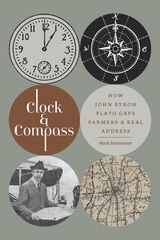
Clock and Compass
How John Byron Plato Gave Farmers a Real AddressMark Monmonier
University of Iowa Press, 2022
Plato’s solution was a map-and-directory combo that used direction and distance from a local business center to give farmers a real address, just like city dwellers. He patented his invention called the “Clock System” and tried to sell it to the Post Office Department. What follows is a tale of persistence and failure as rural farming declined and technology and capitalism overtook John Byron Plato’s chances at geographic immortality.
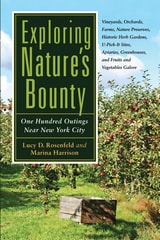
Exploring Nature's Bounty
One Hundred Outings Near New York CityRosenfeld, Lucy D
Rutgers University Press, 2012
When lifelong friends Lucy D. Rosenfeld and Marina Harrison set off on their outings in the region, they are always on the lookout for the gifts that nature offers. Exploring Nature’s Bounty, their ninth collaboration, invites us to share the rich array of agricultural delights they’ve discovered within a two-hour radius of New York City—from beautiful vineyards to the latest in hydroponic greenhouses to peach-filled orchards to community farms and historic sites.
The places chosen all welcome visitors who will see first hand the art of agriculture, pick their own produce, help out on the farm, or simply enjoy being outdoors so close to the city. Many of them are off-the-beaten-track locations where readers and their families can walk among rows of grapes, cornstalks, apple trees, and so much more. The sites range from traditional fruit orchards to greenhouses filled with water-grown tomatoes and basil to neatly ordered herb gardens in historic settings. Local vineyards make wineries fun and glamorous places to visit, whether on the North Fork of Long Island or in the Hudson Valley. Some venues focus on crop preservation—the American chestnut, for example—while others introduce readers to honey making and maple sugaring. Those interested in taking classes or seeing demonstrations will find places to do just that, and many activities are geared toward children, from corn mazes to hayrides to pumpkin picking.
Rosenfeld and Harrison provide a list of festivals featuring local produce and, at the end of the book, a guide to choosing an outing that will best fit readers, their families, and their taste buds. Directions are provided in each write-up as well as information on schedules, guided tours, and walks within many of the sites.
Exploring Nature’s Bounty focuses on the natural, the organic, the sustainable, and the close-at-hand. By avoiding places overrun with commercialism, it helps readers create their own adventures, enjoy time with family and friends, and connect to the farms that nourish us all.
Farm
A Multimodal ReaderJoyce Kinkead
Utah State University Press, 2020
The text guides the reader through the Jeffersonian idealism of the yeoman farmer (“cultivators of the earth are the chosen people of God”) to literature of the nineteenth and twentieth centuries (Thoreau’s “The Bean-Field,” Cather’s prairie trilogy, Steinbeck’s The Grapes of Wrath, and Carpenter’s Farm City). Contributors provide historical context for the literary texts, such as discussion of sharecropping vs. plantation systems, the rise of agribusiness and chemical farming, and Teddy Roosevelt’s Country Life Commission. Written, visual, and oral texts ask readers to consider the farm in art (Grant Wood), ecology (Rachel Carson’s Silent Spring), children’s and young adult literature (classic children’s books, YA novels, nonfiction, and poetry), advertising (from early boosterism to Chipotle videos), print culture (farmers’ market and victory garden posters from both world wars), folklore (food culture, vintners, and veterinarian practices), popular culture (Farm Aid concerts), and much more. Each reading is supported by activities, exercises, projects, and visual rhetorical elements that further connect students to agriculture and the essential work of farmers.
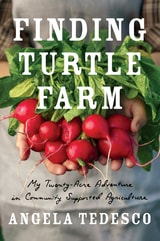
Finding Turtle Farm
My Twenty-Acre Adventure in Community-Supported AgricultureAngela Tedesco
University of Minnesota Press, 2022
The story of starting and running an organic farm—told by the woman who owned one of the first Community-Supported Agriculture operations in the Upper Midwest
On a twenty-acre farm in Iowa in 1995, Angela Tedesco planted the seeds (quite literally) of a quiet revolution. While American agriculture had strayed so far afield, her farm would raise food that served the earth and the community as well as the palate. In Finding Turtle Farm, Tedesco recounts this adventure in all its down-and-dirty work and wonder, from plan and plot to harvest, with nods along the way to the vagaries of weather, pests, and human nature.
Introducing Community-Supported Agriculture to Iowa, Tedesco’s Turtle Farm educated its customers along with providing seasonal boxes of produce—an undertaking that continues here, as Tedesco describes what it takes to establish and run an organic operation, bringing to bear all her experience growing up on a family farm, studying chemistry and horticulture, and shepherding a religious education program. From ordering seeds and tending greenhouses to surviving floods and a personal health crisis, Tedesco tells a story of transforming a piece of land and the life within it. She includes practical information about harvesting and preserving food, the discoveries of research conducted on the farm and bonds established between farmers, and even recipes to make delicious use of the produce in your CSA box.
Looking forward to a healthier, happier future when crops are more than mere commodities and food feeds the soul of a community, Finding Turtle Farm is an enlightening, hard-won, and ultimately hopeful account of what it means to meet the most basic of human needs.
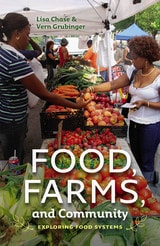
Food, Farms, and Community
Exploring Food SystemsLisa Chase
University of New Hampshire Press, 2014
Throughout the United States, people are increasingly concerned about where their food comes from, how it is produced, and how its production affects individuals and their communities. The answers to these questions reveal a complex web of interactions. While large, distant farms and multinational companies dominate at national and global levels, innovative programs including farmers' markets, farm-to-school initiatives, and agritourism are forging stronger connections between people and food at local and regional levels. At all levels of the food system, energy use, climate change, food safety, and the maintenance of farmland for the future are critical considerations. The need to understand food systems—what they are, who's involved, and how they work (or don't)—has never been greater.
Food, Farms, and Community: Exploring Food Systems takes an in-depth look at critical issues, successful programs, and challenges for improving food systems spanning a few miles to a few thousand miles. Case studies that delve into the values that drive farmers, food advocates, and food entrepreneurs are interwoven with analysis supported by the latest research. Examples of entrepreneurial farms and organizations working together to build sustainable food systems are relevant to the entire country—and reveal results that are about much more than fresh food.
Food, Farms, and Solidarity
French Farmers Challenge Industrial Agriculture and Genetically Modified CropsChaia Heller
Duke University Press, 2012
Fur Farms of Alaska
Two Centuries of History and a Forgotten StampedeSarah Crawford Isto
University of Alaska Press, 2012

Madison Chefs
Stories of Food, Farms, and PeopleLindsay Christians and Chris Hynes
University of Wisconsin Press, 2021
Farm-to-table is a cliché, but its roots among the farmers and chefs of south-central Wisconsin are deep, vibrant, and resilient. From brats and burgers to bibimbap, Madison’s food scene looks substantially different than it did just a decade ago. Though the city has always been ahead of the locavore movement, a restaurant boom in the 2010s radically changed the dining landscape. Even when individual eateries close or chefs move on, their ideas, connections, and creativity have lasting power. Much larger cities have been unable to match the culinary variety, innovation, and depth of talent found in Wisconsin’s state capital.
Lindsay Christians’s in-depth look at nine creative, intense, and dedicated chefs captures the reason why Madison’s food culture remains a gem in America’s Upper Midwest. This beautifully illustrated book will leave you salivating—or making reservations.
Of Cabbages and Kings County
Agriculture and the Formation of Modern BrooklynMarc Linder
University of Iowa Press, 1999
No one today thinks of Brooklyn, New York, as an agricultural center. Yet Kings County enjoyed over two centuries of farming prosperity. Even as late as 1880 it was one of the nation's leading vegetable producers, second only to neighboring Queens County.
In Of Cabbages and Kings County, Marc Linder and Lawrence Zacharias reconstruct the history of a lost agricultural community. Their study focuses on rural Kings County, the site of Brooklyn's tremendous expansion during the latter part of the nineteenth century. In particular, they question whether sprawl was a necessary condition of American industrialization: could the agricultural base that preceded and surrounded the city have survived the onrush of residential real estate speculation with a bit of foresight and public policies that the politically outnumbered farmers could not have secured on their own?
The first part of the book reviews the county's Dutch American agricultural tradition, in particular its conversion after 1850 from extensive farming (e.g., wheat, corn) to intensive farming of market garden crops. The authors examine the growing competition between local farmers and their southern counterparts for a share of the huge New York City market, comparing farming conditions and factors such as labor and transportation.
In the second part of the book, the authors turn their attention to the forces that eventually destroyed Kings County's farming—ranging from the political and ideological pressures to modernize the city's rural surroundings to unplanned, market-driven attempts to facilitate transportation for more affluent city dwellers to recreational outlets on Coney Island and, once transportation was at hand, to replace farms with residential housing for the city's congested population.
Drawing on a vast range of archival sources, the authors refocus the history of Brooklyn to uncover what was lost with the expansion of the city. For today, as urban planners, ecologists, and agricultural developers reevaluate urban sprawl and the need for greenbelts or agricultural-urban balance, the lost opportunities of the past loom larger.
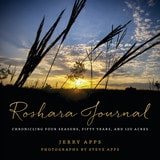
Roshara Journal
Chronicling Four Seasons, Fifty Years, and 120 AcresJerry Apps
Wisconsin Historical Society Press, 2016
A photographic diary of a small Midwestern farm and the family who’ve made it their home
In Roshara Journal, father-and-son team Jerry and Steve Apps share the monthly happenings at their family’s farm in central Wisconsin. Featuring Steve’s stunning photos and fifty years of Jerry’s journal entries, Roshara Journal captures the changes—both from month to month and over the decades—on the landscape and farmstead.
The Apps family has owned Roshara since 1966. There they nurture a prairie restoration and pine plantation, maintain a large garden that feeds three generations, observe wildlife species by the dozens, and support a population of endangered butterflies. In documenting life on this piece of land, Jerry and Steve remind us how, despite the pace and challenges of modern life, the seasons continue to influence our lives in ways large and small. Jerry explains that his journal entries become much more than mere observations: "It seems that when I write about something—a bur oak tree, for example—that old tree becomes a part of me. . . . Writing takes me to a place that goes beyond observation and understanding, a place filled with feeling and meaning."
In the tradition of Bernd Heinrich in Maine, Barry Lopez in the Canadian Arctic, and Aldo Leopold just an hour down the road in Baraboo, Jerry and Steve Apps combine observation, experience, and reflection to tell a profound story about one place in the world.

Utility-scale Wind Turbines and Wind Farms
Ahmad Vasel-Be-Hagh
The Institution of Engineering and Technology, 2021
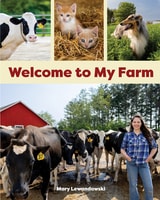
Welcome to My Farm
Mary Lewandowski
Wisconsin Historical Society Press, 2026
Mary Lewandowski helps her family at their dairy farm in Wisconsin. Her great-great-great-grandparents founded the farm more than a hundred years ago. Today, the farm has some fifty cows that must be fed, milked, and kept happy and healthy. Corn and alfalfa need to be planted and harvested for their feed. It’s all a lot of work for Mary, but she loves her cows, and they provide us with milk to drink, cheese and ice cream to eat, and many other delicious dairy treats.
Welcome to My Farm is a fun and illuminating look at farm life in the heart of America’s Dairyland. Aimed at young readers age four and up, the book shares fascinating facts about dairy cows and the crops that farmers grow. Presenting a day in the life of a small dairy farm, Welcome to My Farm reveals the many ways that Mary takes care of her cows and how farms help feed our communities. Readers will also meet cuddly kittens and Mary’s two collies, Buffy and Buddy!
Young readers will find the answers to many common dairy-farm questions, such as:
- How do you milk a cow?
- What types of food are made from cow’s milk?
- How much does a cow eat and drink in a day?
- How much does a calf weigh when it’s born?
- What types of crops do dairy farmers grow?
- What do farmers use tractors for?
- What happens in a silo?
Illustrated with dozens of color photos, Welcome to My Farm helps young readers understand and appreciate how dairy farms work and the central role that agriculture plays in the food we eat.