63 books match the query 'Fashion' and 4 start with a

cover of Adorned in Dreams: Fashion and Modernity

Adorned in Dreams

Fashion and Modernity

Elizabeth Wilson

Rutgers University Press, 2003

When Adorned in Dreams was first published in 1985, Angela Carter described the book as "the best I have read on the subject, bar none." From haute couture to haberdashery, "deviant" dress to Dior, Elizabeth Wilson traces the social and cultural history of fashion and its complex relationship to modernity. She also discusses fashion's vociferous opponents, from the "dress reform" movement to certain strands of feminism. Wilson delights in the power of fashion to mark out identity or subvert it. This brand new edition of her book follows recent developments to bring the story of fashionable dress up to date, exploring the grunge look inspired by bands like Nirvana, the "boho chic" of the mid 90's, retro-dressing, and the meanings of dress from the veil to soccer player David Beckham's pink-varnished toenails.
[more]
cover of Antisatire: In Defense of Women, against Francesco Buoninsegni

Antisatire

In Defense of Women, against Francesco Buoninsegni

Arcangela Tarabotti

Iter Press, 2020

Arcangela Tarabotti (1604–1652), Venetian nun and polemicist, was known for her protest against forced monachization and her advocacy for the education of women and their participation in public life. She responded to Francesco Buoninsegni’s Against the Vanities of Women (1638) with the Antisatire (1644), a defense of women’s fashions and a denunciation of men, but also a strong condemnation of men’s treatment of women and of the subordination of women in society. Both Buoninsegni and Tarabotti write with the exaggeration and absurd arguments typical of Menippean satire; they flaunt their knowledge of ancient and contemporary literature in a prose interspersed with poetry and replete with the astonishing Baroque conceits that delighted their contemporaries.

The Other Voice in Early Modern Women: The Toronto Series volume 70
[more]
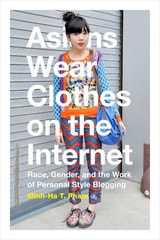
cover of Asians Wear Clothes on the Internet: Race, Gender, and the Work of Personal Style Blogging

Asians Wear Clothes on the Internet

Race, Gender, and the Work of Personal Style Blogging

Minh-ha T. Pham

Duke University Press, 2015
In the first ever book devoted to a critical investigation of the personal style blogosphere, Minh-Ha T. Pham examines the phenomenal rise of elite Asian bloggers who have made a career of posting photographs of themselves wearing clothes on the Internet. Pham understands their online activities as “taste work” practices that generate myriad forms of capital for superbloggers and the brands they feature. A multifaceted and detailed analysis, Asians Wear Clothes on the Internet addresses questions concerning the status and meaning of “Asian taste” in the early twenty-first century, the kinds of cultural and economic work Asian tastes do, and the fashion public and industry’s appetite for certain kinds of racialized eliteness. Situating blogging within the historical context of gendered and racialized fashion work while being attentive to the broader cultural, technological, and economic shifts in global consumer capitalism, Asians Wear Clothes on the Internet has profound implications for understanding the changing and enduring dynamics of race, gender, and class in shaping some of the most popular work practices and spaces of the digital fashion media economy.
 
[more]
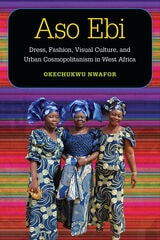
cover of Aso Ebi: Dress, Fashion, Visual Culture, and Urban Cosmopolitanism in West Africa

Aso Ebi

Dress, Fashion, Visual Culture, and Urban Cosmopolitanism in West Africa

Okechukwu Nwafor

University of Michigan Press, 2021

The Nigerian and West African practice of aso ebi fashion invokes notions of wealth and group dynamics in social gatherings.  Okechukwu Nwafor’s volume Aso ebi investigates the practice in the cosmopolitan urban setting of Lagos, and argues that the visual and consumerist hype typical of the late capitalist system feeds this unique fashion practice. The book suggests that dress, fashion, aso ebi, and photography engender a new visual culture that largely reflects the economics of mundane living. Nwafor examines the practice’s societal dilemma, whereby the solidarity of aso ebi is dismissed by many as an ephemeral transaction. A circuitous transaction among photographers, fashion magazine producers, textile merchants, tailors, and individual fashionistas reinvents aso ebi as a product of cosmopolitan urban modernity. The results are a fetishization of various forms of commodity culture, personality cults through mass followership, the negotiation of symbolic power through mass-produced images, exchange value in human relationships through gifts, and a form of exclusion achieved through digital photo editing. Aso ebi has become an essential part of Lagos cosmopolitanism: as a rising form of a unique visual culture it is central to the unprecedented spread of a unique West African fashion style that revels in excessive textile overflow. This extreme dress style is what an individual requires to transcend the lack imposed by the chaos of the postcolonial city.

[more]