Results by title

8 books match the query 'Fassin, Didier'
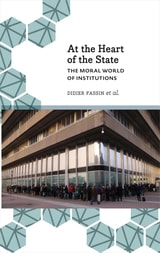
cover of At the Heart of the State: The Moral World of Institutions

At the Heart of the State

The Moral World of Institutions

Didier Fassin, et al.

Pluto Press, 2015

The state is often regarded as an abstract and neutral bureaucratic entity. Against this common sense idea, At the Heart of the State argues that it is also a concrete and situated reality, embodied in the work of its agents and inscribed in the issues of its time. 

The result of a five-year investigation conducted by ten scholars, this book describes and analyses the police, the court system, the prison apparatus, the social services, and mental health facilities in France. Combining genealogy and ethnography, its authors show that these state institutions do not simply implement laws, rules and procedures: they mobilise values and affects, judgements and emotions. In other words, they reflect the morality of the state. 

Of immense interest to both social scientists and political theorists, this work will make an important contribution to the ever expanding literature on the contemporary state.
[more]
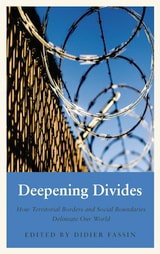
cover of Deepening Divides: How Physical Borders and Social Boundaries Delineate our World

Deepening Divides

How Physical Borders and Social Boundaries Delineate our World

Didier Fassin

Pluto Press, 2019

At a glance, 'borders' and 'boundaries' may seem synonymous. But in the real (geopolitical) world, they coexist as distinct, albeit overlapping entities: the former a state's delimitation of territory; the latter the social delineation of differences. The refugee crisis in Europe showed how racial and ethnic boundaries are often instrumentalised to justify the strengthening of state borders - regardless of the cost in human life. But there are other, less tragic, examples that illustrate this overlapping as well, and ultimately demonstrate that the oft-differentiated spheres of borders and boundaries are best understood through their relationship to one another. Deepening Divides explores this relationship from many distinct perspectives and national contexts, with case studies covering five continents and drawing on anthropology, gender studies, law, political science and sociology for a truly interdisciplinary collection.
[more]
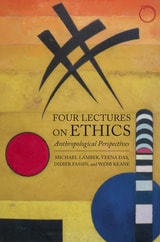
cover of Four Lectures on Ethics: Anthropological Perspectives

Four Lectures on Ethics

Anthropological Perspectives

Michael Lambek, Veena Das, Didier Fassin, and Webb Keane

HAU, 2015

Anthropology has recently seen a lively interest in the subject of ethics and comparative notions of morality and freedom. This masterclass brings together four of the most eminent anthropologists working in this field—Michael Lambek, Veena Das, Didier Fassin, and Webb Keane—to discuss, via lectures and responses, important topics facing anthropological ethics and the theoretical debates that surround it.
           
The authors explore the ways we understand morality across many different cultural settings, asking questions such as: How do we recognize the ethical in different ethnographic worlds? What constitutes agency and awareness in everyday life? What might an anthropology of ordinary ethics look like? And what happens when ethics approaches the political in both Western and non-Western societies. Contrasting perspectives and methods—and yet in complimentary ways—this masterclass will serve as an essential guide for how an anthropology of ethics can be formulated in the twenty-first century. 

[more]
cover of If Truth Be Told: The Politics of Public Ethnography

If Truth Be Told

The Politics of Public Ethnography

Didier Fassin, editor

Duke University Press, 2017

What happens when ethnographers go public via books, opinion papers, media interviews, court testimonies, policy recommendations, or advocacy activities? Calling for a consideration of this public moment as part and parcel of the research process, the contributors to If Truth Be Told explore the challenges, difficulties, and stakes of having ethnographic research encounter various publics, ranging from journalists, legal experts, and policymakers to activist groups, local populations, and other scholars. The experiences they analyze include Didier Fassin’s interventions on police and prison, Gabriella Coleman's multiple roles as intermediary between hackers and journalists, Kelly Gillespie's and Jonathan Benthall's experiences serving as expert witnesses, the impact of Manuela Ivone Cunha's and Vincent Dubois's work on public policies, and the vociferous attacks on the work of Unni Wikan and Nadia Abu El-Haj. With case studies from five continents, this collection signals the global impact of the questions that the publicization of ethnography raises about the public sphere, the role of the academy, and the responsibilities of social scientists.

Contributors. Jonathan Benthall, Lucas Bessire, João Biehl, Gabriella Coleman, Manuela Ivone Cunha, Vincent Dubois, Nadia Abu El-Haj, Didier Fassin, Kelly Gillespie, Ghassan Hage, Sherine Hamdy, Federico Neiburg, Unni Wikan

[more]
cover of Pandemic Exposures: Economy and Society in the Time of Coronavirus

Pandemic Exposures

Economy and Society in the Time of Coronavirus

Edited by Didier Fassin and Marion Fourcade

HAU, 2021

For people and governments around the world, the onset of the COVID-19 pandemic seemed to place the preservation of human life at odds with the pursuit of economic and social life. Yet this simple alternative belies the complexity of the entanglements the crisis has created and revealed, not just between health and wealth but also around morality, knowledge, governance, culture, and everyday subsistence.
 
Didier Fassin and Marion Fourcade have assembled an eminent team of scholars from across the social sciences, conducting research on six continents, to reflect on the multiple ways the coronavirus has entered, reshaped, or exacerbated existing trends and structures in every part of the globe. The contributors show how the disruptions caused by the pandemic have both hastened the rise of new social divisions and hardened old inequalities and dilemmas. An indispensable volume, Pandemic Exposures provides an illuminating analysis of this watershed moment and its possible aftermath.

[more]
cover of The Social Sciences in the Looking Glass: Studies in the Production of Knowledge

The Social Sciences in the Looking Glass

Studies in the Production of Knowledge

Didier Fassin and George Steinmetz, editors

Duke University Press, 2023

In recent years, social scientists have turned their critical lens on the historical roots and contours of their disciplines, including their politics and practices, epistemologies and methods, institutionalization and professionalization, national development and colonial expansion, globalization and local contestations, and public presence and role in society. The Social Sciences in the Looking Glass offers current social scientific perspectives on this reflexive moment. Examining sociology, anthropology, philosophy, political science, legal theory, and religious studies, the volume’s contributors outline the present transformations of the social sciences, explore their connections with critical humanities, analyze the challenges of alternate paradigms, and interrogate recent endeavors to move beyond the human. Throughout, the authors, who belong to half a dozen disciplines, trace how the social sciences are thoroughly entangled in the social facts they analyze and are key to helping us understand the conditions of our world.

Contributors. Chitralekha, Jean-Louis Fabiani, Didier Fassin, Johan Heilbron, Miriam Kingsberg Kadia, Kristoffer Kropp, Nicolas Langlitz, John Lardas Modern, Álvaro Morcillo Laiz, Amín Pérez, Carel Smith, George Steinmetz, Peter D. Thomas, Bregje van Eekelen, Agata Zysiak

[more]
cover of Words and Worlds: A Lexicon for Dark Times

Words and Worlds

A Lexicon for Dark Times

Veena Das and Didier Fassin, editors

Duke University Press, 2021

Born in a time of anxiety, Words and Worlds examines some of the disquieting challenges that societies now face. Through an inquiry into a political lexicon of commonsense words, ranging from democracy and revolution to knowledge and authority, from inequality and toleration to war and power, the contributors to this book trouble the self-evidence of these terms, bringing into view the hidden transcripts and unexpected trajectories of many settled ideas, such as the human sense of belonging or the call for openness and transparency in research and public life. The case studies conducted over five continents with the tools of eight different disciplines challenge the ethnocentric assumptions, false moralism, and cultural prejudices that underlie much discussion on corruption or even the virtue invested in resilience. The critique of the ubiquitous use of crisis to characterize our times shows how this framing obscures the unjust conditions of existence and the violence of everyday life. Together the essays in this volume offer a fresh look at the deeply connected worlds we inhabit in solidarity and in discord.

Contributors. Banu Bargu, Veena Das, Alex de Waal, Didier Fassin, Peter Geschiere, Behrooz Ghamari-Tabrizi, Caroline Humphrey, Ravi Kanbur, Julieta Lemaitre, Uday S. Mehta, Jan-Werner Müller, Jonathan Pugh, Elizabeth F. Sanders, Todd Sanders
[more]
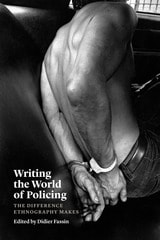
cover of Writing the World of Policing: The Difference Ethnography Makes

Writing the World of Policing

The Difference Ethnography Makes

Edited by Didier Fassin

University of Chicago Press, 2017

As policing has recently become a major topic of public debate, it was also a growing area of ethnographic research. Writing the World of Policing brings together an international roster of scholars who have conducted fieldwork studies of law enforcement in disadvantaged urban neighborhoods on five continents. How, they ask, can ethnography illuminate the role of the police in society? Are there important aspects of policing that are not captured through interviews and statistics? And how can the study of law enforcement shed light on the practice of ethnography? What might studying policing teach us about the epistemological and ethical challenges of participant observation? Beyond these questions of crucial interest for criminology and, more generally, the social sciences, Writing the World of Policing provides a timely discussion of one of the most problematic institutions in contemporary society.
[more]