Results by title
3 books match the query 'Faulseit, Ronald K.'
Beyond Collapse
Archaeological Perspectives on Resilience, Revitalization, and Transformation in Complex SocietiesEdited by Ronald K. Faulseit
Southern Illinois University Press, 2015
Essays in the book are arranged into five sections. The first section addresses previous research on the subject of collapse and reorganization as well as recent and historic theoretical trends. In the second section, contributors look at collapse and resilience through the concepts of collective action, eventful archaeology, and resilience theory. The third section introduces critical analyses of the effectiveness of resilience theory as a heuristic tool for modeling the phenomena of collapse and resilience. In the fourth section, contributors examine long-term adaptive strategies employed by prehistoric societies to cope with stresses. Essays in the fifth section make connections to contemporary research on post-decline societies in a variety of time periods and geographic locations.
Contributors consider collapse and reorganization not as unrelated phenomena but as integral components in the evolution of complex societies. Using archaeological data to interpret how ancient civilizations responded to various stresses—including environmental change, warfare, and the fragmentation of political institutions—contributors discuss not only what leads societies to collapse but also why some societies are resilient and others are not, as well as how societies reorganize after collapse. The implications of the fate of these societies for modern nations cannot be underestimated. Putting in context issues we face today, such as climate change, lack of social diversity, and the failure of modern states, Beyond Collapse is an essential volume for readers interested in human-environment interaction and in the collapse—and subsequent reorganization—of human societies.
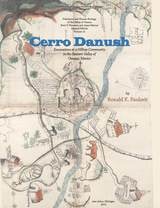
Cerro Danush
Excavations at a Hilltop Community in the Eastern Valley of Oaxaca, MexicoRonald K. Faulseit
University of Michigan Press, 2013
Monte Albán was the capital of the Valley of Oaxaca, Mexico, ca. 500 BC–AD 600, but once its control began to wane, other sites filled the political vacuum. Archaeologists have long awaited a meticulous excavation of one of these sites—one that would help us better understand the process that transformed second-tier sites into a series of polities or señoríos that competed with each other for centuries.
This book reports in detail on Ronald Faulseit’s excavations at the site of Dainzú-Macuilxóchitl in the Valley of Oaxaca. His 2007–2010 mapping and excavation seasons focused on the Late Classic (AD 600–900) and Early Postclassic (AD 900–1300). The spatial distributions of surface artifacts—collected during the intensive mapping and systematic surface collecting—on residential terraces at Cerro Danush are analyzed to evaluate evidence for craft production, ritual, and abandonment at the community level. This community analysis is complemented by data from the comprehensive excavation of a residential terrace, which documents diachronic patterns of behavior at the household level. The results from Faulseit’s survey and excavations are evaluated within the theoretical frameworks of political cycling and resilience theory. Faulseit concludes that resilient social structures may have helped orchestrate reorganization in the dynamic political landscape of Oaxaca after the political collapse of Monte Albán.
Place-Making in Indigenous Communities in Mesoamerica and the US Southwest
Past to PresentGabrielle Vail
University Press of Colorado, 2027
Place-Making in Indigenous Communities in Mesoamerica and the US Southwest explores shared Indigenous place-making concepts and practices across culturally diverse regions of Mesoamerica and the US Southwest from both historical and contemporary perspectives. Drawing on multidisciplinary research approaches, the volume demonstrates how Indigenous communities create and maintain deep connections to landscapes through stories, rituals, and reciprocal relationships, stressing the dynamic nature of the place-making process.
Contributors emphasize themes that crosscut Mesoamerican and Southwestern Indigenous cultures, including place-making through the (re)activation of primordial time, how people and spiritual energies embodied in geographical features of the land co-define time and space, the role of nonlocal materials and beings in establishing new—and often prestigious—place-based connections, and the impact of colonialism and neocolonialism on place-making and identity. Integrating archaeological evidence with contemporary ethnographic work, contributors explore the significance of places like Chichen Itzá's Balankanche cave as manifestations of primordial emergence sites. They also examine Hopi pilgrimages to ancestral shrines and how places such as Mirador Mountain in Chiapas, Cerro Danush in Oaxaca, and Black Mesa near San Ildefonso Pueblo continue to serve as focal points for ritual processions and community belonging.
Organized into sections emphasizing deep-time perspectives and contemporary heritage issues, Place-Making in Indigenous Communities in Mesoamerica and the US Southwest advocates for collaborative research approaches that center Indigenous voices and knowledge systems. By highlighting the deep connections between Indigenous communities and their sacred landscapes, this work brings a new perspective to ongoing conversations centered on land—one that urges engagement with Indigenous communities in a spirit of openness, collaboration, and respect.