Results by title
23 books match the query 'Femininity'

Constance Pascal (1877–1937)
Authority, Femininity and Feminism in French PsychiatryFelicia Gordon
University of London Press, 2014

Cultures of Femininity in Modern Fashion
Ilya Parkins
University of New Hampshire Press, 2011
This transatlantic and truly interdisciplinary collection, with an afterword by distinguished literary scholar Rita Felski, is also notable for its mix of established and emerging scholars. The contributors address diverse aspects of women’s engagement with fashion in modernity, through such topics as Sapphic architecture, tea gowns, secondhand clothing, transnational identity, the coquette, nursing uniforms, and Harlem Renaissance photographs. Cultures of Femininity in Modern Fashion traces a unique and often surprising history of modernity and its entwinement with the gendered phenomenon of fashion.
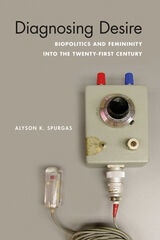
Diagnosing Desire
Biopolitics and Femininity into the Twenty-First CenturyAlyson K. Spurgas
The Ohio State University Press, 2020
In Diagnosing Desire: Biopolitics and Femininity into the Twenty-First Century, Alyson K. Spurgas examines the “new science of female sexuality” from a critical, sociological perspective, considering how today’s feminist-identified sex researchers study and manage women with low desire. Diagnosing Desire investigates experimental sex research that measures the disconnect between subjective and genital female arousal, contemporary psychiatric diagnoses for low female desire, new models for understanding women’s sexual response, and cutting-edge treatments for low desire in women—including from the realms of mindfulness and alternative healing.
Spurgas makes the case that, together, all of these technologies create a “feminized responsive desire framework” for understanding women’s sexuality, and that this, in fact, produces women’s sexuality as a complex problem to be solved. The biggest problem, Spurgas argues, is that gendered and sexualized trauma—including as it is produced within technoscientific medicine itself—is too often ignored in contemporary renderings. Through incisive textual analysis and in-depth qualitative research based on interviews with women with low desire, Spurgas argues for a more radical and communal form of care for feminized—and traumatized—populations, in opposition to biopolitical mandates to individualize and neoliberalize forms of self-care. Ultimately, this is a book not just about a specific diagnosis or dysfunction but about the material-discursive regimes that produce and regulate femininity.

Fantasizing the Feminine in Indonesia
Laurie J. Sears, ed.
Duke University Press, 1996
The contributors examine the ways in which Indonesian women and men are enmeshed in networks of power and then pursue the stories of those who, sometimes at great political risk, challenge these powers. In this juxtaposition of voices and stories, we see how indigenous patriarchal fantasies of feminine behavior merged with Dutch colonial notions of proper wives and mothers to produce the Indonesian government’s present approach to controlling the images and actions of women. Facing the theoretical challenge of building a truly cross-cultural feminist analysis, Fantasizing the Feminine takes us into an ongoing conversation that reveals the contradictions of postcolonial positionings and the fragility of postmodern identities.
This book will be welcomed by readers with interests in contemporary Indonesian politics and society as well as historians, anthropologists, and other scholars concerned with literature, gender, and cultural studies.
Contributors. Benedict R. O’G. Anderson, Sita Aripurnami, Jane Monnig Atkinson, Nancy K. Florida, Daniel S. Lev, Dédé Oetomo, Laurie J. Sears, Ann Laura Stoler, Saraswati Sunindyo, Julia I. Suryakusuma, Jean Gelman Taylor, Sylvia Tiwon, Anna Lowenhaupt Tsing, Diane L. Wolf
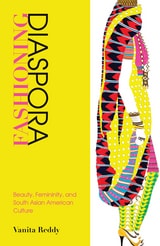
Fashioning Diaspora
Beauty, Femininity, and South Asian American CultureVanita Reddy
Temple University Press, 2015
One of the first books to consider beauty and fashion as a point of entry into an examination of South Asian diasporic public cultures, Fashioning Diaspora examines a range of literature, visual art, and live performance. Through careful analyses of novels by Bharati Mukherjee and Jhumpa Lahiri, young adult literature, performance art by Shailja Patel, as well as objects of popular culture including an Indian American fashion doll, and beauty and adornment practices, Reddy challenges fashion and beauty as a set of dematerialized, overly commodified cultural practices. She argues instead that beauty and fashion structure South Asian Americans’ uneven access to social mobility, capital, and citizenship, and demonstrates their varying capacities to produce social attachments across national, class, racial, gender, and generational divides.

Femininity in Flight
A History of Flight AttendantsKathleen M. Barry
Duke University Press, 2007
From the moment the first stewardesses took flight in 1930, flight attendants became glamorous icons of femininity. For decades, airlines hired only young, attractive, unmarried white women. They marketed passenger service aloft as an essentially feminine exercise in exuding charm, looking fabulous, and providing comfort. The actual work that flight attendants did—ensuring passenger safety, assuaging fears, serving food and drinks, all while conforming to airlines’ strict rules about appearance—was supposed to appear effortless; the better that stewardesses performed by airline standards, the more hidden were their skills and labor. Yet today flight attendants are acknowledged safety experts; they have their own unions. Gone are the no-marriage rules, the mandates to retire by thirty-two. In Femininity in Flight, Kathleen M. Barry tells the history of flight attendants, tracing the evolution of their glamorized image as ideal women and their activism as trade unionists and feminists.
Barry argues that largely because their glamour obscured their labor, flight attendants unionized in the late 1940s and 1950s to demand recognition and respect as workers and self-styled professionals. In the 1960s and 1970s, flight attendants were one of the first groups to take advantage of new laws prohibiting sex discrimination. Their challenges to airlines’ restrictive employment policies and exploitive marketing practices (involving skimpy uniforms and provocative slogans such as “fly me”) made them high-profile critics of the cultural mystification and economic devaluing of “women’s work.” Barry combines attention to the political economy and technology of the airline industry with perceptive readings of popular culture, newspapers, industry publications, and first-person accounts. In so doing, she provides a potent mix of social and cultural history and a major contribution to the history of women’s work and working women’s activism.

From Bananas to Buttocks
The Latina Body in Popular Film and CultureEdited by Myra Mendible
University of Texas Press, 2007
From the exuberant excesses of Carmen Miranda in the "tutti frutti hat" to the curvaceous posterior of Jennifer Lopez, the Latina body has long been a signifier of Latina/o identity in U.S. popular culture. But how does this stereotype of the exotic, erotic Latina "bombshell" relate, if at all, to real Latina women who represent a wide spectrum of ethnicities, national origins, cultures, and physical appearances? How are ideas about "Latinidad" imagined, challenged, and inscribed on Latina bodies? What racial, class, and other markers of identity do representations of the Latina body signal or reject?
In this broadly interdisciplinary book, experts from the fields of Latina/o studies, media studies, communication, comparative literature, women's studies, and sociology come together to offer the first wide-ranging look at the construction and representation of Latina identity in U.S. popular culture. The authors consider such popular figures as actresses Lupe Vélez, Salma Hayek, and Jennifer Lopez; singers Shakira and Celia Cruz; and even the Hispanic Barbie doll in her many guises. They investigate the media discourses surrounding controversial Latinas such as Lorena Bobbitt and Marisleysis González. And they discuss Latina representations in Lupe Solano's series of mystery books and in the popular TV shows El Show de Cristina and Laura en América. This extensive treatment of Latina representation in popular culture not only sheds new light on how meaning is produced through images of the Latina body, but also on how these representations of Latinas are received, revised, and challenged.

From Klein to Kristeva
Psychoanalytic Feminism and the Search for the "Good Enough" MotherJanice Doane and Devon Hodges
University of Michigan Press, 1993

Gender, Sexuality, and the Cold War
A Global PerspectivePhilip E. Muehlenbeck
Vanderbilt University Press, 2017
Gender, Sexuality, and the Cold War brings together a diverse group of scholars whose combined research spans fifteen countries across five continents, claiming a place as the first volume to examine how issues of gender and sexuality impacted both the domestic and foreign policies of states, far beyond the borders of the United States, during the tumult of the Cold War.
Table of Contents
Preface
Introduction: Hidden in Plain Sight: The Histories of Gender and Sexuality during the Cold War
Marko Dumančić
Part I: Sexuality
Faceless and Stateless: French Occupation Policy toward Women and Children in Postwar Germany (1945-1949)
Katherine Rossy
Patriarchy and Segregation: Policing Sexuality in US-Icelandic Military Relations
Valur Ingimundarson
Queering Subversives in Cold War Canada
Patrizia Gentile
"Nonreligious Activities": Sex, Anticommunism, and Progressive Christianity in Late Cold War Brazil
Benjamin A. Cowan
Manning the Enemy: US Perspectives on International Birthrates during the Cold War
Kathleen A. Tobin
Part II: Femininities
Indian Peasant Women's Activism in a Hot Cold War
Elisabeth Armstrong
The Medicalization of Childhood in Mexico during the Early Cold War, 1945-1960
Nichole Sanders
Africa's Kitchen Debate: Ghanaian Domestic Space in the Age of the Cold War
Jeffrey S. Ahlman
Mobilizing Women? State Feminisms in Communist Czechoslovakia and Socialist Egypt
May Hawas and Philip E. Muehlenbeck
A Vietnamese Woman Directs the War Story: Duc Hoan, 1937-2003
Karen Turner
Global Feminism and Cold War Paradigms: Women's International NGOs and the United Nations, 1970-1985
Karen Garner
Part III: Masculinities
"Men of the World" or "Uniformed Boys"? Hegemonic Masculinity and the British Army in the Era of the Korean War
Grace Huxford
Yuri Gagarin and Celebrity Masculinity in Soviet Culture
Erica L. Fraser

Impossible Purities
Blackness, Femininity, and Victorian CultureJennifer DeVere Brody
Duke University Press, 1998
Opening with a reading of Daniel Defoe’s “A True-Born Englishman,” which posits the mixed origins of English identity, Brody goes on to analyze mulattas typified by Rhoda Swartz in William Thackeray’s Vanity Fair, whose mixed-race status reveals the “unseemly origins of English imperial power.” Examining Victorian stage productions from blackface minstrel shows to performances of The Octoroon and Uncle Tom’s Cabin, she explains how such productions depended upon feminized, “black” figures in order to reproduce Englishmen as masculine white subjects. She also discusses H.G. Wells’s The Island of Dr. Moreau in the context of debates about the “new woman,” slavery, and fears of the monstrous degeneration of English gentleman. Impossible Purities concludes with a discussion of Bram Stoker’s novella, “The Lair of the White Worm,” which brings together the book’s concerns with changing racial representations on both sides of the Atlantic.
This book will be of interest to scholars in Victorian studies, literary theory, African American studies, and cultural criticism.

Interior Femme
PoemsStephanie Berger
University of Nevada Press, 2022
The poems offer layered perspectives fused with multiple versions of female representation, as if to underscore the burden of responsibility, inherited shame, and awesome power that comes with the position women have occupied throughout history. Berger reveals a woman critically wounded—representing the totality of the Western feminine imaginary. Lyrically complex, sometimes surreal, and often ekphrastic in style and content, Interior Femme simultaneously offers heartbreak, laughter, comfort, and empowerment.

Male Delivery
Reproduction, Effeminacy, and Pregnant Men in Early Modern SpainSherry Velasco
Vanderbilt University Press, 2006
Men were increasingly taking over medical duties--especially surrounding childbirth--usually left to women and, as their medical knowledge increased, they became aware of bodies and behaviors--both male and female--that transgressed gender norms. The anxieties about men who acted in ways seen as increasingly womanly (from acting effeminately to participating in homosexual activity) played out in the character of pregnant Juan Rana.
Then, Velasco turns to Hollywood and asks if we might not use the lessons of Juan Rana to help explain why contemporary America is also fascinated by the idea of male pregnancy--think Arnold Schwarzenegger in Junior--and our increasing anxiety over the changing face of masculinity in our own culture.
Masculinity and Femininity in the MMPI-2 and MMPI-A
Hale Martin
University of Minnesota Press, 2010
Martin and Finn consider the factor structure and correlates of masculinity and femininity in the MMPI in multiple samples. Through their analyses, they are able to address such questions as: Is there such a thing as masculinity/femininity? If so, are masculinity and femininity separate constructs, or are they opposite ends of a bipolar dimension? What are the core aspects of masculinity and femininity? Are they the same for men and women? Do the meanings of masculinity and femininity vary across the human life span and in different cultures? To what extent are masculinity and femininity biologically or socially determined? Can masculinity and femininity be adequately measured by the MMPI-2 and MMPI-A?
This insightful work uses solid empirical methods to clarify significant constructs. It will be an essential resource for researchers in the areas of personality, psychological assessment, and gender studies, as well as for clinicians working with clients who have nontraditional gender identities.
Masculinity and Femininity
Their Psychological Dimensions, Correlates, and AntecedentsBy Janet T. Spence and Robert L. Helmreich
University of Texas Press, 1978
Many societies assign sharply distinguished roles to men and women. Personality differences, as well as physical differences, between men and women are used to justify these different sex roles, and women are seen as more emotionally and interpersonally sensitive than men, while men are said to be more competent, achievement oriented, and assertive than women. A widely held view is that not only do men and women differ but that possession of "masculine" characteristics precludes possession of "feminine" characteristics. This bipolar conception has led to the definition of masculinity and femininity as opposites. Acceptance of this idea has caused social scientists and laypersons to consider men and women who possess cross-sex personality characteristics as less emotionally healthy and socially adjusted than those with sex-appropriate traits. Previous research by the authors and others, done almost exclusively with college students, has shown, however, that masculinity and femininity do not relate negatively to each other, thus supporting a dualistic rather than a bipolar conception of these two psychological dimensions.
Spence and Helmreich present data showing that the dualistic conception holds for a large number of groups, varying widely in age, geographical location, socioeconomic status, and patterns of interest, whose psychological masculinity and femininity were measured with an objective instrument, the Personality Attributes Questionnaire, devised by the authors. Many individuals are shown to be appropriately sex-typed; that is, men tend to be high in masculinity and low in femininity and women the reverse. However, a substantial number of men and women are androgynous—high in both masculine and feminine characteristics—while some are not high in either. Importantly, the authors find that androgynous individuals display more self-esteem, social competence, and achievement orientation than individuals who are strong in either masculinity or femininity or are not strong in either.
One of the major contributions of the work is the development of a new, multifaceted measure of achievement motivation (the Work and Family Orientation Questionnaire), which can be used successfully to predict behavior in both males and females and is related to masculinity and femininity in both sexes.
In addition to investigating the correlates of masculinity and femininity, the authors attempt to isolate parental factors that contribute to the development of these characteristics and achievement motivation. The book includes analyses of data from students on their perception of their parents, which enable the authors to examine the influence of parental masculinity and femininity and parental behaviors and child-rearing attitudes on the development of masculinity and femininity and achievement motivation characteristics in their children. The important implications of these findings for theories of sex roles, personality development, and achievement motivation are examined.
Out for Glamour in Africa
A History of Black Urban Femininities in Drum MagazineWanjiru G. Mbure
University of Michigan Press, 2026
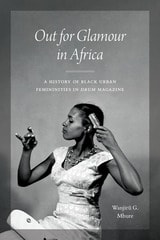
Out for Glamour in Africa critically reflects on how Black women utilized Drum magazine, a leading publication in Africa during the era of independence, for political empowerment and constructing notions of Black femininity. Wanjirũ G. Mbure terms the concept of femme urbAfricana, a model of Black femininity depicted as urban, political, fashionable, paradoxically Afrocentric, heteronormative, and transnational. Foregrounding stories of the women who embodied these traits and the social, political, and economic forces that shaped their presence in Drum, Mbure argues that these representations of Black women from Africa, the Caribbean, Europe, and the United States produced a novel form of Black urban femininity. Utilizing a breadth of archival materials from cover girl photographs, advertisements, and columns, to readers’ comments, Mbure reveals the complex relationship between the Black urban woman and the era’s contested ideals within a transnational matrix.

Queen for a Day
Transformistas, Beauty Queens, and the Performance of Femininity in VenezuelaMarcia Ochoa
Duke University Press, 2014
Beauty pageants play an outsized role in Venezuela. The country has won more international beauty contests than any other. The femininity performed by Venezuelan women in high-profile, widely viewed pageants defines a kind of national femininity. Ochoa argues that as transformistas and misses work to achieve the bodies, clothing and makeup styles, and postures and gestures of this national femininity, they come to embody Venezuelan modernity.

The Complementarity of Women and Men
Philosophy, Theology, Psychology, and ArtPaul C. Vitz
Catholic University of America Press, 2021
The Crimes of Womanhood
Defining Femininity in a Court of LawA. Cheree Carlson
University of Illinois Press, 2014
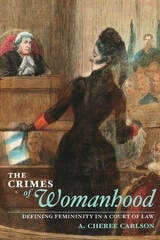
Carlson analyzes the situations of several women of varying historical stature, from the insanity trials of Mary Todd Lincoln and Lizzie Borden's trial for the brutal slaying of her father and stepmother, to lesser-known trials involving insanity, infidelity, murder, abortion, and interracial marriage. The insanity trial of Elizabeth Parsons Ware Packard, the wife of a minister, resulted from her attempts to change her own religion, while a jury acquitted Mary Harris for killing her married lover, suggesting that loss of virginity to an adulterous man was justifiable grounds for homicide. The popular conception of abortion as a "woman's crime" came to the fore in the case of Ann Loman (also known as Madame Restell), who performed abortions in New York both before and after it became a crime. Finally, Alice Rhinelander was sued for fraud by her new husband Leonard for "passing" as white, but the jury was more moved by the notion of Alice being betrayed as a woman by her litigious husband than by the supposed defrauding of Leonard as a white male. Alice won the case, but the image of womanhood as in need of sympathy and protection won out as well.
At the heart of these cases, Carlson reveals clearly just how narrow was the line that women had to walk, since the same womanly virtues that were expected of them--passivity, frailty, and purity--could be turned against them at any time. These trials of popular status are especially significant because they reflect the attitudes of the broad audience, indicate which forms of knowledge are easily manipulated, and allow us to analyze how the verdict is argued outside the courtroom in the public and press. With gripping retellings and incisive analysis of these scandalous criminal and civil cases, this book will appeal to historians, rhetoricians, feminist researchers, and anyone who enjoys courtroom drama.

The Feminine in Jungian Psychology and in Christian Theology
Ann Belford Ulanov
Northwestern University Press, 1971
Jung focuses on the human person and sees as central its mixture of masculine and feminine elements. In a time when so much is asserted and written about women in society—their rights, roles, identities, needs, and contributions—it is especially significant that Jung asserts the existence of the feminine as a key element, not only in women but in men as well. No less contested are the roles and identities of Christians. Ulanov brings into focus the deep and fascinating connections between theology and psychology.

The Hostess
Hospitality, Femininity, and the Expropriation of IdentityTracy McNulty
University of Minnesota Press, 2006
The meaning of hospitality in Western thought—from the Bible to Derrida
The evolution of the idea of hospitality can be traced alongside the development of Western civilization. Etymologically, the host is the “master,” but this identity is established through expropriation and loss—the best host is the one who gives the most, ultimately relinquishing what defines him as master.
In The Hostess, Tracy McNulty asks, What are the implications for personhood of sharing a person—a wife or daughter—as an act of hospitality? In many traditions, the hostess is viewed not as a subject but as the master’s property. A foreign presence that both sustains and undercuts him, the hostess embodies the interplay of self and other within the host’s own identity.
Here McNulty combines critical readings of the Bible and Pierre Klossowski’s trilogy The Laws of Hospitality with analyses of exogamous marital exchange, theological works from the Talmud to Aquinas, the writings of Kant and Nietzsche, and the theory of femininity in the work of Freud and Lacan. Ultimately, she contends, hospitality involves the boundary between the proper and the improper, affecting the subject as well as interpersonal relations.

The Wounded Woman
Healing the Father-Daughter RelationshipLinda Schierse Leonard
Ohio University Press, 1982
This book is an invaluable key to self-understanding. Using examples from her own life and the lives of her clients, as well as from dreams, fairy tales, myths, films, and literature, Linda Schierse Leonard, a Jungian analyst, exposes the wound of the spirit that both men and women of our culture bear—a wound that is grounded in a poor relationship between masculine and feminine principles.
Leonard speculates that when a father is wounded in his own psychological development, he is not able to give his daughter the care and guidance she needs. Inheriting this wound, she may find that her ability to express herself professionally, intellectually, sexually, and socially is impaired. On a broader scale, Leonard discusses how women compensate for cultural devaluation, resorting to passive submission (“the Eternal Girl”), or a defensive imitation of the masculine (“the Armored Amazon”).
The Wounded Woman shows that by understanding the father-daughter wound and working to transform it psychologically, it is possible to achieve a fruitful, caring relationship between men and women, between fathers and daughters, a relationship that honors both the mutuality and the uniqueness of the sexes.
Transcribing Class and Gender
Masculinity and Femininity in Nineteenth-Century Courts and OfficesCarole Srole
University of Michigan Press, 2012
"Drawing upon census data, trade periodicals devoted to stenography and court reporting, the writings of educational reformers, and fiction, Srole allows us to better understand the roles that gender and work played in the formation of middle-class identity. Clearly written and thoroughly researched, her book reminds us of the contradictions that both men and women faced as they navigated changes in the labor market and sought to realize a modern professional identity."
---Thomas Augst, New York University
Transcribing Class and Gender explores the changing meanings of clerical work in nineteenth-century America, focusing on the discourse surrounding that work. At a time when shorthand transcription was the primary method of documenting business and legal communications and transactions, most stenographers were men, but changing technology saw the emergence of women in the once male-dominated field. Carole Srole argues that this shift placed stenographers in a unique position to construct a new image of the professional man and woman and, in doing so, to redefine middle- and working-class identities.
Many male court reporters emphasized their professionalism, portraying themselves as educated language experts as a way to elevate themselves above the growing numbers of female and working-class stenographers and typewriter operators. Meanwhile, women in the courts and offices were confronting the derogatory image of the so-called Typewriter Girl who cared more about her looks, clothing, and marriage prospects than her job. Like males in the field, women responded by fashioning a gendered professional image---one that served to combat this new version of degraded female labor while also maintaining traditional ideals of femininity.The study is unique in the way it reads and analyzes popular fiction, stenography trade magazines, the archives of professional associations, and writings by educational reformers to provide new perspectives on this history. The author challenges the common assumption that men and women clerks had separate work cultures and demonstrates how each had to balance elements of manhood and womanhood in the drive toward professionalism and the construction of a new middle-class image. Transcribing Class and Gender joins the recent scholarship that employs cultural studies approaches to class and gender without abandoning the social history valuation of workers' experiences.
Carole Srole is Professor of History at California State University, Los Angeles.
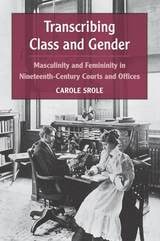
Photo: A female stenographer working for an actuary in 1897. Courtesy Metlife Archives.

Ventures into Childland
Victorians, Fairy Tales, and FemininityU. C. Knoepflmacher
University of Chicago Press, 1998
"Ventures into Childland is acute, well written and stimulating. It also has a political purpose, to insist on the importance of protecting and nurturing children, imaginatively and physically."—Jan Marsh, Times Literary Supplement
"A provocative and interesting book about Victorian culture."—Library Journal