Results by title
3 books match the query 'Ferguson, John'

A Companion to Greek Tragedy
By John Ferguson
University of Texas Press, 1972
This handbook provides students and scholars with a highly readable yet detailed analysis of all surviving Greek tragedies and satyr plays. John Ferguson places each play in its historical, political, and social context—important for both Athenian and modern audiences—and he displays a keen, discriminating critical competence in dealing with the plays as literature.
Ferguson is sensitive to the meter and sound of Greek tragedy, and, with remarkable success, he manages to involve even the Greekless reader in an actual encounter with the Greek as poetry. He examines language and metrics in relation to each tragedian's dramatic purpose, thus elucidating the crucial dimension of technique that other handbooks, mostly the work of philologists, renounce in order to concentrate on structure and plot. The result is perceptive criticism in which the quality of Ferguson's scholarship vouches for what he sees in the plays.
The book is prefaced with a general introduction to ancient Greek theatrical production, and there is a brief biographical sketch of each tragedian. Footnotes are avoided: the object of this handbook is to introduce readers to the plays as dramatic poetry, not to detail who said what about them. There is an extensive bibliography for scholars and a glossary of Greek words to assist the student with the operative moral and stylistic terms of Greek tragedy.
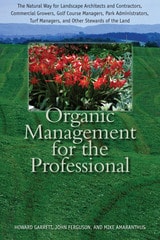
Organic Management for the Professional
The Natural Way for Landscape Architects and Contractors, Commercial Growers, Golf Course Managers, Park Administrators, Turf Managers, and Other Stewards of the LandBy Howard Garrett, John Ferguson, and Mike Amaranthus
University of Texas Press, 2012
Can you manage the landscape of a golf course, city park, or corporate campus without synthetic fertilizers and toxic pesticides? Absolutely! Organic landscaping is not only possible on a large scale, but it also makes sense both economically and environmentally. It promotes healthy soils and plants, which require less water and sequester more carbon—a winning combination for both your bottom line and the planet’s fight against resource depletion and global warming. Organic programs on a commercial scale have enormous potential to make a difference in the quality of our environment, our use of fuels, and our climate. And as those who have already converted to organics have discovered, they also cost a lot less over the long term.
Organic Management for the Professional is the first comprehensive guide to “going green” in large-scale landscaping. Nationally recognized organic gardening expert Howard Garrett, with associates John Ferguson and Mike Amaranthus, not only explains in detail how to manage projects with natural organic techniques, but also presents the material in clear, simple terms so that commercial and institutional property owners can understand what to ask of their landscape architects, contractors, growers, and maintenance people. They give detailed, proven instructions for the key components of organic landscaping—soil building, correct planting techniques, fertilizing, pest control, compost, and mulch. Then they show how to apply these organic methods in large-scale landscaping, commercial growing (orchards, tree farms, nurseries, and greenhouse operations), and recreational properties (golf courses, parks, and sports fields).
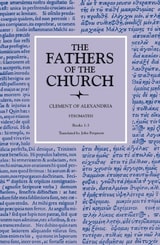
Stromateis, Books 1–3
Catholic University of America Press, 1991