Results by title
9 books match the query 'Fetus'
Cultural Conceptions
On Reproductive Technologies and the Remaking of LifeValerie Hartouni
University of Minnesota Press, 1997

Fetal Rights, Women's Rights
Gender Equality in the WorkplaceSuzanne U. Samuels
University of Wisconsin Press, 1995
In the late 1970s and throughout the 1980s, many private employers in the United States enacted fetal protection policies that barred fertile women—that is, women who had not been surgically sterilized—from working in jobs that might expose fetuses to toxins. In Fetal Rights, Women’s Rights, Suzanne Samuels analyzes these policies and the ambiguous responses to them by federal and state courts, legislatures, administrative agencies, litigants, and interest groups. She poses provocative questions about the implicit links between social welfare concerns and paternalism in the workplace, including: are women workers or wombs?
Placing the fetal protection controversy within the larger societal debate about gender roles, Samuels argues that governmental decision-makers confuse sex, which is based solely on biological characteristics, with gender, which is based on societal conceptions. She contends that the debate about fetal protection policies brought this ambiguity into stark relief, and that the response of policy-makers was rooted in assumptions about gender roles. Judges, legislators, and regulators used gender as a proxy, she argues, to sidestep the question of whether fetal protection policies could be justified by the biological differences between women and men.
The fetal protection controversy raises a number of concerns about women's role in the workplace. Samuels discusses the effect on governmental policies of the ongoing controversy over abortion rights and the debates between egalitarian and relational feminists about the treatment of women at work. A timely and engrossing study, Fetal Rights, Women's Rights details the pattern of gender politics in the United States and demonstrates the broader ramifications of gender bias in the workplace.
Medication in Maternity
Infant Exposure and Maternal InformationYvonne Brackbill, Karen McManus, and Lynn Woodward
University of Michigan Press, 1985

Smoking and Pregnancy
The Politics of Fetal ProtectionOaks, Laury
Rutgers University Press, 2001
The 1966 edition of the leading medical textbook states that pregnant women can safely smoke half a pack of cigarettes a day. Yet today, women who smoke during pregnancy are among the most vilified figures in public health campaigns. Laury Oaks argues this shift is not due solely to medical findings indicating that cigarette smoking may harm the fetus. Also responsible are a variety of social factors that converged more than a decade ago to construct the demonized category of the “pregnant smoker.”
This book charts the emergence of smoking during pregnancy as a public health concern and social problem. Oaks looks at the emphasis public health educators place on individual responsibility, the current legal and social assertion of fetal personhood, the changing expectations of pregnant and prepregnant women, and the advent of antismoking campaigns. She explores how public health educators discuss “the problem” with one another, how they communicate with pregnant smokers, and how these women themselves understand the “risk” of fetal harm. Finally, Oaks discusses the various meanings of “objective” statistics on the effects of smoking on the fetus, exploring the significance of cultural context in assessing the relative importance of those numbers. She argues that rather than bombarding pregnant women with statistics, health educators should consider the daily lives of these women and their socioeconomic status to understand why some women choose to smoke during pregnancy. Without downplaying the seriousness of the health risks that smoking poses to women and their babies, the book supports new efforts that challenge the moral policing of pregnant smokers.
Surrogates and Other Mothers
The Debates over Assisted ReproductionRuth Macklin
Temple University Press, 1994
Developments in new reproductive technologies have confounded public policy and created legal and ethical quandaries for professionals and ordinary citizens alike. Drawing from the most current medical, psychiatric, legal, and bioethical literature, Ruth Macklin, noted author and philosopher, presents the arguments surrounding these advances through the voices of fictional characters. The episodes she narrates are based on real-life situations, both from her personal experience as a hospital ethicist and from the public arena, where such controversial court cases as that of Baby M have sparked a multitude of disparate opinions on surrogacy, in vitro fertilization, and egg and sperm donor program.
Macklin's hypoethical tale centers on Bonnie and Larry, an infertile couple longing for a child. As the couple's quest to become parents begins, they discover that Bonnie is physically incapable of carrying a pregnancy to term. Desperate to explore their options, Bonnie and Larry attempt adoption but are rejected by the agency without explanation. Finally, they contemplate surrogacy as their last chance to have a child. Seeking advice and answers, they consult health professionals, lawyers, pastoral counselors, and a bioethicist. In the course of this complicated and often painful decision-making process, they attend meetings of a government task force on reproduction where they hear both radical and liberal feminist positions.
Their experiences with friends, family members, two surrogates, hospital ethics committees, and special interest groups underscore the difficulty of coming to a consensus on such issues as AIDS, the right to privacy, premenstrual syndrome, the violation of surrogate contracts, and the responsibilities of therapists and physicians to their patients and to the community at large.
Tangled Diagnoses
Prenatal Testing, Women, and RiskIlana Löwy
University of Chicago Press, 2018
Tangled Diagnoses examines the multiple consequences of the widespread diffusion of this medical innovation. Prenatal testing, Ilana Löwy argues, has become mainly a risk-management technology—the goal of which is to prevent inborn impairments, ideally through the development of efficient therapies but in practice mainly through the prevention of the birth of children with such impairments. Using scholarship, interviews, and direct observation in France and Brazil of two groups of professionals who play an especially important role in the production of knowledge about fetal development—fetopathologists and clinical geneticists—to expose the real-life dilemmas prenatal testing creates, this book will be of interest to anyone concerned with the sociopolitical conditions of biomedical innovation, the politics of women’s bodies, disability, and the ethics of modern medicine.
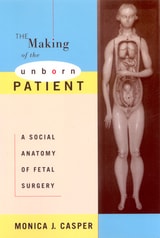
The Making of the Unborn Patient
A Social Anatomy of Fetal SurgeryCasper, Monica J
Rutgers University Press, 1998
It is now possible for physicians to recognize that a pregnant woman's fetus is facing life-threatening problems, perform surgery on the fetus, and if it survives, return it to the woman's uterus to finish gestation. Although fetal surgery has existed in various forms for three decades, it is only just beginning to capture the public's imagination. These still largely experimental procedures raise all types of medical, political and ethical questions. Who is the patient? What are the technical difficulties involved in fetal surgery? How do reproductive politics seep into the operating room, and how do medical definitions and meanings flow out of medicine and into other social spheres? How are ethical issues defined in this practice and who defines them? Is fetal surgery the kind of medicine we want? What is involved in reframing fetal surgery as a women's health issue, rather than simply a pediatric concern? In this ethnographic study of the social, cultural and historical aspects of fetal surgery, Monica Casper addresses these questions. The Making of the Unborn Patient examines two important and connected events of the second half of the 20th century: the emergence of fetal surgery as a new medical specialty and the debut of the unborn patient.
The Maternal Imprint
The Contested Science of Maternal-Fetal EffectsSarah S. Richardson
University of Chicago Press, 2021
The idea that a woman may leave a biological trace on her gestating offspring has long been a commonplace folk intuition and a matter of scientific intrigue, but the form of that idea has changed dramatically over time. Beginning with the advent of modern genetics at the turn of the twentieth century, biomedical scientists dismissed any notion that a mother—except in cases of extreme deprivation or injury—could alter her offspring’s traits. Consensus asserted that a child’s fate was set by a combination of its genes and post-birth upbringing.
Over the last fifty years, however, this consensus was dismantled, and today, research on the intrauterine environment and its effects on the fetus is emerging as a robust program of study in medicine, public health, psychology, evolutionary biology, and genomics. Collectively, these sciences argue that a woman’s experiences, behaviors, and physiology can have life-altering effects on offspring development.
Tracing a genealogy of ideas about heredity and maternal-fetal effects, this book offers a critical analysis of conceptual and ethical issues—in particular, the staggering implications for maternal well-being and reproductive autonomy—provoked by the striking rise of epigenetics and fetal origins science in postgenomic biology today.
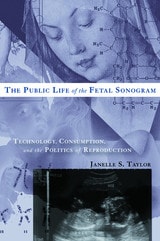
The Public Life of the Fetal Sonogram
Technology, Consumption, and the Politics of ReproductionTaylor, Janelle S
Rutgers University Press, 2008
This book offers much-needed critical awareness of the less easily recognized ways in which ultrasound technology is profoundly social and political in the United States today.