Results by title
5 books match the query 'Fifteenth Century'
Form and Reform
Reading across the Fifteenth CenturyShannon Gayk and Kathleen Tonry
The Ohio State University Press, 2011
Form and Reform: Reading across the Fifteenth Century challenges the idea of any definitive late medieval moment and explores instead the provocatively diverse, notably untidy, and very rich literary culture of the age. These essays from leading medievalists, edited by Shannon Gayk and Kathleen Tonry, both celebrate and complicate the reemergence of the fifteenth century in literary studies. Moreover, this is the first collection to concentrate on the period between 1450 and 1500—the crucial five decades, this volume argues, that must be understood to comprehend the entire century’s engagement with literary form in shifting historical contexts.
Persian Bookbindings of the Fifteenth Century
A Contribution from the Research Seminary in Islamic ArtMehmet Aga-Oglu
University of Michigan Press, 1935
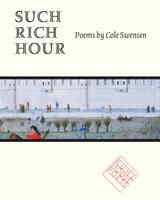
Such Rich Hour
Cole Swensen
University of Iowa Press, 2001
Covering a variety of subjects—from the plague and the first danse macabre to the development of perspective and recipes for pigments—the poems in Cole Swensen's new collection are set in fifteenth-century France and explore the end of the medieval world and its gradual transition into the Renaissance. The collection is loosely based on the calendar illuminations from the Très Riches Heures, the well-known book of hours, and uses them to explore the ways that the arts—visual and verbal—interact with history, at times prefiguring it, at times shaping it, and at times offering wry commentary or commiseration.
The Church, the Councils, and Reform
The Legacy of the Fifteenth CenturyGerald Christianson
Catholic University of America Press, 2008
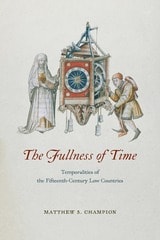
The Fullness of Time
Temporalities of the Fifteenth-Century Low CountriesMatthew S. Champion
University of Chicago Press, 2017
The Fullness of Time asks how the passage of time in the Low Countries was ordered by the rhythms of human action, from the musical life of a cathedral to the measurement of time by clocks and calendars, the work habits of a guildsman to the devotional practices of the laity and religious orders. Through a series of transdisciplinary case studies, it explores the multiple ways that objects, texts and music might themselves be said to engage with, imply, and unsettle time, shaping and forming the lives of the inhabitants of the fifteenth-century Low Countries. Champion reframes the ways historians have traditionally told the history of time, allowing us for the first time to understand the rich and varied interplay of temporalities in the period.