Results by title

5 books match the query 'Film archives'
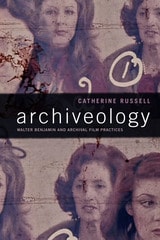
cover of Archiveology: Walter Benjamin and Archival Film Practices

Archiveology

Walter Benjamin and Archival Film Practices

Catherine Russell

Duke University Press, 2018
In Archiveology Catherine Russell uses the work of Walter Benjamin to explore how the practice of archiveology—the reuse, recycling, appropriation, and borrowing of archival sounds and images by filmmakers—provides ways to imagine the past and the future. Noting how the film archive does not function simply as a place where moving images are preserved, Russell examines a range of films alongside Benjamin's conceptions of memory, document, excavation, and historiography. She shows how city films such as Nicole Védrès's Paris 1900 (1947) and Thom Andersen's Los Angeles Plays Itself (2003) reconstruct notions of urban life and uses Christian Marclay's The Clock (2010) to draw parallels between critical cinephilia and Benjamin's theory of the phantasmagoria. Russell also discusses practices of collecting in archiveological film and rereads films by Joseph Cornell and Rania Stephan to explore an archival practice that dislocates and relocates the female image in film. In so doing, she not only shows how Benjamin's work is as relevant to film theory as ever; she shows how archiveology can awaken artists and audiences to critical forms of history and memory.
[more]
cover of Moving Image and Sound Collections for Archivists

Moving Image and Sound Collections for Archivists

Anthony Cocciolo

Society of American Archivists, 2017
Moving Image and Sound Collections for Archivists by Anthony Cocciolo is for every archivist (or archivist in training) who has unearthed some carrier of moving image and sound and wondered what to do. Combining best practices with guidance for specific media formats, Cocciolo applies concepts of appraisal, description, and accessioning to audiovisual collections, providing a solid grounding for archivists in environments where resources for description, digitization, and storage are scarce.
[more]
cover of Research Guide to Japanese Film Studies

Research Guide to Japanese Film Studies

Abé Mark Nornes and Aaron Gerow

University of Michigan Press, 2009
The Research Guide to Japanese Film Studies provides a snapshot of all the archival and bibliographic resources available to students and scholars of Japanese cinema. Among the nations of the world, Japan has enjoyed an impressively lively print culture related to cinema. The first film books and periodicals appeared shortly after the birth of cinema, proliferating wildly in the 1910s with only the slightest pause in the dark days of World War II. The numbers of publications match the enormous scale of film production, but with the lack of support for film studies in Japan, much of it remains as uncharted territory, with few maps to negotiate the maze of material.
This book is the first comprehensive guide ever published for approaching the complex archive for Japanese cinema. It lists all the libraries and film archives in the world with significant collections of film prints, still photographs, archival records, books, and periodicals. It provides a full annotated bibliography of the core books and magazines for the field. And it supplies hints for how to find and access materials for any research project. Above and beyond that, Nornes and Gerow’s Research Guide to Japanese Film Studies constitutes a comprehensive overview of the impressive dimensions and depth of the print culture surrounding Japanese film, and a guideline for future research in the field. This is an essential book for anyone seriously thinking about Japan and its cinema.
[more]
cover of The Archival Afterlives of Philippine Cinema

The Archival Afterlives of Philippine Cinema

Bliss Cua Lim

Duke University Press, 2024
Drawing on cultural policy, queer and feminist theory, materialist media studies, and postcolonial historiography, Bliss Cua Lim analyzes the crisis-ridden history of Philippine film archiving—a history of lost films, limited access, and collapsed archives. Rather than denigrate underfunded Philippine audiovisual archives in contrast to institutions in the global North, The Archival Afterlives of Philippine Cinema shows how archival practices of making do can inspire alternative theoretical and historical approaches to cinema. Lim examines formal state and corporate archives, analyzing restorations of the last nitrate film and a star-studded lesbian classic as well as archiving under the Marcos dictatorship. She also foregrounds informal archival efforts: a cinephilic video store specializing in vintage Tagalog classics; a microcuratorial initiative for experimental films; and guerilla screenings for rural Visayan audiences. Throughout, Lim centers the improvisational creativity of audiovisual archivists, collectors, advocates, and amateurs who embrace imperfect access in the face of inhospitable conditions.
[more]
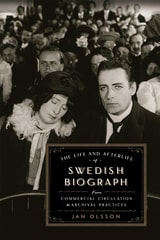
cover of The Life and Afterlife of Swedish Biograph: From Commercial Circulation to Archival Practices

The Life and Afterlife of Swedish Biograph

From Commercial Circulation to Archival Practices

Jan Olsson

University of Wisconsin Press, 2022

Sweden’s early film industry was dominated by Swedish Biograph (Svenska Biografteatern), home to star directors like Victor Sjöström and Mauritz Stiller. It is nostalgically remembered as the generative site of a nascent national artform, encapsulating a quintessentially Nordic aesthetic—the epicenter of Sweden’s cinematic Golden Age. In The Life and Afterlife of Swedish Biograph, veteran film scholar Jan Olsson takes a hard look at this established, romanticized narrative and offers a far more complete, complex, and nuanced story.

Nearly all of the studio’s original negatives were destroyed in an explosion in 1941, but Olsson’s comprehensive archival research shows how the company operated in a commercial, international arena, and how it was influenced not just by Nordic aesthetics or individual genius but also by foreign audiences’ expectations, technological demands, Hollywood innovations, and the gritty back-and-forth between economic pressures, government interference, and artistic desires. Olsson’s focus is wide, encompassing the studio’s production practices, business affairs, and cinematographic conventions, as well as the latter-day archival efforts that both preserved and obscured parts of Swedish Biograph’s story, helping construct the company’s rosy legacy. The result is a necessary rewrite to Swedish film historiography and a far fuller picture of a canonical film studio.

[more]