Results by title

2 books match the query 'Fin de Siècle Vienna'
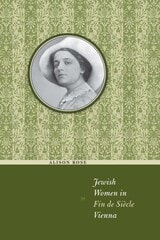
cover of Jewish Women in Fin de Siècle Vienna

Jewish Women in Fin de Siècle Vienna

By Alison Rose

University of Texas Press, 2008

Despite much study of Viennese culture and Judaism between 1890 and 1914, little research has been done to examine the role of Jewish women in this milieu. Rescuing a lost legacy, Jewish Women in Fin de Siècle Vienna explores the myriad ways in which Jewish women contributed to the development of Viennese culture and participated widely in politics and cultural spheres.

Areas of exploration include the education and family lives of Viennese Jewish girls and varying degrees of involvement of Jewish women in philanthropy and prayer, university life, Zionism, psychoanalysis and medicine, literature, and culture. Incorporating general studies of Austrian women during this period, Alison Rose also presents significant findings regarding stereotypes of Jewish gender and sexuality and the politics of anti-Semitism, as well as the impact of German culture, feminist dialogues, and bourgeois self-images.

As members of two minority groups, Viennese Jewish women nonetheless used their involvement in various movements to come to terms with their dual identity during this period of profound social turmoil. Breaking new ground in the study of perceptions and realities within a pivotal segment of the Viennese population, Jewish Women in Fin de Siècle Vienna applies the lens of gender in important new ways.
[more]
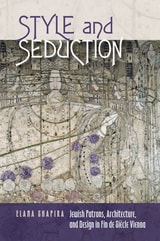
cover of Style and Seduction: Jewish Patrons, Architecture, and Design in Fin de Siècle Vienna

Style and Seduction

Jewish Patrons, Architecture, and Design in Fin de Siècle Vienna

Elana Shapira

Brandeis University Press, 2016

A recent surge of interest in Jewish patronage during the golden years of Vienna has led to the question, Would modernism in Vienna have developed in the same fashion had Jewish patrons not been involved? This book uniquely treats Jewish identification within Viennese modernism as a matter of Jews active fashioning of a new language to convey their aims of emancipation along with their claims of cultural authority. In this provocative reexamination of the roots of Viennese modernism, Elana Shapira analyzes the central role of Jewish businessmen, professionals, and writers in the evolution of the city’s architecture and design from the 1860s to the 1910s. According to Shapira, these patrons negotiated their relationship with their non-Jewish surroundings and clarified their position within Viennese society by inscribing Jewish elements into the buildings, interiors, furniture, and design objects that they financed, produced, and co-designed. In the first book to investigate the cultural contributions of the banker Eduard Todesco, the steel tycoon Karl Wittgenstein, the textile industrialist Fritz Waerndorfer, the author Peter Altenberg, the tailor Leopold Goldman, and many others, Shapira reconsiders theories identifying the crisis of Jewish assimilation as a primary creative stimulus for the Jewish contribution to Viennese modernism. Instead, she argues that creative tensions between Jews and non-Jews—patrons and designers who cooperated and arranged well-choreographed social encounters with one another—offer more convincing explanations for the formation of a new semantics of modern Viennese architecture and design than do theories based on assimilation. This thoroughly researched and richly illustrated book will interest scholars and students of Jewish studies, Vienna and Viennese culture, and modernism.
[more]