Results by title
3 books match the query 'Financial'

Essays in History
Financial, Economic, PersonalCharles P. Kindleberger
University of Michigan Press, 1999
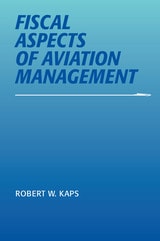
Fiscal Aspects of Aviation Management
Robert W. Kaps
Southern Illinois University Press, 2000
Although introductions to courses in finance exist for a variety of fields, Robert W. Kaps provides the first text to address the subject from an aviation viewpoint. Relying on his vast experience—twenty-plus years in the airline industry and more than thirty years in aviation—Kaps seeks not only to prepare students for careers in the aviation field but also to evoke in these students an excitement about the business. Specifically, he shows students how airlines, airports, and aviation are financed. Each chapter contains examples and illustrations and ends with suggested readings and references.
Following his discussion of financial management and accounting procedures, Kaps turns to financial management and sources of financial information. Here he discusses types of business organizations, corporate goals, business ethics, maximizing share price, and sources of financial information.
Kaps also covers debt markets, financial statements, air transport sector revenue generation, and air transport operating cost management, including cost administration and labor costs, fuel, and landing fees and rentals. He describes in depth air transport yield management systems and airport financing, including revenues, ownership, operations, revenue generation, funding, allocation of Air Improvement Program funds, bonds, and passenger facility charges.
Kaps concludes with a discussion of the preparation of a business plan, which includes advice about starting and running a business. He also provides two typical business plan outlines. While the elements of fiscal management in aviation follow generally accepted accounting principles, many nuances are germane only to the airline industry. Kaps provides a basic understanding of the principles that are applicable throughout the airline industry.

Product Design, Technology, and Social Change
A Short Cultural HistoryLaura Scherling
Intellect Books, 2024
This cultural history critically examines the development of product design, considering major milestones in the mass production of goods and services and aiming to incorporate a more inclusive worldview than traditional surveys of the topic.
The breadth and versatility of product design throughout history have been profound. Products have long supported the integration and interpretation of emerging technologies into our lives. These objects include everything from tools, accessories, furniture, and clothing to types of transportation, websites, and mobile applications. Products provide singular or multiple functions, are tangible and intangible, and in many instances have affected the quality of our lives by saving time or money or by increasing feelings of personal satisfaction. At the same time, many products have negatively affected people and the environment. For nearly every product that makes it into the hands of a consumer, there is also a designer who created it and someone who labored to make it.
An eye-opening survey of product design from preindustrial times to the present day, Product Design, Technology, and Social Change provides a thorough examination of the relationship between products, consumption, sustainability, politics, and social movements.