Results by title
5 books match the query 'Find'

"A Good Man is Hard to Find"
Flannery O'ConnorAsals, Frederick
Rutgers University Press, 1993
"A Good Man Is Hard to Find" is Flannery O'Connor's most famous and most discussed story. O'Connor herself singled it out by making it the title piece of her first collection and the story she most often chose for readings or talks to students. It is an unforgettable tale, both riveting and comic, of the confrontation of a family with violence and sudden death. More than anything else O'Connor ever wrote, this story mixes the comedy, violence, and religious concerns that characterize her fiction.
This casebook for the story includes an introduction by the editor, a chronology of the author's life, the authoritative text of the story itself, comments and letters by O'Connor about the story, critical essays, and a bibliography. The critical essays span more than twenty years of commentary and suggest several approaches to the story--formalistic, thematic, deconstructionist-- all within the grasp of the undergraduate, while the introduction also points interested students toward still other resources. Useful for both beginning and advanced students, this casebook provides an in-depth introduction to one of America's most gifted modern writers.

How to Find a Martian
A Fossil Hunter’s Guide to the Red PlanetSean McMahon
University of Chicago Press, 2027
Join today’s search for signs of alien life in fossil remains from prehistoric Mars, an Earth-like world that glittered with rivers, lakes, and deep blue seas.
Billions of years ago, there was another Earth in our solar system: the temperate and blue-streaked world of ancient Mars. Today, the rocky ruins of that lost world offer our best hope of finding signs of alien life. In How to Find a Martian, astrobiologist and paleontologist Sean McMahon argues that we may soon find fossils on Mars—perhaps even in our lifetime.
There are now thousands of astrobiologists around the world, using the tools of modern science to answer some of the most profound, intellectually exciting questions that have ever been asked: What is life? How does it evolve and proliferate across vast spans of space and time, and what forms might it take on alien worlds? The search for life on Mars is a mainstay of this research program, and it has never been more advanced, more sophisticated, or better funded than it is today. Although scientists have not yet found fossils on Mars, astrobiologist Sean McMahon says, we have at least learned how to find them. We now know which regions and landscapes on Mars could once have supported life and preserved its remains in rocks and minerals. We know how the remains of living organisms can end up woven into the texture of ancient rocks, transmuted into minerals or transcribed into the subtle language of fossil carbon molecules. But we have also learned to be cautious—and not to be fooled when non-living nature imitates the patterns of life.
Accessibly explaining trailblazing ideas and findings in astronomy, geology, microbiology, and paleontology, McMahon makes a persuasive and alluring case that we have the tools, ideas, methods, and missions to find past life on Mars.

Legal Reference for Librarians
How and Where to Find the AnswersPaul D. Healey
American Library Association, 2014
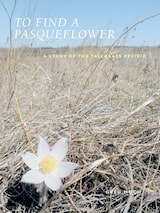
To Find a Pasqueflower
A Story of the Tallgrass PrairieGreg Hoch
University of Iowa Press, 2022
Hoch blends history, culture, and science into a unified narrative of the tallgrass prairie, with an emphasis on humans’ participation in its development and destruction. Hoch also demonstrates how variable and dynamic the prairie is, creating both challenges and opportunities for those who manage and restore and appreciate it.
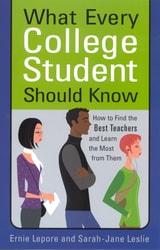
What Every College Student Should Know
How to Find the Best Teachers and Learn the Most from ThemLepore, Ernie
Rutgers University Press, 2002
Students do months of research before choosing just the right college, but once theyre on campus, how many of them actually research the professors who are teaching their classes? To optimize your college education you need to find your schools best teachers but how?
What Every College Student Should Know is a guide to discovering the best teachers at your school and learning everything you can from them. Here, the unique writing combination of a professor and a student provides you with perspectives from both sides of the equation. You'll learn:
-
- What questions to ask in selecting an instructor
- How to evaluate professors based on the first class sessions
- What to look for in a syllabus and grading policies
- How to identify a professors teaching style and how to adapt to it
-
- Advice on how to review your exam or paper with your professor
- Ways to build a relationship with a teacher and get invaluable feedback on your work
- Tips on how to get the best recommendations from proffessors