Results by title
19 books match the query 'Fires'
After Grenfell
Violence, Resistance and ResponseEdited by Dan Bulley, Jenny Edkins and Nadine El-Enany
Pluto Press, 2019
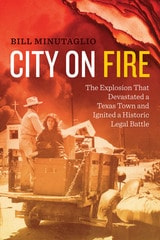
City on Fire
The Explosion that Devastated a Texas Town and Ignited a Historic Legal BattleBy Bill Minutaglio
University of Texas Press, 2014
First published in 2003, City on Fire is a gripping, intimate account of the explosions of two ships loaded with ammonium nitrate fertilizer that demolished Texas City, Texas, in April 1947, in one of the most catastrophic disasters in American history.
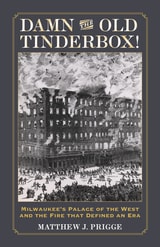
Damn the Old Tinderbox!
Milwaukee’s Palace of the West and the Fire that Defined an EraMatthew J. Prigge
Wisconsin Historical Society Press, 2019
Damn the Old Tinderbox! is the gripping tale of one of the Gilded Age’s forgotten calamities, a fire that remains among the deadliest unsolved arsons in American history, and a significant chapter in both the history of Milwaukee and the Midwest.
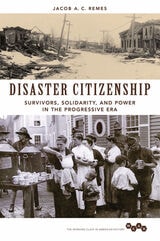
Disaster Citizenship
Survivors, Solidarity, and Power in the Progressive EraJacob Remes
University of Illinois Press, 2015
In Disaster Citizenship, Jacob A. C. Remes draws on histories of the Salem and Halifax events to explore the institutions--both formal and informal--that ordinary people relied upon in times of crisis. He explores patterns and traditions of self-help, informal order, and solidarity and details how people adapted these traditions when necessary. Yet, as he shows, these methods--though often quick and effective--remained illegible to reformers. Indeed, soldiers, social workers, and reformers wielding extraordinary emergency powers challenged these grassroots practices to impose progressive "solutions" on what they wrongly imagined to be a fractured social landscape.
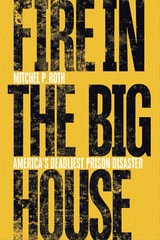
Fire in the Big House
America’s Deadliest Prison DisasterMitchel P. Roth
Ohio University Press, 2019
On April 21, 1930—Easter Monday—some rags caught fire under the Ohio Penitentiary’s dry and aging wooden roof, shortly after inmates had returned to their locked cells after supper. In less than an hour, 320 men who came from all corners of Prohibition-era America and from as far away as Russia had succumbed to fire and smoke in what remains the deadliest prison disaster in United States history.
Within 24 hours, moviegoers were watching Pathé’s newsreel of the fire, and in less than a week, the first iteration of the weepy ballad “Ohio Prison Fire” was released. The deaths brought urgent national and international focus to the horrifying conditions of America’s prisons (at the time of the fire, the Ohio Penitentiary was at almost three times its capacity). Yet, amid darkening world politics and the first years of the Great Depression, the fire receded from public concern.
In Fire in the Big House, Mitchel P. Roth does justice to the lives of convicts and guards and puts the conflagration in the context of the rise of the Big House prison model, local and state political machinations, and American penal history and reform efforts. The result is the first comprehensive account of a tragedy whose circumstances—violent unrest, overcrowding, poorly trained and underpaid guards, unsanitary conditions, inadequate food—will be familiar to prison watchdogs today.
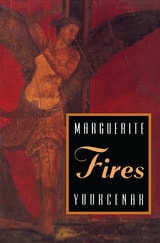
Fires
Marguerite Yourcenar
University of Chicago Press, 1994
"The unwritten novel among the fantasies and aphorisms of Fires is a classic tale."—Stephen Koch, New York Times Book Review
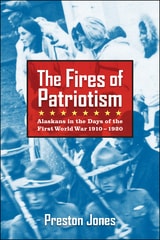
Fires of Patriotism
Alaskans in the Days of the First World War 1910-1920Preston Jones
University of Alaska Press, 2013
The Fires of Patriotism explores Alaska’s wartime experience, bringing to light new stories and new characters from a decade that shook the world. This multifaceted book explores the era through engaging stories and rare photos, offering a fresh perspective on World War I from a marginal land that forged its place in the greater unity of the country.
Fires on the Border
The Passionate Politics of Labor Organizing on the Mexican FronteraRosemary Hennessy
University of Minnesota Press, 2013
The history of the maquiladoras has been punctuated by workers’ organized resistance to abysmal working and living conditions. Over years of involvement in such movements, Rosemary Hennessy was struck by an elusive but significant feature of these struggles: the extent to which organizing is driven by attachments of affection and antagonism, belief, betrayal, and identification.
What precisely is the “affective” dimension of organizing for justice? Are affects and emotions the same? And how can their value be calculated? Fires on the Border takes up these questions of labor and community organizing—its “affect-culture”—on Mexico’s northern border from the early 1970s to the present day. Through these campaigns, Hennessy illuminates the attachments and identifications that motivate people to act on behalf of one another and that bind them to a common cause. The book’s unsettling, even jarring, narratives bring together empirical and ethnographic accounts—of specific campaigns, the untold stories of gay and lesbian organizers, love and utopian longing—in concert with materialist theories of affect and the critical good sense of Mexican organizers.
Teasing out the integration of affect-culture in economic relations and cultural processes, Hennessy provides evidence that sexuality and gender as strong affect attractors are incorporated in the harvesting of surplus labor. At the same time, workers’ testimonies confirm that the capacities for bonding and affective attachment, far from being entirely at the service of capital, are at the very heart of social movements devoted to sustaining life.
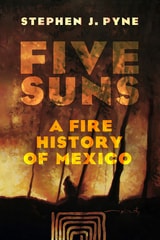
Five Suns
A Fire History of MexicoStephen J. Pyne
University of Arizona Press, 2024
Narrating Mexico’s evolution of fire through five eras, historian Stephen J. Pyne describes the pre-human, pre-Hispanic, colonial, industrializing (1880–1980), and contemporary (1980–2015) fire biography of this diverse and dynamic country. Creatively deploying the Aztec New Fire Ceremony and the “five suns” that it birthed, Pyne addresses the question, “Why does fire appear in Mexico the way it does?” Five Suns tells the saga through a pyric prism.
Mexico has become one of the top ten “firepowers” in the world today through its fire suppression capabilities, fire research, and industrial combustion, but also by those continuing customary practices that have become increasingly significant to a world that suffers too much combustion and too little fire.
Five Suns completes a North American fire-history trilogy written by Pyne over the past 40 years, complementing his histories of Canada and the United States.
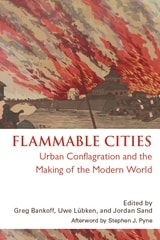
Flammable Cities
Urban Conflagration and the Making of the Modern WorldGreg Bankoff
University of Wisconsin Press, 2012
In most cities today, fire has been reduced to a sporadic and isolated threat. But throughout history the constant risk of fire has left a deep and lasting imprint on almost every dimension of urban society. This volume, the first truly global study of urban conflagration, shows how fire has shaped cities throughout the modern world, from Europe to the imperial colonies, major trade entrepôts, and non-European capitals, right up to such present-day megacities as Lagos and Jakarta. Urban fire may hinder commerce or even spur it; it may break down or reinforce barriers of race, class, and ethnicity; it may serve as a pretext for state violence or provide an opportunity for displays of state benevolence. As this volume demonstrates, the many and varied attempts to master, marginalize, or manipulate fire can turn a natural and human hazard into a highly useful social and political tool.
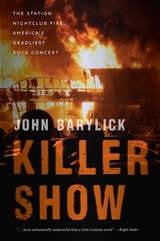
Killer Show
The Station Nightclub Fire, America’s Deadliest Rock ConcertJohn Barylick
University Press of New England, 2015
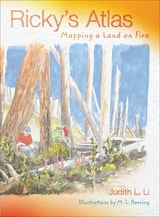
Ricky's Atlas
Mapping a Land on FireLi
Oregon State University Press, 2016
In this sequel to Ellie’s Log: Exploring the Forest Where the Great Tree Fell, Ricky Zamora brings his love of map-making and his boundless curiosity to the arid landscapes east of the Cascades Mountains. He arrives during a wild thunderstorm, and watches his family and their neighbors scramble to deal with a wildfire sparked by lightning. Joined by his friend Ellie, he sees how plants, animals, and people adjust to life with wildfires.
While hiking across a natural prairie, climbing up a fire tower, and studying historical photos and maps, Ricky and Ellie learn about the role of fire in shaping the landscape of the semi-arid plateau east of the mountains. They experience the scary days of wildfire in progress, explore a gritty site after a wildfire, and discover how some plants and animals depend on fire to survive.
Color pen-and-ink drawings accompany the text and vividly illustrate plants, animals, and events encountered in this exciting summer adventure. With his friend Ellie, Ricky creates a brightly colored diary of the fire, with maps, timelines, and sketches of what they see in this fire-prone land. Ricky’s notebook about his summer visit to his uncle’s ranch becomes an atlas of fire ecology, weather patterns, and life in the rain shadow.
Upper elementary kids will enjoy the mixture of amazing adventures with actual historical, physical, and ecological data about the region. Woven into the story are the small pleasures of ranch life, intriguing histories of Native Americans and early settlers, and almost unbelievable views of ancient fossils. Ricky and Ellie’s explorations, accompanied by their hand-written notes, introduce readers to a very special landscape and history east of the mountains.
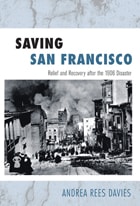
Saving San Francisco
Relief and Recovery after the 1906 DisasterAndrea Rees Davies
Temple University Press, 2011
Combining the experiences of ordinary people with urban politics and history, Saving San Francisco challenges the long-lived myth that the 1906 disaster erased social differences as it leveled the city. Highlighting new evidence from San Francisco’s relief camps, Andrea Rees Davies shows that as policy makers directed various forms of aid to groups and projects that enjoyed high social status before the disaster, the widespread need and dislocation created opportunities for some groups to challenge biased relief policy. Poor and working-class refugees organized successful protests, while Chinatown business leaders and middle-class white women mobilized resources for the less privileged. Ultimately, however, the political and financial elite shaped relief and reconstruction efforts and cemented social differences in San Francisco.
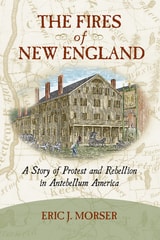
The Fires of New England
A Story of Protest and Rebellion in Antebellum AmericaEric J. Morser
University of Massachusetts Press, 2017
Few people embraced the manifesto and its radical message. Nonetheless, as Eric J. Morser illustrates in this eloquently written and deeply researched book, the address matters because it reveals how commercial, cultural, political, and social changes were remaking the lives of the men who drafted and shared it in the 1830s. Using an imaginative range of sources, Morser artfully reconstructs their moving personal tales and locates them in a grander historical context. By doing so, he demonstrates that even seemingly small stories from antebellum America can help us understand the rich complexities of the era.
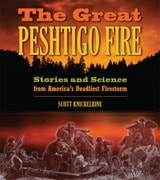
The Great Peshtigo Fire
Stories and Science from America’s Deadliest FireScott Knickelbine
Wisconsin Historical Society Press, 2012
On the night of October 8, 1871, a whirlwind of fire swept through northeastern Wisconsin, destroying the bustling frontier town of Peshtigo. Trees, buildings, and people burst into flames. Metal melted. Sand turned into glass. People thought the end of the world had come. When the “tornado of fire” was over, 2,500 people were dead, and Peshtigo was nothing but a smoking ruin. It was the deadliest wildfire in U.S. history.
The Great Peshtigo Fire: Stories and Science from America’s Deadliest Firestorm explores the history, science, and legacy of the 1871 Peshtigo Fire at a fourth-grade reading level. Readers will learn about the history of settlement, agriculture, and forestry in 19th-century Wisconsin. This illuminating text covers a diverse range of topics that will enrich the reader’s understanding of the Peshtigo Fire, including the building and land-use practices of the time that made the area ripe for such a fire, the weather patterns that fostered widespread fires throughout the upper Midwest in the summer and fall of 1871, and exciting first-person accounts that vividly bring the `victims’ stories to life. Connections made between the Peshtigo Fire and the history of fire prevention in the United States encourage critical thinking about issues that remain controversial to this day, such as planned burns and housing development restrictions near forested areas. The Great Peshtigo Fire: Stories and Science from America’s Deadliest Firestorm will inform and captivate its readers as it journeys through the horrifying history of the Peshtigo Fire.
The Memory Sessions
Suzanne Farrell Smith
Bucknell University Press, 2019
Published by Bucknell University Press. Distributed worldwide by Rutgers University Press.
The Texas City Disaster, 1947
By Hugh W. Stephens
University of Texas Press, 1997
On April 16, 1947, a small fire broke out among bags of ammonium nitrate fertilizer in the hold of the ship Grandcamp as it lay docked at Texas City, Texas. Despite immediate attempts to extinguish the fire, it rapidly intensified until the Grandcamp exploded in a blast that caused massive loss of life and property. In the ensuing chaos, no one gave much thought to the ship in the next slip, the High Flyer. It exploded sixteen hours later.
The story of the Texas City explosions—America's worst industrial disaster in terms of casualties—has never been fully told until now. In this book, Hugh W. Stephens draws on official reports, newspaper and magazine articles, personal letters, and interviews with several dozen survivors to provide the first full account of the disaster at Texas City.
Stephens describes the two explosions and the heroic efforts of Southeast Texans to rescue survivors and cope with extensive property damage. At the same time, he explores why the disaster occurred, showing how a chain of indifference and negligence made a serious industrial accident almost inevitable, while a lack of emergency planning allowed it to escalate into a major catastrophe. This gripping, cautionary tale holds important lessons for a wide reading public.
Urban Disorder and the Shape of Belief
The Great Chicago Fire, the Haymarket Bomb, and the Model Town of PullmanCarl Smith
University of Chicago Press, 1994
While Rome Burned
Fire, Leadership, and Urban Disaster in the Roman Cultural ImaginationVirginia M. Closs
University of Michigan Press, 2020
Working in the increasingly repressive environment of the early principate, Roman authors frequently employed “figured” speech and mythopoetic narratives to address politically risky topics. In response to shifting political and social realities, the literature of the early imperial period reimagines and reanimates not just historical fires, but also archetypal and mythic representations of conflagration. Throughout, the author engages critically with the growing subfield of disaster studies, as well as with theoretical approaches to language, allusion, and cultural memory.