Results by title
3 books match the query 'First Century'
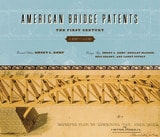
AMERICAN BRIDGE PATENTS
"THE FIRST CENTURY, 1790-1890"EMORY L. KEMP
West Virginia University Press, 2005
American Bridge Patents: The First Century (1790-1890), thoroughly illustrated with dozens of photographs and reproductions, presents the findings of a two-decade long study of several thousand pages of patent documents collected from the U.S. Patent Office. The essays in this volume offer readers tremendous insight into the creativity that characterized the evolution of bridge patents during this important and formative period of American engineering history. Of particular interest to the authors is the great variety of innovative and unusual designs that were accommodated by the then ambiguous patent law. Alongside these case studies, authors also address the Patent Office itself, whose processes regarding permissions were reformed in 1836, linking the evolution of patent law to the technology it managed.
Talladega College
The First CenturyMaxine D. Jones
University of Alabama Press, 1990
In 1954 when the U.S. Supreme Court declared separate education inherently unequal, Talladega College was a notable black liberal arts school thriving in rural east Alabama. This is a study of that college, its growth, development, and significance, from its inception by freed slaves in the 1860s through the student protest movement more than a century later. Initially Talladega offered primary, secondary, nursing, and theological as well as college-level work. Under strong leadership of visionaries such as James T. Cater, the school’s first black dean, Talladega became a first-rate liberal arts institution. During its first decades the school struggled against poverty, white hostility, Ku Klux Klan threats, and internal dissension to produce a number of teachers and ministers for Alabama schools and churches.
This book examines such college issues as finance, enrollment, students, educational policy, and the often stormy relationship with black and white neighbors. It provides a sense of both the obstacles to and the positive consequences of building and nurturing a black college.
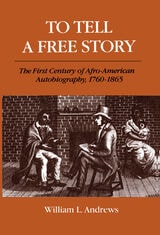
To Tell a Free Story
The First Century of Afro-American Autobiography, 1760-1865William L. Andrews
University of Illinois Press, 1986