Results by title
19 books match the query 'Fiscal policy'
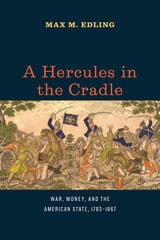
A Hercules in the Cradle
War, Money, and the American State, 1783–1867Max M. Edling
University of Chicago Press, 2014
Two and a half centuries after the American Revolution the United States stands as one of the greatest powers on earth and the undoubted leader of the western hemisphere. This stupendous evolution was far from a foregone conclusion at independence. The conquest of the North American continent required violence, suffering, and bloodshed. It also required the creation of a national government strong enough to go to war against, and acquire territory from, its North American rivals.
In A Hercules in the Cradle, Max M. Edling argues that the federal government’s abilities to tax and borrow money, developed in the early years of the republic, were critical to the young nation’s ability to wage war and expand its territory. He traces the growth of this capacity from the time of the founding to the aftermath of the Civil War, including the funding of the War of 1812 and the Mexican War. Edling maintains that the Founding Fathers clearly understood the connection between public finance and power: a well-managed public debt was a key part of every modern state. Creating a debt would always be a delicate and contentious matter in the American context, however, and statesmen of all persuasions tried to pay down the national debt in times of peace.
Behavioral Simulation Methods in Tax Policy Analysis
Edited by Martin Feldstein
University of Chicago Press, 1983
The principal focus of the project has been on the microsimulation of individual behavior. Thus, this volume includes studies of individual responses to an over reduction in tax rates and to changes in the highest tax rates; a study of alternative tax treatments of the family; and studies of such specific aspects of household behavior as tax treatment of home ownership, charitable contributions, and individual saving behavior. Microsimulation techniques are also used to estimate the effects of alternative policies on the long-run financial status of the social security program and to examine the effects of alternative tax rules on corporate investment and of foreign-source income on overseas investment.
The papers devoted to the development of general equilibrium simulation models to include an examination of the implications of international trade and capital flows, a study of the effects of capital taxation that uses a closed economy equilibrium model, and an examination of the effect of switching to an inflation-indexed tax system. In the volume's final paper, a life-cycle model in which individuals maximize lifetime utility subject to a lifetime budget constraint is used to simulate the effects of tax rules on personal savings.

Colonial Debts
The Case of Puerto RicoRocío Zambrana
Duke University Press, 2021
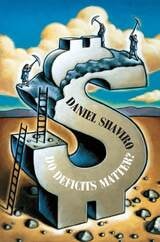
Do Deficits Matter?
Daniel Shaviro
University of Chicago Press, 1997
"[An] excellent, comprehensive, and illuminating book. Its analysis, deftly integrating considerations of economics, law, politics, and philosophy, brings the issues of 'balanced budgets,' national saving, and intergenerational equity out of the area of religious crusades and into an arena of reason. . . . A magnificent, judicious, and balanced treatment. It should be read and studied not just by specialists in fiscal policy but by all those in the economic and political community."—Robert Eisner, Journal of Economic Literature
"Shaviro's history, economics, and political analysis are right on the mark. For all readers."—Library Journal
Economic Policy Reforms and the Indian Economy
Edited by Anne O. Krueger
University of Chicago Press, 2002
Economic Policy Reforms and the Indian Economy evaluates the effects of those changes and identifies areas of the Indian economy still in urgent need of reform. After an overview of Indian economic policies and development since independence, papers focus on the country's fiscal situation, the environment for private economic activity, education, the reservation of certain activities for small-scale industry, and determinants of differentials in rates of growth across the different Indian states. Contributors include respected academic specialists on India and policy reform, high-level Indian administrators, and present and past policymakers.
Financial Deregulation and Integration in East Asia
Edited by Takatoshi Ito and Anne O. Krueger
University of Chicago Press, 1996
In these thirteen essays, American and Asian scholars analyze the effects of financial deregulation and integration on East Asian markets. Topics covered include the roles of the United States and Japan in trading with Asian countries, macroeconomic policy implications of export-led growth in Korea and Taiwan, the effects of foreign direct investment in China, and the impact of financial liberalization in Japan, Korea, and Singapore.
Demonstrating the complexity of financial deregulation and the challenges it poses for policy makers, this volume provides an excellent picture of the overall status of East Asian financial markets for scholars in international finance and Asian economic development.
Fiscal Institutions and Fiscal Performance
Edited by James M. Poterba and Jürgen von Hagen
University of Chicago Press, 1999
Fiscal Institutions and Fiscal Performance shifts emphasis away from narrow economic factors to more broadly defined political and institutional factors that affect government policy and national debt. This collection brings together new theoretical models, empirical evidence, and a series of in-depth case studies to analyze the effect of political institutions, fiscal regulations, and policy decisions on accumulating deficits. It provides a fascinating overview of the political and economic issues involved and highlights the role of budgetary institutions in the formation of budget deficits.
Fiscal Policy after the Financial Crisis
Edited by Alberto Alesina and Francesco Giavazzi
University of Chicago Press, 2013
Fiscal Policy after the Financial Crisis focuses on the effects of fiscal stimuli and increased government spending, with contributions that consider the measurement of the multiplier effect and its size. In the face of uncertainty over the sustainability of recent economic policies, further contributions to this volume discuss the merits of alternate means of debt reduction through decreased government spending or increased taxes. A final section examines how the short-term political forces driving fiscal policy might be balanced with aspects of the long-term planning governing monetary policy.
Fiscal Policy and Management in East Asia
Edited by Takatoshi Ito and Andrew K. Rose
University of Chicago Press, 2007
Fiscal Policy and Management in East Asia explores the inefficient tax systems of many developing countries, the relationship between public and private sector economic behavior, and the pressing issue of future obligations that governments have undertaken to provide pensions and health care for their citizens. Featuring both overviews and analyses of the countries discussed, this book will be of value to economists and policymakers seeking to understand fiscal policy in a global context.
For the Many or the Few
The Initiative, Public Policy, and American DemocracyJohn G. Matsusaka
University of Chicago Press, 2004
Drawing upon a century of evidence, Matsusaka argues against the popular belief that initiative measures are influenced by wealthy special interest groups that neglect the majority view. Examining demographic, political, and opinion data, he demonstrates how the initiative process brings about systematic changes in tax and expenditure policies of state and local governments that are generally supported by the citizens. He concludes that, by and large, direct democracy in the form of the initiative process works for the benefit of the many rather than the few.
An unprecedented, comprehensive look at the historical, empirical, and theoretical components of how initiatives function within our representative democracy to increase political competition while avoiding the tyranny of the majority, For the Many or the Few is a most timely and definitive work.

Inflation and Disinflation
The Israeli ExperimentLeonardo Leiderman
University of Chicago Press, 1993
Even though standard economic models predict that output will drop and unemployment will rise during disinflation, Israel saw a boom in private consumption and large increases in real wages that lasted for about three years. To understand how the effects of Israeli disinflation policies defied typical expectations, Leiderman investigates how monetary fiscal policy determined Israel's runaway inflation and how the country brought its economy abruptly under control. He finds that rates of inflation and consumption depend on the public's expectations about future fiscal adjustments and that foreign trade shocks do not inevitably lead to a long-term rise in the inflation rate. His illumination of international trade and domestic policies, past and present, will interest academic economists and policymakers alike.
International Aspects of Fiscal Policies
Edited by Jacob A. Frenkel
University of Chicago Press, 1988
The studies analyze national fiscal policies within the context of the international economic order. Malcolm D. Knight and Paul R. Masson use an empirical model to show that fiscal changes in recent years in the United States, West Germany, and Japan have caused major disturbances in net savings and investment flows. Linda S. Kole uses a two-country simulation model to examine the effects of a large nation's expansion on exchange rates, interest rates, and the balance of payments. In other studies, Warwick J. McKibbin and Jeffrey D. Sachs discuss the influences of different currency regimes on the international transmission of inflation; Kent P. Kimbrough analyzes the interaction between optimal tax policies and international trade; Sweder van Wijnbergen investigates the interrelation of fiscal policies, trade intervention, and world interest rates; and Willem H. Buiter uses an analytical model to look at fiscal interdependence and optimal policy design. David Backus, Michael Devereux, and Douglas Purvis develop a theoretical model to investigate effects of different fiscal policies in an open economy. Alan C. Stockman looks at the influence of policy anticipation in the private sector, while Lawrence H. Summers shows the effects of differential tax policy on international competitiveness.
Latin American Macroeconomic Reforms
The Second StageEdited by José Antonio González, Vittorio Corbo, Anne O. Krueger, and Aaron Tornell
University of Chicago Press, 2003
Contributors also work to identify future concerns and erect clear signposts for future reforms. For instance, now that inflation rates have been stabilized, one suggested "second stage" monetary reform would be to focus on reducing rates from high to low single digits. Financial sector reforms, it is suggested, should center on improving regulation and supervision. And, contributors argue, since fiscal stability has already been achieved in most countries, new fiscal reforms need to concentrate on institutionalizing fiscal discipline, improving the efficiency and equity of tax collection, and modifying institutional arrangements to deal with increasingly decentralized federal systems.
The analysis and commentary in this volume-authored not only by academic observers but by key Latin American policymakers with decades of firsthand experience-will prove important to anyone with an interest in the future of Latin American's continuing economic development and reform.
Contributors to this volume:
José Antonio González, Stanford University
Anne O. Krueger, International Monetary Fund
Vittorio Corbo, Pontifical Catholic University, Chile
Klaus Schmidt-Hebbel, Central Bank of Chile
Alejandro Werner, Bank of Mexico
Márcio G. P. Garcia, Pontifical Catholic University, Rio
Tatiana Didier, World Bank
Gustavo H. B. Franco, former president, Central Bank of Brazil
Francisco Gil Díaz, Minister of the Treasury, Mexico
Roberto Zahler, former governor, Central Bank of Chile
Ricardo J. Caballero, Massachusetts Institute of Technology
Philip L. Brock, University of Washington
Stephen Haber, Stanford University
Pablo E. Guidotti, Universidad Torcuato Di Tella, Buenos Aires
Vito Tanzi, International Monetary Fund
Enrique Dávila, Ministry of Finance, Mexico
Santiago Levy, Mexican Social Security Institute
Ricardo Fenochietto, private consultant, Buenos Aires
Rogério L. F. Werneck, Pontifical Catholic University, Rio
Carola Pessino, Universidad Torcuato di Tella, Buenos Aires
Michael Michaely, Hebrew University of Jerusalem
Mayors and Money
Fiscal Policy in New York and ChicagoEster R. Fuchs
University of Chicago Press, 1992

Michigan at the Millennium
A Benchmark and Analysis of Its Fiscal and Economic StructureCharles L. Ballard
Michigan State University Press, 2003
Michigan at the Millennium provides objective background and analysis on a wide variety of key economic and fiscal issues. The chapters are written by economists and policy analysts at leading universities and other institutions in Michigan. Written in clear, non-technical language, the articles are aimed at an audience that includes members of the legislative and executive branches of state government, members of the judicial system, local government officials, policy analysts, and informed citizens.
This volume follows in the tradition of the landmark 1982 study, Michigan’s Fiscal and Economic Structure, edited by Harvey E. Brazer. The first section of the volume focuses on broad aspects of the economy, people, and land of Michigan, including chapters on demographics, the labor force, land use, the manufacturing sector, high-technology industries, and health care. Section two focuses on public expenditures and public services, and includes chapters on economic-development efforts, K–12 education, the transportation system, the welfare system, policies for low-wage workers and displaced workers, and pensions. The third section is concerned with taxes and other government revenues. It includes chapters on the Headlee Amendment, income taxes, sales and use taxes, property taxes, the Single Business Tax, intergovernmental fiscal relations, and other sources of revenue.
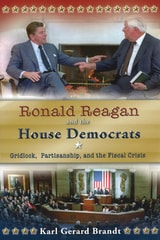
Ronald Reagan and the House Democrats
Gridlock, Partisanship, and the Fiscal CrisisKarl Gerard Brandt
University of Missouri Press, 2009
Strategy or Principle?
The Choice Between Regulation and TaxationMark Kelman
University of Michigan Press, 1999
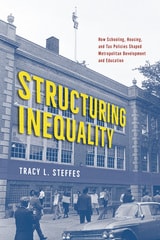
Structuring Inequality
How Schooling, Housing, and Tax Policies Shaped Metropolitan Development and EducationTracy L. Steffes
University of Chicago Press, 2024
As in many American metropolitan areas, inequality in Chicagoland is visible in its neighborhoods. These inequalities are not inevitable, however. They have been constructed and deepened by public policies around housing, schooling, taxation, and local governance, including hidden state government policies.
In Structuring Inequality, historian Tracy L. Steffes shows how metropolitan inequality in Chicagoland was structured, contested, and naturalized over time even as reformers tried to change it through school desegregation, affordable housing, and property tax reform. While these efforts had modest successes in the city and the suburbs, reformers faced significant resistance and counter-mobilization from affluent suburbanites, real estate developers, and other defenders of the status quo who defended inequality and reshaped the policy conversation about it. Grounded in comprehensive archival research and policy analysis, Structuring Inequality examines the history of Chicagoland’s established systems of inequality and provides perspective on the inequality we live with today.

The Judicial Power of the Purse
How Courts Fund National Defense in Times of CrisisNancy Staudt
University of Chicago Press, 2011
Congress and the president are not the only branches that deal with fiscal issues in times of war. In this innovative book, Nancy Staudt focuses on the role of federal courts in fiscal matters during warfare and high-cost national defense emergencies. There is, she argues, a judicial power of the purse that becomes evident upon examining the budgetary effects of judicial decision making. The book provides substantial evidence that judges are willing—maybe even eager—to redirect private monies into government hands when the country is in peril, but when the judges receive convincing cues that ongoing wartime activities undermine the nation’s interests, they are more likely to withhold funds from the government by deciding cases in favor of private individuals and entities who show up in court.
In stark contrast with conventional legal, political, and institutional thought that privileges factors associated with individual preferences, The Judicial Power of the Purse sheds light on environmental factors in judicial decision making and will be an excellent read for students of judicial behavior in political science and law.