Results by title
4 books match the query 'Fisher, Dorothy Canfield'
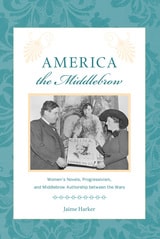
America the Middlebrow
Women's Novels, Progressivism, and Middlebrow Authorship between the WarsJaime Harker
University of Massachusetts Press, 2007
Between the two world wars, American publishing entered a “golden age” characterized by an explosion of new publishers, authors, audiences, distribution strategies, and marketing techniques. The period was distinguished by a diverse literary culture, ranging from modern cultural rebels to working-class laborers, political radicals, and progressive housewives. In America the Middlebrow, Jaime Harker focuses on one neglected mode of authorship in the interwar period—women's middlebrow authorship and its intersection with progressive politics.
With the rise of middlebrow institutions and readers came the need for the creation of the new category of authorship. Harker contends that these new writers appropriated and adapted a larger tradition of women's activism and literary activity to their own needs and practices. Like sentimental women writers and readers of the 1850s, these authors saw fiction as a means of reforming and transforming society. Like their Progressive Era forebears, they replaced religious icons with nationalistic images of progress and pragmatic ideology. In the interwar period, this mode of authorship was informed by Deweyan pragmatist aesthetics, which insisted that art provided vicarious experience that could help create humane, democratic societies.
Drawing on letters from publishers, editors, agents, and authors, America the Middlebrow traces four key moments in this distinctive culture of letters through the careers of Dorothy Canfield, Jessie Fauset, Pearl Buck, and Josephine Herbst. Both an exploration of a virtually invisible culture of letters and a challenge to monolithic paradigms of modernism, the book offers fresh insight into the ongoing tradition of political domestic fiction that flourished between the wars.
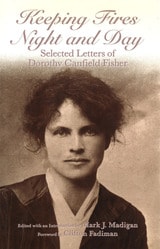
Keeping Fires Night and Day
Selected Letters of Dorothy Canfield FisherEdited & Intro by Mark J. Madigan & Foreword by Clifton Fadiman
University of Missouri Press, 1993
Eleanor Roosevelt called her one of the most influential women in America. Among the earliest and most assertive members of the Book-of-the-Month Club selection committee, Dorothy Canfield Fisher helped define literary taste in America for more than three decades. She helped shape the careers of such great writers as Pearl Buck, Isak Dinesen, and Richard Wright. A best-selling author herself, Fisher was also a deeply committed social activist. In Keeping Fires Night and Day, Mark J. Madigan collects much of Fisher's copious correspondence. With letters to Willa Cather, W.E.B. Du Bois, Albert Einstein, Robert Frost, Margaret Mead, James Thurber, and E.B. White, he documents Fisher's personal and professional life and career in a way that no biography could. Set against the American historical and cultural landscape from 1900 to 1958, these letters offer a firsthand account of one of the twentieth century's most remarkable women.
While Fisher's novels treated such conventional subjects as marriage and domestic life, her own life was anything but conventional. When her best-selling novels made her the chief breadwinner in her marriage, her husband, John Fisher, quietly assumed the role of secretary and editor of her work. Fluent in five languages, Dorothy Canfield Fisher founded a Braille press in France and introduced the educational methods of Dr. Maria Montessori to the United States. She became a pioneering advocate of adult education and served as the first woman on the Vermont Board of Education.
In letters to friends, fans, and colleagues, Fisher discussed her homelife, her work, and the world around her. Her passions and concerns-revealed in her correspondence with wit and poignancy-include the "New Woman' and the suffrage movement, racial discrimination and the emergence of the NAACP, the development of the national education system, two world wars, the depression, and the influence of book clubs in the literary market-place.
Dorothy Canfield Fisher "helped twentieth-century American literature to come of age," writes Clifton Fadimon in his Foreward. Yet lasting recognition has eluded her. In Keeping Fires Night and Day the distinctive voice of this gifted, intelligent and spirited woman is heard once again.
Understood Betsy
Dorothy Canfield Fisher
Brandeis University Press, 1999
Writers of Conviction
The Personal Politics of Zona Gale, Dorothy Canfield Fisher, Rose Wilder Lane, and Josephine HerbstJulia C. Ehrhardt
University of Missouri Press, 2004