Results by title
14 books match the query 'Fishers'
Alaska's Greatest Outdoor Legends
Colorful Characters Who Built the Fishing and Hunting IndustriesDoug Kelly
University of Alaska Press, 2016
Alejandro and the Fishermen of Tancay
Braulio Muñoz
University of Arizona Press, 2008
Don Morales is a wise man. But he is also a sad man, mourning the loss of the past, of better times, of brotherhood. With his short, evocative stories—told with simplicity and beauty—he pulls his readers closer to him, as if he were speaking directly to us. For the good fishermen of Tancay, life was better yesterday than it is today. It was better to live in harmony with the sea. When they lived in harmony with the natural world, there was harmony in the human world, too.
With a nostalgic feel, yet reflecting Peru’s current political instability, this is a delightful book with an important message. When the natural order is disrupted, it is not only fish that die. When nature dies, so might we all.
Beyond Cannery Row
Sicilian Women, Immigration, and Community in Monterey, California, 1915-99Carol Lynn McKibben
University of Illinois Press, 2005
McKibben's analysis of gender and gender roles shows that it was the women in this community who had the insight, the power, and the purpose to respond and even prosper amid changing economic conditions. Vividly evoking the immigrants' everyday experiences through first-person accounts and detailed description, McKibben demonstrates that the cannery work done by Sicilian immigrant women was crucial in terms of the identity formation and community development. These changes allowed their families to survive the challenges of political conflicts over citizenship in World War II and intermarriage with outsiders throughout the migration experience. The women formed voluntary associations and celebrated festas that effectively linked them with each other and with their home villages in Sicily. Continuous migration created a strong sense of transnationalism among Sicilians in Monterey, which has enabled them to continue as a viable ethnic community today.
Clearing the Coastline
The Nineteenth-Century Ecological & Cultural Transformations of Cape CodMatthew McKenzie
University Press of New England, 2011
Coastal Lives
Nature, Capital, and the Struggle for Artisanal Fisheries in PeruMaximilian Viatori and Héctor Bombiella
University of Arizona Press, 2019
In Coastal Lives, Maximilian Viatori and Héctor Bombiella argue that this has not made Peru’s fisheries more sustainable. Through a fine-grained ethnographic and historical account of Lima’s fisheries, the authors reveal that new government regimes of entrepreneurial agency have placed overwhelming burdens on the city’s impoverished artisanal fishers to demonstrate that they are responsible producers and have created failures that can be used to justify closing these fishers’ traditional use areas and to deny their historically sanctioned rights. The result is a critical examination of how neoliberalized visions of nature and individual responsibility work to normalize the dispossessions that have enabled ongoing capital accumulation at the cost of growing social dislocations and ecological degradation.
The authors’ innovative approach to the politics of constructing and degrading coastal lives will interest a wide range of scholars in cultural anthropology, environmental humanities, and Latin American studies, as well as policymakers and anyone concerned with inequality, global food systems, and multispecies ecologies.
Creatures at the Absolute Bottom of the Sea
Rosemary McGuire
University of Alaska Press, 2015
These are fishing stories, told as such stories are meant to be: simple, often coarse, and tinged with the elemental beauty of the sea. They reflect rugged lives lived on the edge of the ocean’s borders, where grief and grace ride the same waves. Rosemary McGuire, a fisherman herself, captures the essential humanity at the heart of each tale. No one comes through unscathed, but all retain a sense of hope and belief in earthly miracles, however humble.
A dazzling debut, The Creatures at the Absolute Bottom of the Sea will leave readers with a sense of the fragility and beauty inherent in eroded lives spent in proximity to danger.
Escaping into Nature
The Making of a Sportsman-Conservationist and Environmental HistorianJohn F. Reiger
Oregon State University Press, 2013
In Escaping into Nature, prominent wildlife conservationist and environmental historian John Reiger shares his story of an angler and hunter who found a cause and a calling and combined them for his life’s work.
John Reiger’s outdoor adventures as a young man primed him for the teachings of the great sportsmen-conservationists of the past, particularly George Bird Grinnell, Theodore Roosevelt, and Aldo Leopold. Inspired by these conservation giants, Reiger left the security of a tenured professorship to serve as executive director of the Connecticut Audubon Society where he, sometimes controversially, put his ideals into practice. Later, he resumed his academic career to illuminate the lives of early wildlife conservationists, visionaries who continue to inspire us to care deeply about the future of the natural world.
Abused psychologically within his family in his early years, Reiger found solace in nature. Though he first entered the outdoors as an escape from his unpleasant circumstances, he soon found the study and pursuit of insects, fishes, and birds to be exciting ends in themselves. He came to believe that it was only by participating in the life and death of other creatures that one could learn to truly value the natural world, be a part of it, and be inspired to work for its conservation.
John Reiger’s autobiography is also the story of his own developing fascination with America’s past, especially as it relates to human interaction with the natural world; his desire to share that passion with others; and his experiences on the road to becoming a nationally recognized scholar. The twists and turns of that journey, and his accounts of the people—and of the wild creatures—who helped him along the way, will appeal to history enthusiasts and nature lovers alike.
Fishers At Work, Workers At Sea
Puerto Rican Journey Thru Labor & RefugeDavid Griffith and Manuel Valdés Pizzini
Temple University Press, 2002
Fishers at Work, Workers at Sea describes Puerto Rican fishing families as they negotiate homeland and diaspora. It considers how wage work affects their livelihoods and identities at home and how these independent producers move in and out of global commodity markets. Drawing on some 100 life histories and years of fieldwork, David Griffith and Manuel Valdés Pizzini have developed a complex, often moving portrait of the men and women who fiercely struggle to hang onto the coastal landscapes and cultural heritage tied to the Caribbean Sea.
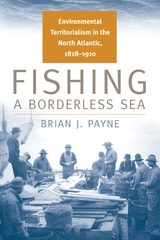
Fishing a Borderless Sea
Environmental Territorialism in the North Atlantic, 1818-1910Brian J. Payne
Michigan State University Press, 2010
Over the centuries, processing and distribution of products from land and sea has stimulated the growth of a global economy. In the broad sweep of world history, it may be hard to imagine a place for the meager little herring baitfish. Yet, as Brian Payne adeptly recounts, the baitfish trade was hotly contested in the Anglo-American world throughout the nineteenth century. Politicians called for wars, navies were dispatched with guns at the ready, vessels were seized at sea, and violence erupted at sea.
Yet, the battle over baitfish was not simply a diplomatic or political affair. Fishermen from hundreds of villages along the coastline of Atlantic Canada and New England played essential roles in the construction of legal authority that granted or denied access to these profitable bait fisheries.
Fishing a Borderless Sea illustrates how everyday laborers created a complex system of environmental stewardship that enabled them to control the local resources while also allowing them access into the larger global economy.
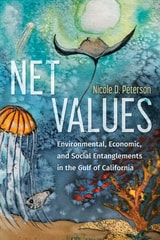
Net Values
Environmental, Economic, and Social Entanglements in the Gulf of CaliforniaNicole D. Peterson
University of Arizona Press, 2025
In Loreto, Baja California Sur, Mexico, artisanal fishing families and staff of Loreto Bay National Park face an array of choices as tourism, environmental concerns, and economic precarity challenge livelihoods and natural resource availability. In Net Values, Nicole D. Peterson offers a critical examination of how the idea of “choice” is understood, and what it means for policies, planning, and programs to ignore the social, political, economic, and cultural contexts surrounding these choices.
Anchored by more than twenty years of research, Peterson provides insight into the fishing community of Loreto and reveals an important role in decision-making that diverges from previous studies. She argues that decisions about fishing, natural resource management, and other aspects of life are influenced by context, values, and expectations in ways that go beyond the typical psychological or cognitive theories of choice. Instead, Net Values highlights the ways that choices are constrained and enabled by values and expectations of cultures, histories, relationships, and experiences, both personal and shared. Peterson answers questions such as “why do the fishermen fish?” or “what is the marine park staff doing?” These decisions and choices are related to the larger implication addressed by this book: that in order to make effective policies around natural resource management and other issues, we must understand how those potential policies interact with the decision processes already underway.
Divided into five chapters, Net Values is rich in ethnographic detail, drawing from real people to inform the narratives, chapters, and theoretical elaboration. Peterson’s interactions with fishers such as Don Javier and his family and friends support the ideas offered around choice, values, and strategies, connecting ideas to real experiences.

Oil and Water
A NovelMei Mei Evans
University of Alaska Press, 2013
Evans’s compelling story, influenced by her own experiences during the Exxon Valdez oil spill, is a provocative look at the choice that must be made between environmental safety and economic survival. A PEN/Bellwether Prize finalist, it will have readers reconsidering where they draw their own lines.
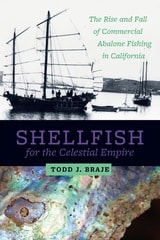
Shellfish for the Celestial Empire
The Rise and Fall of Commercial Abalone Fishing in CaliforniaTodd J. Braje
University of Utah Press, 2016
In the 1800s, when California was captivated by gold fever, a small group of Chinese immigrants recognized the fortune to be made from the untapped resources along the state’s coast, particularly from harvesting the black abalone of southern and Baja California. These immigrants, with skills from humble beginnings in a traditional Chinese fishing province, founded California’s commercial abalone industry, and led its growth and expansion for several decades. By the turn of the twentieth century, however, their successful livelihood was stolen from them through targeted legislation of the U.S. and California governments.
Today, the physical evidence of historical Chinese abalone fishing on the mainland has been erased by development. On California’s Channel Islands, however, remnants of temporary abalone collecting and processing camps lie scattered along the coastlines. These sites hold a treasure trove of information, stories, lifeways, and history. Braje has excavated many of these sites and uses them to explore the history of Chinese abalone fishing, presenting a microcosm of the broader history of Chinese immigrants in America—their struggles, their successes, the institutionalized racism they faced, and the unique ways in which they helped to shape the identity of the United States.
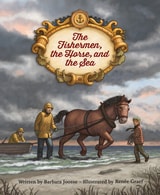
The Fishermen, the Horse, and the Sea
Barbara Joosse
Wisconsin Historical Society Press, 2021
This beautifully illustrated children’s book based on a true story recounts a dramatic rescue on Lake Michigan and introduces young readers to Lester Smith and his family, who founded Port Washington’s long-running and beloved Smith Bros. Fish Shanty. Educational materials including definitions, an illustrated map of Lake Michigan, and short biographies of the story’s featured characters supplement this engaging story for elementary-age readers.
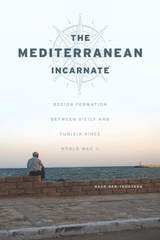
The Mediterranean Incarnate
Region Formation between Sicily and Tunisia since World War IINaor Ben-Yehoyada
University of Chicago Press, 2017
The book centers on the town of Mazara del Vallo, located on the southwestern tip of Sicily some ninety nautical miles northeast of the African shore. Ben-Yehoyada intertwines the town’s recent turbulent history—which has been fraught with conflicts over fishing rights, development projects, and how the Mediterranean should figure in Italian politics at large—with deep accounts of life aboard the Naumacho, linking ethnography with historical anthropology and political-economic analysis. Through this sophisticated approach, he crafts a new viewpoint on the historical processes of transnational region formation, one offered by these moving ships as they weave together new social and political constellations.