64 books match the query 'Fishing' and 6 start with a
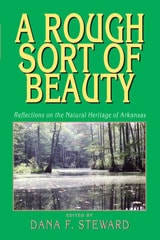
cover of A Rough Sort of Beauty: Reflections on the Natural Heritage of Arkansas

A Rough Sort of Beauty

Reflections on the Natural Heritage of Arkansas

Dana Steward

University of Arkansas Press, 2002
What does it mean to have a sense of place? Through history, memoir, poetry, and fiction, the writers of these essays answer this question in a variety of ways, giving us their collective history of natural Arkansas. They speak of the interrelationships of humans and nature, and of the struggles for balance between economic realities and landscape preservation. The book evokes the sheer physical diversity of the Natural State, from the Ozarks and the Boston Mountains to Crowley's Ridge, the Grand Prairie, and the Delta. But far more than mere geography, these are places of intense meaning: sites of enlightenment, conflict, comfort, and vivid experience. Rivers and mountains, plains and forests — these are shorthand terms for specific, beloved, storied places.
[more]
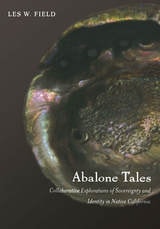
cover of Abalone Tales: Collaborative Explorations of Sovereignty and Identity in Native California

Abalone Tales

Collaborative Explorations of Sovereignty and Identity in Native California

Les W. Field

Duke University Press, 2008

For Native peoples of California, the abalone found along the state’s coast have remarkably complex significance as food, spirit, narrative symbol, tradable commodity, and material with which to make adornment and sacred regalia. The large mollusks also represent contemporary struggles surrounding cultural identity and political sovereignty. Abalone Tales, a collaborative ethnography, presents different perspectives on the multifaceted material and symbolic relationships between abalone and the Ohlone, Pomo, Karuk, Hupa, and Wiyot peoples of California. The research agenda, analyses, and writing strategies were determined through collaborative relationships between the anthropologist Les W. Field and Native individuals and communities. Several of these individuals contributed written texts or oral stories for inclusion in the book.

Tales about abalone and their historical and contemporary meanings are related by Field and his coauthors, who include the chair and other members of the Muwekma Ohlone Tribe; a Point Arena Pomo elder; the chair of the Wiyot tribe and her sister; several Hupa Indians; and a Karuk scholar, artist, and performer. Reflecting the divergent perspectives of various Native groups and people, the stories and analyses belie any presumption of a single, unified indigenous understanding of abalone. At the same time, they shed light on abalone’s role in cultural revitalization, struggles over territory, tribal appeals for federal recognition, and connections among California’s Native groups. While California’s abalone are in danger of extinction, their symbolic power appears to surpass even the environmental crises affecting the state’s vulnerable coastline.
[more]
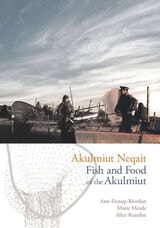
cover of Akulmiut Neqait / Fish and Food of the Akulmiut

Akulmiut Neqait / Fish and Food of the Akulmiut

Ann Fienup-Riordan, Marie Meade, and Alice Rearden

University of Alaska Press, 2019

For centuries, the Akulmiut people—a Yup’ik group—have been sustained by the annual movements of whitefish. It is a food that sustains and defines them. To this day, many Akulmiut view not only their actions in the world, but their interactions with each other, as having a direct and profound effect on these fish. Not only are fish viewed as responding to human action and intention in many contexts, but the lakes and rivers fish inhabit are likewise viewed as sentient beings, with the ability to respond both positively and negatively to those who travel there.
This bilingual book details the lives of the Akulmiut living in the lake country west of Bethel, Alaska, in the villages of Kasigluk, Nunapitchuk, and Atmautluak. Akulmiut Neqait is based in conversations recorded with the people of these villages as they talk about their uniquely Yup'ik view of the world and how it has weathered periods of immense change in southwest Alaska. While many predicted that globalization would sound the death knoll for many distinctive traditions, these conversations show that Indigenous people all over the planet have sought to appropriate the world in their own terms. For all their new connectedness, the continued relevance of traditional admonitions cannot be denied.
 
[more]
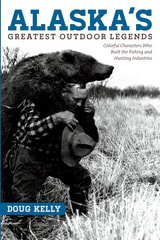
cover of Alaska's Greatest Outdoor Legends: Colorful Characters Who Built the Fishing and Hunting Industries

Alaska's Greatest Outdoor Legends

Colorful Characters Who Built the Fishing and Hunting Industries

Doug Kelly

University of Alaska Press, 2016

Outdoor tourism is one of Alaska’s biggest industries, and the thousands of people who flock to the state’s dramatic landscapes and pristine waters to hunt and fish are supported by a large and growing network of guides, lodges, outfitters, and wildlife biologists.
This book honors more than sixty of those remarkably colorful characters, past and present, people whose incredible skills were their calling cards, but whose larger-than-life personalities were what people remember after the trip is over.  Taken together, these portraits offer a history of outdoor life in Alaska and celebrate its incredible natural beauty—and the people who devote their lives to helping us enjoy it.
 
[more]
cover of An Outdoor Journal: Adventures and Reflections

An Outdoor Journal

Adventures and Reflections

Jimmy Carter

University of Arkansas Press, 1994
An Outdoor Journal, first published in 1988, is President Carter’s memoir of hunting and fishing and the meaning of nature, revealing much about a man who embodies “so much of what Americans claim to admire—self-reliance, honesty, humor, modesty, intelligence—the stuff of heroes” (The New York Times Book Review).
[more]
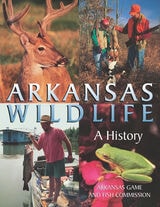
cover of Arkansas Wildlife: A History

Arkansas Wildlife

A History

Keith B. Sutton

University of Arkansas Press, 1998

Lavishly illustrated with black and white photos, this book tells the story of the state's wildlife in a historical and national context. It describes the resident species, their environments, early conservation efforts to save them, and the attitudes of those who sought to make use of Arkansas's natural resources.
[more]