Results by title
6 books match the query 'Flag'

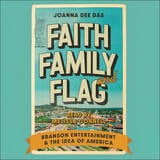
Faith, Family, and Flag
Branson Entertainment and the Idea of AmericaJoanna Dee Das
University of Chicago Press, 2025
Branson, Missouri, the Ozark Mountain mecca of wholesome entertainment, has been home to countless stage shows espousing patriotism and Christianity, welcoming over ten million visitors a year. Some consider it “God’s Country” and others “as close to Hell as anything on Earth.” For Joanna Dee Das, Branson is a political, religious, and cultural harbinger of a certain enduring dream of what America is. She takes Branson more seriously than the light-hearted fun it advertises—and maybe we should too.
For Das, Branson’s performers offer visions of the American Dream that embody a set of values known as the three Fs: faith, family, and flag. Branson boosters insist that these are universal values that welcome all people; the city aims to capture as many tourists as possible. But over the past several decades, faith, family, and flag have become markers of contemporary conservatism. The shows and culture of Branson, for all their fun and laughter, have been a galvanizing political force for white, working-and-middle class, Christian Americans. For social and economic conservatives alike, Branson is practically proof-of-concept for America as they want it to be.
Faith, Family, and Flag is a comprehensive history of the Branson entertainment industry, within the context of America’s long culture wars. Das reveals how and why a town known for popular entertainment, a domain associated most often with the political left (“Hollywood liberals”), came to be so important to the political right and its vision for America.
Faith, Family, and Flag
Branson Entertainment and the Idea of AmericaJoanna Dee Das
University of Chicago Press, 2025
Branson, Missouri, the Ozark Mountain mecca of wholesome entertainment, has been home to countless stage shows espousing patriotism and Christianity, welcoming over ten million visitors a year. Some consider it “God’s Country” and others “as close to Hell as anything on Earth.” For Joanna Dee Das, Branson is a political, religious, and cultural harbinger of a certain enduring dream of what America is. She takes Branson more seriously than the light-hearted fun it advertises—and maybe we should too.
For Das, Branson’s performers offer visions of the American Dream that embody a set of values known as the three Fs: faith, family, and flag. Branson boosters insist that these are universal values that welcome all people; the city aims to capture as many tourists as possible. But over the past several decades, faith, family, and flag have become markers of contemporary conservatism. The shows and culture of Branson, for all their fun and laughter, have been a galvanizing political force for white, working-and-middle class, Christian Americans. For social and economic conservatives alike, Branson is practically proof-of-concept for America as they want it to be.
Faith, Family, and Flag is a comprehensive history of the Branson entertainment industry, within the context of America’s long culture wars. Das reveals how and why a town known for popular entertainment, a domain associated most often with the political left (“Hollywood liberals”), came to be so important to the political right and its vision for America.
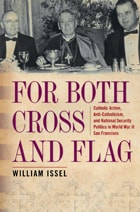
For Both Cross and Flag
Catholic Action, Anti-Catholicism, and National Security Politics in World War II San FranciscoAuthored by William Issel
Temple University Press, 2010
In this fascinating, detailed history, William Issel recounts the civil rights abuses suffered by Sylvester Andriano, an Italian American Catholic civil leader whose religious and political activism in San Francisco provoked an Anti-Catholic campaign against him. A leading figure in the Catholic Action movement, Andriano was falsely accused in state and federal Un-American Activities Committee hearings of having Fascist sympathies prior to and during World War II. As his ordeal began, Andriano was subjected to a hostile investigation by the FBI, whose confidential informants were his political rivals. Furthermore, the U.S. Army ordered him to be relocated on the grounds that he was a security risk.
For Both Cross and Flag provides a dramatic illustration of what can happen when parties to urban political rivalries, rooted in religious and ideological differences, seize the opportunity provided by a wartime national security emergency to demonize their enemy as “a potentially dangerous person.”
Issel presents a cast of characters that includes archbishops, radicals, the Kremlin, and J. Edgar Hoover, to examine the significant role faith-based political activism played in the political culture that violated Andriano’s constitutional rights. Exploring the ramifications of this story, For Both Cross and Flag presents interesting implications for contemporary events and issues relating to urban politics, ethnic groups, and religion in a time of war.
The Cross and the Flag
Papal Diplomacy and John Paul II's Struggle Against the Tyranny of the PossibleJohn Tanyi Nquah Lebui
St. Augustine's Press, 2024
What is papal diplomacy and what role does it play on the larger geopolitical stage? Why does it matter what popes say to a global audience? "As John Tanyi points out, papal diplomacy has followed a trajectory all its own over the years. In today’s globalized world, the Holy See stands out as an important communicator with a widely respected moral voice. It is often said that 'When the Pope speaks, the world listens.' What sets the diplomatic voices of the Holy Father and his envoys apart from all others is that they speak and act for the good of humanity––not just for the sovereign entity they represent, and not just for Catholics. As a former foreign minister of the Holy See, Cardinal Jean Louis Tauran, once described the mission of papal diplomats: 'Our duty is to promote and defend not only the freedom and rights of Catholic communities around the world, but also to promote certain principles without which there is no civilization.'"
The particular example of Pope John Paul II is a groundbreaking example of the critical nature of ecclesiastical diplomacy and why popes as diplomats are playing at a greater level than other statesmen. As George Weigel notes, popes must combat all the problems of the world, but also importantly what he calls the 'tyranny of the possible'––that is, in all things compromise and complacency will play a part. It is the position occupied by one man, the heir of St. Peter, to know when to defy the entirety of global politics (and sometimes what seems like common sense) to say 'yes' and 'no' definitively in light of unchanging truths.
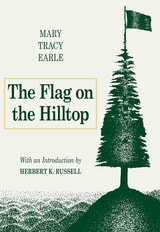
The Flag on the Hilltop
Mary Tracy Earle
Southern Illinois University Press, 1989
Early in the Civil War, two young brothers boldly flew the Union flag from a tree atop a hill between Makanda and Cobden. This was a towering act of courage in an area teeming with Copperheads.
Theodore and Al Thompson, 18 and 20 years old at the time, raised the flag in defiance of the Knights of the Golden Circle, a secessionist group that operated throughout the Midwest. Controlling its membership through terror, this secret society condemned betrayers to death by torture. The Knights, whose goals included capturing a Union prison and liberating the rebels, triggered the Civil War riot in Charleston, instigated anti-draft movements, and aided Northern deserters.
Theodore Thompson, who later owned much of Makanda, Giant City, and the land that became Southern Illinois University describes the tree as a "tall tulip poplar between 3 and 4 feet in diameter at the trunk and some 60 feet to the first limbs. This noted tree could be seen in some directions 15 or 20 miles away."

UNDER THE FLAG OF THE NATION
DIARIES AND LETTERS OF OWEN JOHNSTON HOPKINS, A YANKEE VOLUNTEER IN THE CIVIL WAROwen Johnston Hopkins
The Ohio State University Press, 1998
Owen Hopkins was a young man brought to maturity by the agony of war, but in spite of the horror of battle and the tedium of life in camp, he maintained a lively sense of humor and a constant devotion to the ideals for which he fought. The Civil War in these pages is a savage, vindictive conflict fought with canister, "minnie balls," grapeshot, the Enfield rifle, and the bayonet. Only seventeen when he enlisted in 1861, Hopkins was a foot soldier and a witness to the action that took place on the field of battle.
A vital part of Hopkins's life in the army was his correspondence with Julia Allison, who lived in his hometown of Bellefontaine. They began writing each other in 1863, and their friendship deepened into love. Each was a fervent patriot, and their shared devotion to their country was a significant fact of their relationship. They were married in 1865.
An epilogue tells what happened to Hopkins after June of 1865: his career, his family, and his death in 1902. Originally published in1961, this work is now available for the first time in paperback.