Results by title
3 books match the query 'Fleming, James Rodger'
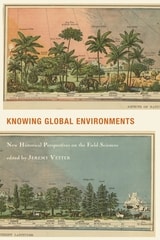
Knowing Global Environments
New Historical Perspectives on the Field SciencesVetter, Jeremy
Rutgers University Press, 2011
Collectively their essays explore the history of the field sciences, through the lens of place, practice, and the production of scientific knowledge, with a wide-ranging perspective extending outwards from the local to regional, national, imperial, and global scales. The book also shows what the history of the field sciences can contribute to environmental history-especially how knowledge in the field sciences has intersected with changing environments-and addresses key present-day problems related to sustainability, such as global climate, biodiversity, oceans, and more.
Contributors to Knowing Global Environments reveal how the field sciences have interacted with practical economic activities, such as forestry, agriculture, and tourism, as well as how the public has been involved in the field sciences, as field assistants, students, and local collaborators.

Osiris, Volume 26
KlimaEdited by James Rodger Fleming and Vladimir Jankovic
University of Chicago Press, 2011
“Climate is a rather elusive entity,” wrote Helmut Landsberg in 1950 as he sorted out some twenty or so competing definitions. This volume of Osiris explores the complexities in understanding what climate means from a historical perspective. The title of this volume, Klima, evokes its Greek origins, κλίμα, meaning an extended period encompassing vast layers of different kinds of meteorological information. The volume thus seeks not only to decouple Klima from its current exclusive association with atmospheric sciences, but also to re-visit the implications of an ancient vocabulary for medical, geographical, agricultural, economic, racial, and other “endemic” concerns. If climate is not just about the weather, what is it? The essays in this volume treat climate discourse as a framing device that makes explicit all social concerns arising from the anxiety over the sensible and latent experiences of living in an atmosphere of hunger and satiation, disease and health, poverty and wealth, isolation and community, angst and hope.
James Fleming is a historian of science and technology and Professor of Science, Technology and Society at Colby College, Maine. Vladimir Jankovic is a faculty member, at the Centre for the History of Science, Technology and Medicine, University of Manchester. He is a historian of atmospheric sciences, and has published in the history of meteorology, geography of environmental knowledge, and medical climatology.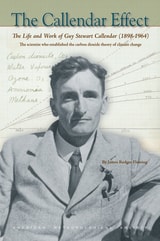
The Callendar Effect
The Life and Work of Guy Stewart Callendar (1898-1964)James Rodger Fleming
American Meteorological Society, 2007