Results by title
3 books match the query 'Folly'
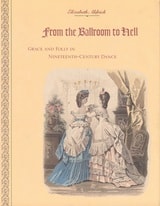
From the Ballroom to Hell
Grace and Folly in Nineteenth-Century DanceElizabeth Aldrich
Northwestern University Press, 1991
From the Ballroom to Hell collects over 100 little-known excerpts from dance, etiquette, beauty, and fashion manuals from the nineteenth century. Included are instructions for performing various dances, as well as musical scores, costume patterns, and the proper way to hold one's posture, fork, gloves, and fan. While of particular interest to dancers, dance historians, and choreographers, anyone fascinated by the ways and mores of the period will find From the Ballroom to Hell an endearing and informative glimpse of America's past.

Hope and Folly
The United States and UNESCO, 1945-1985William Preston Jr., Edward S. Herman, and Herbert I. SchillerIntroduction by Ellen Ray and William H. SchappSean MacBride
University of Minnesota Press, 1989
Hope and Folly was first published in 1989. Minnesota Archive Editions uses digital technology to make long-unavailable books once again accessible, and are published unaltered from the original University of Minnesota Press editions.
Created in a burst of idealism after World War II, the United Nations Educational, Scientific, and Cultural Organization (UNESCO) existed for forty years in a state of troubled yet often successful collaboration with one of its founders and benefactors, the United States. In 1980, UNESCO adopted the report of a commission that surveyed and criticized the dominance, in world media, of the United States, Japan, and a handful of European countries. The report also provided the conceptual underpinnings for what was later called the New World Information and Communication Order, a general direction adopted by UNESCO to encourage increased Third World participation in world media. This direction - it never became an official program - ultimately led to the United States's withdrawal from UNESCO in 1984.
Hope and Folly is an interpretive chronicle of U.S./ UNESCO relations. Although the information debated has garnered wide attention in Europe and the Third World, there is no comparable study in the English language, and none that focuses specifically on the United States and the broad historical context of the debate. In the first three parts, William Preston covers the changing U.S./ UNESCO relationship from the early cold war years through the period of anti-UNESCO backlash, as well as the politics of the withdrawal. Edward Herman's section is an interpretive critique of American media coverage of the withdrawal, and Herbert Schiller's is a conceptual analysis of conflicts within the United States's information policies during its last years in UNESCO. The book's appendices include an analysis of Ed Bradley's notorious "60 Minutes" broadcast on UNESCO.
Praise of Folly
Desiderius Erasmus; Translated by John Wilson
University of Michigan Press, 1958