Results by title
8 books match the query 'Food habits in literature'
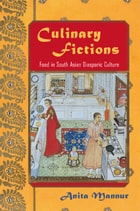
Culinary Fictions
Food in South Asian Diasporic CultureAnita Mannur
Temple University Press, 2009
For South Asians, food regularly plays a role in how issues of race, class, gender, ethnicity, and national identity are imagined as well as how notions of belonging are affirmed or resisted. Culinary Fictions provides food for thought as it considers the metaphors literature, film, and TV shows use to describe Indians abroad. When an immigrant mother in Jhumpa Lahiri’s The Namesake combines Rice Krispies, Planters peanuts, onions, salt, lemon juice, and green chili peppers to create a dish similar to one found on Calcutta sidewalks, it evokes not only the character’s Americanization, but also her nostalgia for India.
Food, Anita Mannur writes, is a central part of the cultural imagination of diasporic populations, and Culinary Fictions maps how it figures in various expressive forms. Mannur examines the cultural production from the Anglo-American reaches of the South Asian diaspora. Using texts from novels—Chitra Divakaruni’s Mistress of Spices and Shani Mootoo’s Cereus Blooms at Night—and cookbooks such as Madhur Jaffrey’s Invitation to Indian Cooking and Padma Lakshmi’s Easy Exotic, she illustrates how national identities are consolidated in culinary terms.
Culinary Poetics and Edible Images in Twentieth-Century American Literature
Stacie Cassarino
The Ohio State University Press, 2018
Cassarino takes the reader through the changing dynamics of food production and consumption, from wartime sensibilities of patriotic eating to the postwar excess of culinary cosmopolitanism and finally to contemporary supermarket pastorals. She pairs chefs and poets—Julia Child and Gertrude Stein, Poppy Cannon and Frank O’Hara, Vertamae Smart-Grosvenor and Harryette Mullen—to argue that each converts eating into an aesthetic opportunity that has the power to impact how people consume. In this way, Cassarino reveals the modern cookbook not just as a literary counterpart to contemporary poetry but also as vital to the literature and art occurring around it. From Futurist cookbooks to fast food lyrics, from Gullah recipes to Eat Art, she reminds us that global foodscapes are connected to aesthetic movements in literature and art.
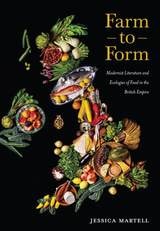
Farm to Form
Modernist Literature and Ecologies of Food in the British EmpireJessica Martell
University of Nevada Press, 2020
Deeply informed by Martell’s extensive knowledge of modern British, Irish, American, and World Literatures, this progressive work positions modernism as central to the study of narratives of resistance against social and environmental degradation. Analyzed works include those of Thomas Hardy, E. M. Forster, Virginia Woolf, Joseph Conrad, George Russell, and James Joyce.
In light of climate change, fossil fuel supremacy, nutritional dearth, and other pressing food issues, modernist texts bring to life an era of crisis and anxiety similar to our own. In doing so, Martell summons the past as a way to employ the modernist term of “defamiliarizing” the present so that entrenched perceptions can be challenged. Our current food regime is both new and constantly evolving with the first industrial food trades. Studying earlier cultural responses to them invites us to return to persistent problems with new insights and renewed passion.
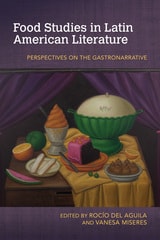
Food Studies in Latin American Literature
Perspectives on the GastronarrativeRocío del Aguila
University of Arkansas Press, 2021
Food Studies in Latin American Literature presents a timely collection of essays analyzing a wide array of Latin American narratives through the lens of food studies. Topics explored include potato and maize in colonial and contemporary global narratives; the role of cooking in Sor Juana Inés de la Cruz’s poetics; the centrality of desire in twentieth-century cooking writing by women; the relationship among food, recipes, and national identity; the role of food in travel narratives; and the impact of advertisements on domestic roles.
The contributors included here—experts in Latin American history, literature, and cultural studies—bring a novel, interdisciplinary approach to these explorations, presenting new perspectives on Latin American literature and culture.
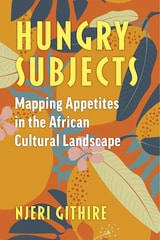
Hungry Subjects
Mapping Appetites in the African Cultural LandscapeNjeri Githire
University of Michigan Press, 2026
Against the backdrop of media representations of Africa through persistent and pervasive images of emaciated, starving Africans and the critical need to marshall food aid in response, Hungry Subjects places Africa’s food anxiety within a broader historical context and expands ongoing food scholarship beyond its current confines in the social sciences. Njeri Githire weaves together coming-of-age texts across the African and African diasporic literary landscape in English, French, and Portuguese expression to ask how African writers incorporate food into their storylines to transmit cultural information, question norms, and propose alternatives. Eating is an intimately personal yet inherently social experience codified by public rituals and commerce, invariably linked to a larger tapestry of historical, cultural, economic, and political dynamics. Delving into the political dynamics of food as a tool of power and control alongside subversive potentialities, Hungry Subjects appraises the narrative and political thrust of (not-)eating and exposes the ways in which postcolonial manifestations of colonial-era power relations are symbolized in food’s many functions and meanings.
Making a Man
Gentlemanly Appetites in the Nineteenth Century British NovelGwen Hyman
Ohio University Press, 2009
The gentleman, Making a Man argues, is a dangerous alimental force. Threatened with placelessness, he seeks to locate and mark himself through his feasting and fasting. But in doing so, he inevitably threatens to starve, to subsume, to swallow the community around him. The gentleman is at once fundamental and fundamentally threatening to the health of the nation: his alimental monstrousness constitutes the nightmare of the period’s striving, anxious, alimentally fraught middle class.
Making a Man makes use of food history and theory, literary criticism, anthropology, gender theory, economics, and social criticism to read gentlemanly consumers from Mr. Woodhouse, the gruel-eater in Jane Austen’s Emma, through the vampire and the men who hunt him in Bram Stoker’s Dracula. Hyman argues that appetite is a crucial means of casting light on the elusive identity of the gentleman, a figure who is the embodiment of power and yet is hardly embodied in Victorian literature.
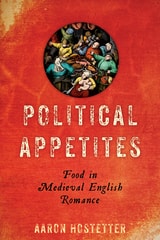
Political Appetites
Food in Medieval English RomanceAaron Hostetter
The Ohio State University Press, 2017
If humanity has attempted through its brief history to render the material world edible, then food and food practice not only influence our aspirations but also shift focus to the limits of human existence on this planet. In studying the foodways of the past as a fundamental economic activity, Political Appetites questions contemporary attitudes towards consumption as their proliferation and abuses create social inequities, menace ecosystems, and threaten to bring about the end of the Anthropocene Era.
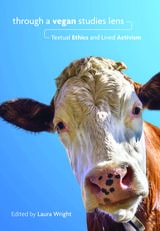
Through a Vegan Studies Lens
Textual Ethics and Lived ActivismLaura Wright
University of Nevada Press, 2019
Veganism is a practice that allows for environmentally responsible consumer choices that are viewed, particularly in the West, as oppositional to an economy that is largely dependent upon big agriculture. This groundbreaking collection exposes this disruption, critiques it, and offers a new roadmap for navigating and reimaging popular culture representations on veganism. These essays engage a wide variety of political, historical, and cultural issues, including contemporary political and social circumstances, emergent veganism in Eastern Europe, climate change, and the Syrian refugee crisis, among other topics.
Through a Vegan Studies Lens significantly furthers the conversation of what a vegan studies perspective can be and illustrates why it should be an integral part of cultural studies and critical theory. Vegan studies is inclusive, refusing to ignore the displacement, abuse, and mistreatment of nonhuman animals. It also looks to ignite conversations about cultural oppression.