Results by title
5 books match the query 'Food sovereignty'
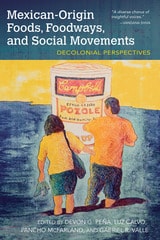
Mexican-Origin Foods, Foodways, and Social Movements
Decolonial PerspectivesDevon Peña
University of Arkansas Press, 2017
Winner, 2018 ASFS (Association for the Study of Food and Society) Book Award, Edited Volume
This collection of new essays offers groundbreaking perspectives on the ways that food and foodways serve as an element of decolonization in Mexican-origin communities.
The writers here take us from multigenerational acequia farmers, who trace their ancestry to Indigenous families in place well before the Oñate Entrada of 1598, to tomorrow’s transborder travelers who will be negotiating entry into the United States. Throughout, we witness the shifting mosaic of Mexican-origin foods and foodways in the fields, gardens, and kitchen tables from Chiapas to Alaska.
Global food systems are also considered from a critical agroecological perspective, including the ways colonialism affects native biocultural diversity, ecosystem resilience, and equality across species, human groups, and generations.
Mexican-Origin Foods, Foodways, and Social Movements is a major contribution to the understanding of the ways that Mexican-origin peoples have resisted and transformed food systems. It will animate scholarship on global food studies for years to come.
[more]
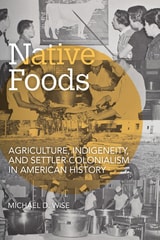
Native Foods
Agriculture, Indigeneity, and Settler Colonialism in American HistoryMichael D. Wise
University of Arkansas Press, 2023
In Native Foods: Agriculture, Indigeneity, and Settler Colonialism in American History, Michael D. Wise confronts four common myths about Indigenous food history: that most Native communities did not practice agriculture; that Native people were primarily hunters; that Native people were usually hungry; and that Native people never developed taste or cuisine. Wise argues that colonial expectations of food and agriculture have long structured ways of seeing (and of not seeing) Native land and labor.
Combining original historical research with interdisciplinary perspectives and informed by the work of Indigenous food sovereignty advocates and activists, this study sheds new light on the historical roles of Native American cuisine in American history and the significance of ongoing colonial processes in present-day discussions about the place of Native foods and Native history in our evolving worlds of taste, justice, and politics.
Combining original historical research with interdisciplinary perspectives and informed by the work of Indigenous food sovereignty advocates and activists, this study sheds new light on the historical roles of Native American cuisine in American history and the significance of ongoing colonial processes in present-day discussions about the place of Native foods and Native history in our evolving worlds of taste, justice, and politics.
[more]
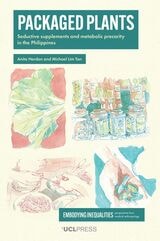
Packaged Plants
Seductive Supplements and Metabolic Precarity in the PhilippinesAnita Hardon and Michael Lim Tan
University College London, 2024
A tight ethnographic focus on the popularity and impact of overly processed plant-based foods and supplements in the Philippines.
Through meticulous research and insightful analysis, Packaged Plants explores the intersectionality between health, economics, and environment in the Philippines, offering an absorbing ethnography and cultural history of how the production and consumption of plants for food and medicine have changed as well as how ultra-processed foods have become linked to health concerns, including cardiovascular disease, diabetes, and obesity.
Part one of the book presents a comprehensive analysis scrutinizing the colonial influences, urbanization, nutritional policies, research programs, and neoliberal marketing strategies in the Philippines that have proliferated packaged plant-based products as food and medicines. Part two interweaves contemporary urban political ecology frameworks with medical anthropological perspectives within Puerto Princesa and elucidates the precarious circumstances compelling individuals to invest in supplements.
[more]
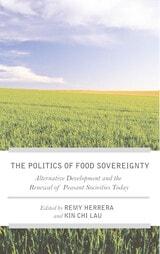
The Struggle for Food Sovereignty
Alternative Development and the Renewal of Peasant Societies TodayEdited by Remy Herrera and Kin Chi Lau
Pluto Press, 2015
Food sovereignty—or the right of a people to operate and control their own food and agricultural systems—has all but disappeared throughout much of the world, usurped by multinational corporations engaging in industrialized farming and global trade. The Struggle for Food Sovereignty examines the prospects and struggles of family farms, peasants, and others in the fight for control over local sustenance and rights of access to land and food. The authors examine the issues in both the global north and south, finding a common vision even amid apparently radically differing political and economic conditions.
[more]
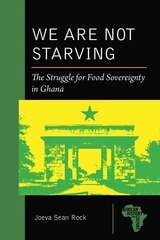
We Are Not Starving
The Struggle for Food Sovereignty in GhanaJoeva Sean Rock
Michigan State University Press, 2022
This critical text is a timely ethnography of how global powers, local resistance, and capital flows are shaping contemporary African foodways. Ghana was one of the first countries targeted by a group of US donors and agribusiness corporations that funded an ambitious plan to develop genetically modified (GM) crops for African farmers. The collective believed that GM crops would help farmers increase their yields and help spark a “new” Green Revolution on the continent. Soon after the project began in Ghana, a nationwide food sovereignty movement emerged in opposition to GM crops. Today, in spite of impressive efforts and investments by proponents, only two GM crops remain in the pipeline. Why, after years of preparation, millions of dollars of funding, and multiple policy reforms, did these megaprojects effectively come to a halt? One of the first ethnographies to take on the question of GM crops in the African context, We Are Not Starving: The Struggle for Food Sovereignty in Ghana blends archival analysis, interviews, and participant observation with Ghanaian scientists, farmers, activists, and officials. Ultimately the text aims to illuminate why GM crops have animated the country and to highlight how their introduction has opened an opportunity to air grievances about the systematic de-valuing and exploitation of African land, labor, and knowledge that have been centuries in the making.
[more]