Results by title
2 books match the query 'Fools and jesters'
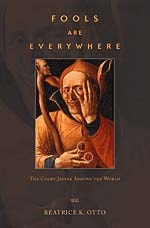
Fools Are Everywhere
The Court Jester Around the WorldBeatrice K. Otto
University of Chicago Press, 2001
Most of the work on the court jester has concentrated on Europe; Otto draws on previously untranslated classical Chinese writings and other sources to correct this bias and also looks at jesters in literature, mythology, and drama. Written with wit and humor, Fools Are Everywhere is the most comprehensive look at these roguish characters who risked their necks not only to mock and entertain but also to fulfill a deep and widespread human and social need.
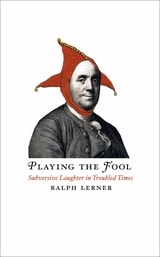
Playing the Fool
Subversive Laughter in Troubled TimesRalph Lerner
University of Chicago Press, 2009
The role of the fool is to provoke the powerful to question their convictions, preferably while avoiding a beating. Fools accomplish this not by hectoring their audience, but by broaching sensitive topics indirectly, often disguising their message in a joke or a tale. Writers and thinkers throughout history have adopted the fool’s approach, and here Ralph Lerner turns to six of them—Thomas More, Francis Bacon, Robert Burton, Pierre Bayle, Benjamin Franklin, and Edward Gibbon—to elucidate the strategies these men employed to persuade the heedless, the zealous, and the overly confident to pause and reconsider.
As Playing the Fool makes plain, all these men lived through periods marked by fanaticism, particularly with regard to religion and its relation to the state. In such a troubled context, advocating on behalf of skepticism and against tyranny could easily lead to censure, or even, as in More’s case, execution. And so, Lerner reveals, these serious thinkers relied on humor to move their readers toward a more reasoned understanding of the world and our place in it. At once erudite and entertaining, Playing the Fool is an eloquently thought-provoking look at the lives and writings of these masterly authors.