Results by title
6 books match the query 'Forced labor'
Beyond Constraint
Middle/Passages of Blackness and Indigeneity in the Radical TraditionShona N. Jackson
Duke University Press, 2024
Capturing Labor
A History of Unfree Work in the SouthwestEdited by Jessica R. Pliley and John Mckiernan-González
University of Texas Press, 2026
A collection of essays grappling with the many, often overlooked, forms of unfree labor in the West.
When Americans think of unfree labor—coerced, extracted from workers unable to freely enter and exit contracts—what comes to mind is Black slavery and peonage in the South. But other forms of unfree labor also built the United States. Collecting a diverse range of sharply argued historical essays, Capturing Labor shares the story of unfree labor in the Southwest, affecting mainly Indigenous people, Mexican Americans, and people of color.
In Texas and elsewhere, state agents developed various methods for directing the movement of workers, seizing their time, and controlling the products of their efforts. Case studies highlight the detention during World War I of Indigenous children and unaccompanied women, who were placed in boarding schools, fined, and obligated to work off the resulting debt. Other essays expose authorities forcing workers to break strikes and jailing Americans who supported labor uprisings in rural Mexico and the United States. Prisons and asylums supplied coerced agricultural workers and musicians who were never compensated for their labor or by the labels that took their recordings.
Editors Jessica Pliley and John Mckiernan-González contend that unfree labor continues to shape American life, and is all around us today. Understanding its history aids us in recognizing and bringing attention to the grim realities of the present.
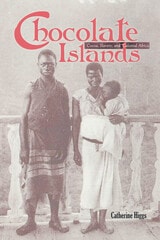
Chocolate Islands
Cocoa, Slavery, and Colonial AfricaCatherine Higgs
Ohio University Press, 2012
In Chocolate Islands: Cocoa, Slavery, and Colonial Africa, Catherine Higgs traces the early-twentieth-century journey of the Englishman Joseph Burtt to the Portuguese colony of São Tomé and Príncipe—the chocolate islands—through Angola and Mozambique, and finally to British Southern Africa. Burtt had been hired by the chocolate firm Cadbury Brothers Limited to determine if the cocoa it was buying from the islands had been harvested by slave laborers forcibly recruited from Angola, an allegation that became one of the grand scandals of the early colonial era. Burtt spent six months on São Tomé and Príncipe and a year in Angola. His five-month march across Angola in 1906 took him from innocence and credulity to outrage and activism and ultimately helped change labor recruiting practices in colonial Africa.
This beautifully written and engaging travel narrative draws on collections in Portugal, the United Kingdom, and Africa to explore British and Portuguese attitudes toward work, slavery, race, and imperialism. In a story still familiar a century after Burtt’s sojourn, Chocolate Islands reveals the idealism, naivety, and racism that shaped attitudes toward Africa, even among those who sought to improve the conditions of its workers.
Czechoslovak Diplomacy and the Gulag
Deportation of Czechoslovak Citizens to the USSR and the Negotiation for their Repatriation, 1945-1953Milada Polisenská
Central European University Press, 2016
Illegible Will
Coercive Spectacles of Labor in South Africa and the DiasporaHershini Bhana Young
Duke University Press, 2017

The Briny South
Displacement and Sentiment in the Indian Ocean WorldNienke Boer
Duke University Press, 2023