Results by title
17 books match the query 'Foreign exchange'
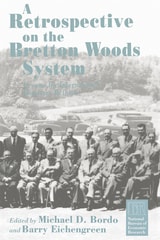
A Retrospective on the Bretton Woods System
Lessons for International Monetary ReformEdited by Michael D. Bordo and Barry Eichengreen
University of Chicago Press, 1993
The contributors explore adjustment, liquidity, and transmission under the System; the way it affected developing countries; and the role of the International Monetary Fund in maintaining a stable rate. The authors examine the reasons for the System's success and eventual collapse, compare it to subsequent monetary regimes, such as the European Monetary System, and address the possibility of a new fixed exchange rate for today's world.
Changes in Exchange Rates in Rapidly Developing Countries
Theory, Practice, and Policy IssuesEdited by Takatoshi Ito and Anne O. Krueger
University of Chicago Press, 1999
Historically, most developing nations have employed strict exchange rate controls and heavy protection of domestic industry-policies now thought to be at odds with sustainable and desirable rates of economic growth. By contrast, many East Asian nations maintained exchange rate regimes designed to achieve an attractive climate for exports and an "outer-oriented" development strategy. The result has been rapid and consistent economic growth over the past few decades.
Changes in Exchange Rates in Rapidly Developing Countries explores the impact of such diverse exchange control regimes in both historical and regional contexts, focusing particular attention on East Asia. This comprehensive, carefully researched volume will surely become a standard reference for scholars and policymakers.
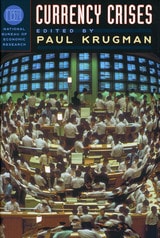
Currency Crises
Edited by Paul Krugman
University of Chicago Press, 2000
Reflecting the latest thinking on the subject, this offering from the NBER will serve as a useful basis for further debate on the theory and practice of speculative attacks, as well as a valuable resource as new crises loom.
Economic Adjustment and Exchange Rates in Developing Countries
Edited by Sebastian Edwards and Liaquat Ahamed
University of Chicago Press, 1986
The volume, divided into four main sections, addresses: the role of exchange rates in stabilization programs and the adjustment process; the importance of exchange rate policy during liberalization reform in developing countries; exchange rate problems relevant and unique to developing countries, illustrated by case studies; and the problems defining, measuring, and identifying determinants of real exchange rates. Authors of individual papers examine the relation between commercial policies and exchange rates, the role of exchange rate policy in stabilization programs, the effectiveness of devaluations as a policy tool, and the interaction between exchange rate terms of trade an capital flow. This research will not only prove crucial to our understanding of the role of exchange rates in developing countries, but will clearly set the standard for future work in the field.
Exchange Rate Theory and Practice
Edited by John F. Bilson and Richard C. Marston
University of Chicago Press, 1984
Exchange Rates and International Macroeconomics
Edited by Jacob A. Frenkel
University of Chicago Press, 1983
Both empirical and theoretical research are represented, and the contributors analyze such issues as the performance of various models of exchange rate determination, the role of risk and speculation in the forward market for foreign exchange, the rational expectations hypothesis in such markets, the performance of monetary policy in ten industrial countries, the role that labor market contracts play in exchange rate policies, the effect of he oil shocks on the evolution of exchange rates, and the output cost of bringing down inflation in the open economy.
Financial Policies and the World Capital Market
The Problem of Latin American CountriesEdited by Pedro Aspe Armella, Rudiger Dornbusch, and Maurice Obstfeld
University of Chicago Press, 1983
The essays brought together in this volume share a common objective: To bring a unifying methodological approach to the analysis of financial problems in developing, open economies. While the primary focus is on contemporary Latin America, the methods employed and the lessons learned are of wider applicability. The papers address the financial integration issue from three different perspectives. In some cases, a country study is the vehicle for an econometric investigation of a particular external linkage. In other cases, an individual country's experience suggests an economic model in which the stylized facts may be analyzed and developed. A third direction is unabashedly theoretical and formulates more general principles which are broadly applicable rather than country-specific.

Foreign Exchange
(Or the Stories You Wouldn't Tell a Stranger)Edited by Clémentine Deliss, Yvette Mutumba, and the Weltkulturen Museum
Diaphanes, 2014
Developed through artistic research in the Weltkulturen Museum’s Weltkulturen Labor research lab, Foreign Exchange raises questions about the relationship between the museum’s educational and scientific aims and global trade. Together, essays by anthropologists, art historians, artists, and curators form an extended conversation around the historical accumulation and commodification of artifacts and, in particular, the representation of the human body in ethnographic photographs. Rounding out the volume are many previously unpublished photographs of works discussed. Contributing authors and artist include Peggy Buth, Minerva Cuevas, Gabriel Gbadamosi, David Lau, Tom McCarthy, David Weber-Krebs, and Luke Willis-Thompson.
Greenback Empire
Global Dollar Dominance and the New Cold WarHo-fung Hung
University of Chicago Press, 2026
A critical history of the US dollar’s dominance in the world economy—and what has kept China’s currency from overtaking it.
The dollar is the primary currency of the world economy. With China now rivaling the United States on the world stage, a critical question hangs in the balance: will the Chinese renminbi challenge the status of the dollar and, in doing so, deprive America of its “exorbitant privilege”?
In GreenbackEmpire, Ho-fung Hung offers a powerful account of why, even as American shares of global production, ownership, and trade continue to decline, its currency has retained the support of governments and investors around the world. For six decades, Hung shows, the dominance of the dollar has rested on the security umbrella that the US offers to the world’s wealthiest countries—including oil producers. To these countries, support for the value of the dollar is tantamount to maintaining US protection. While China has become a serious geopolitical and economic rival to the US, the Chinese state’s airtight control of its financial system has delayed the free trading of the renminbi, limiting the currency’s internationalization. In short, the same strategy that engineered growth in China’s economy is restraining its currency's rise in opposition to the dollar. Hung’s Greenback Empire is an essential history of the dollar’s prowess, indispensable for understanding the future of the global monetary system.
Inflation, Exchange Rates, and the World Economy
Lectures on International Monetary EconomicsW. Max Corden
University of Chicago Press, 1986
International Financial Markets
The Challenge of GlobalizationEdited by Leonardo Auernheimer
University of Chicago Press, 2003
After a guided tour by the editor and a historical exploration, some of the world's leading theorists and policy analysts examine the benefits and pitfalls of capital movements and controls. In the second portion, papers examine the recent experiences of Argentina and Mexico, with Charles Calomiris—whose proposals for a new world financial architecture have elicited wide attention—contributing a response. The volume concludes with a roundtable discussion of the report of the International Financial Institutions Advisory Commission, in which the chair of the commission, Allan H. Meltzer, both comments on the report and responds to questions about it.
The material presented here will become a standard reference for analysts, policymakers, and the interested general public.
Contributors:
Leonardo Auernheimer, Matthew Bishop, Michael D. Bordo, Charles Calomiris, Guillermo A. Calvo, Augustin Carstens, Michael P. Dooley, Pablo E. Guidotti, T. Britton Harris, John P. Lipsky, Guillermo Ortiz Martinez, Allan H. Meltzer, Andrew Powell, Rene Stulz, Carl E. Walsh
International Policy Coordination and Exchange Rate Fluctuations
Edited by William H. Branson, Jacob A. Frenkel, and Morris Goldstein
University of Chicago Press, 1990
In these papers and comments, prominent international economists consider past and present interpretations of the meaning of international policy coordination; conditions necessary for coordination to be beneficial both to the direct participants and the global economy; influential factors for the quantitative impact of coordination; obstacles to coordination; the most—and least—effective methods of coordination; and future directions of the coordination process, including processes associated with greater fixity of exchange rates.
These studies will be readily accessible to policymakers, while offering sophisticated analyses to interested scholars of the global economy.
Misalignment of Exchange Rates
Effects on Trade and IndustryEdited by Richard C. Marston
University of Chicago Press, 1988
Contributors to Misalignment of Exchange Rates address a series of questions about misalignment. Several papers investigate the causes of misalignment and the extent to which observed movements in real exchange rates can be attributed to misalignment. These studies are conducted both empirically, through the experiences of the United States, Great Britain, Japan, and the countries of the European Monetary System, and theoretically, through models of imperfect competition. Attention is then turned to the effects of misalignment, especially on employment and production, and to detailed estimates of the effects of changes in exchange rates on several industries, including the U.S. auto industry. In response to the contention that there is significant "hysteresis" in the adjustment of employment and production to changes in exchange rates, contributors also attempt to determine whether the effects of misalignment can be reversed once exchange rates return to earlier levels. Finally, the issue of how to avoid—or at least control—misalignment through macroeconomic policy is confronted.

Odd Man Out
Readings of the Work and Reputation of Edgar DegasCarol M. Armstrong
University of Chicago Press, 1991
By reading several groups of the artist's images through the lens of a sequence of critical texts, Armstrong shows how our critical and popular expectations of Degas are overturned and subverted. Each of these groups of images is matched to different interpretive moves, each highlighting distinct themes: economics and vocation; narrative and semiotics; gender and corporeality; and the author and self. Armstrong's provocative analysis celebrates the tantalizing qualities of the artist's elusive career: the pluralism of his work, its conflation of positivistic and negational tactics, the modern and the traditional, the abstract and the representational.
"A lucid and searching study. . . . Armstrong has produced one of the most elegant and persuasive examples of the historian's use of 19th-century art criticism. In the process, she has achieved a reading of the artist which makes a difference to the way we understand the difference of Degas himself."—Neil McWilliam, Times Higher Education Supplement
"This is a brilliant, original, and beautifully articulated study. Carol Armstrong's scholarship is impressive in its richness, ambition, and sophistication: Degas's works have rarely been given such detailed, penetrating, and suggestive readings as those offered in this book."—Linda Nochlin, Yale University
"With brilliant insight and incisive analytical intelligence, Carol Armstrong introduces new ways to conceptualize the structural ambiguities of Degas's work. Her subtle and probing readings clarify the fundamental contrariness of Degas's images—their disturbing negativity, their anti-modern modernism. Odd Man Out catapults the criticism of Degas from the hinterlands of traditional art history to the foreground of contemporary critical theory in both literature and the visual arts."—Charles Bernheimer, University of Pennsylvania
Strained Relations
US Foreign-Exchange Operations and Monetary Policy in the Twentieth CenturyMichael D. Bordo, Owen F. Humpage, and Anna J. Schwartz
University of Chicago Press, 2015
The Microstructure of Foreign Exchange Markets
Edited by Jeffrey A. Frankel, Giampaolo Galli, and Alberto Giovannini
University of Chicago Press, 1996
These nine innovative essays use a microstructure approach to analyze the workings of the foreign exchange market, with special emphasis on institutional aspects and the actual behavior of market participants. They examine the volume of transactions, heterogeneity of traders, the time of day and location of trading, the bid-ask spread, and the high level of exchange rate volatility that has puzzled many observers. They also consider the structure of the market, including such issues as nontransparency, asymmetric information, liquidity trading, the use of automated brokers, the relationship between spot and derivative markets, and the importance of systemic risk in the market.
This timely volume will be essential reading for anyone interested in the economics of international finance.
Trading Freedom
How Trade with China Defined Early AmericaDael A. Norwood
University of Chicago Press, 2022
The economic and geographic development of the early United States is usually thought of in trans-Atlantic terms, defined by entanglements with Europe and Africa. In Trading Freedom, Dael A. Norwood recasts these common conceptions by looking to Asia, making clear that from its earliest days, the United States has been closely intertwined with China—monetarily, politically, and psychologically.
Norwood details US trade with China from the late eighteenth through the late nineteenth centuries—a critical period in America’s self-definition as a capitalist nation—and shows how global commerce was central to the articulation of that national identity. Trading Freedom illuminates how debates over political economy and trade policy, the building of the transcontinental railroad, and the looming sectional struggle over slavery were all influenced by Sino-American relations. Deftly weaving together interdisciplinary threads from the worlds of commerce, foreign policy, and immigration, Trading Freedom thoroughly dismantles the idea that American engagement with China is anything new.