Results by title
14 books match the query 'Foreign influences'
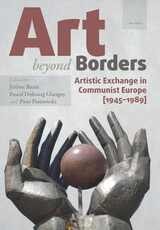
Art beyond Borders
Artistic Exchange in Communist Europe (1945-1989)Jérôme Bazin
Central European University Press, 2016
CROSS-CULTURAL VISIONS IN AFRICAN AMERICAN MODERNISM
FROM SPATIAL NARRATIVE TO JAZZ HAIKUYOSHINOBU HAKUTANI
The Ohio State University Press, 2006
In writing Black Boy, the centerpiece of the Chicago Renaissance, Wright was inspired by Theodore Dreiser. Because the European and African cultural visions that Wright, Ralph Ellison, Alice Walker, and Toni Morrison acquired were buttressed by the universal humanism that is common to all cultures, this ideology is shown to transcend the problems of society. Fascinated by Eastern thought and art, Wright, Walker, Sonia Sanchez, and James Emanuel wrote highly accomplished poetry and prose. Like Ezra Pound, Wright was drawn to classic haiku, as reflected in the 4,000 haiku he wrote at the end of his life. As W. B. Yeats’s symbolism was influenced by his cross-cultural visions of noh theatre and Irish folklore, so is James Emanuel’s jazz haiku energized by his cross-cultural rhythms of Japanese poetry and African American music.
The book demonstrates some of the most visible cultural exchanges in modern and postmodern African American literature. Such a study can be extended to other contemporary African American writers whose works also thrive on their cross-cultural visions, such as Amiri Baraka, Ishmael Reed, Charles Johnson, and haiku poet Lenard Moore.
Distancing English
A Chapter in the History of the InexpressiblePage Richards
The Ohio State University Press, 2009
Empire Burlesque
The Fate of Critical Culture in Global AmericaDaniel T. O Hara
Duke University Press, 2003
Empire Burlesque presents several interrelated analyses through readings of a range of writers and cultural figures including Henry James, Freud, Said, De Man, Derrida, and Cordwainer Smith (an academic, spy, and classic 1950s and 1960s science fiction writer). It describes the debilitating effects of globalization on the university in general and the field of literary studies in particular, it critiques literary studies’ embrace of globalization theory in the name of a blind and vacant modernization, and it meditates on the ways critical reading and writing can facilitate an imaginative alternative to institutionalized practices of modernization. Drawing on Lacanian psychoanalytical theory, it diagnoses contemporary American Studies as typically driven by the mindless abjection and transference of professional identities.
A provocative commentary on contemporary cultural criticism, Empire Burlesque will inform debates on the American university across the humanities, particularly among those in literary criticism, cultural studies, and American studies.
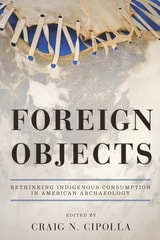
Foreign Objects
Rethinking Indigenous Consumption in American ArchaeologyEdited by Craig N. Cipolla
University of Arizona Press, 2017
Brass tinklers and pendants. Owl effigies, copper kettles, crucifixes with blue glass stones. What do they have in common? The answer spans thousands of years and a multitude of peoples and places, and reveals how people made sense of their world as they collected and used the objects they encountered.
Foreign Objects demonstrates the breadth and vibrancy of contemporary archaeology. Taking a broad set of archaeological cases from across the Americas, editor Craig N. Cipolla and the volume contributors explore how indigenous communities have socialized foreign objects over time. The book critiques the artificial divide between prehistory and history, studying instead the long-term indigenous histories of consumption, a term typically associated with capitalism and modern-world colonialism.
The case studies range from “exotic” stone tools used millennia ago to nineteenth-century patent medicines made and marketed by an Indian doctress. Foreign Objects focuses on how indigenous groups and foreign objects became entangled with one another in myriad ways. The book explores how the framework of consumption can shed new light on trade, exchange, materiality, and cultural production.
Contributors place foreign objects in the spotlight and offer a comparison of how this general class of material played a part in indigenous and colonial worlds. Each chapter illustrates how notions of consumption fit into their place in time and also delves into how foreign objects related to ideas of the body and personhood, how people used them to participate in political and spiritual worlds, and how they presented new ways of enduring or resisting European colonialism and capitalism. Foreign Objects is a critical look at consumption through the lens of indigenous knowledge and archaeological theory.
Contributors:
Matthew A. Beaudoin
Lewis Borck
Kathleen J. Bragdon
Craig N. Cipolla
Charles R. Cobb
John L. Creese
Diana DiPaolo Loren
Martin Gallivan
Meghan C. L. Howey
Barbara J. Mills
Maxine Oland
Lee M. Panich
Patricia E. Rubertone
Christopher Shephard
Keith D. Stephenson
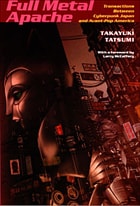
Full Metal Apache
Transactions Between Cyberpunk Japan and Avant-Pop AmericaTakayuki Tatsumi
Duke University Press, 2006
Full Metal Apache introduces English-language readers to a vast array of Japanese writers and performers and considers their work in relation to the output of William Gibson, Thomas Pynchon, H. G. Wells, Jack London, J. G. Ballard, and other Westerners. Tatsumi moves from the poetics of metafiction to the complex career of Madame Butterfly stories and from the role of the Anglo-American Lafcadio Hearn in promoting Japanese folklore within Japan during the nineteenth century to the Japanese monster Godzilla as an embodiment of both Japanese and Western ideas about the Other. Along the way, Tatsumi develops original arguments about the self-fashioning of “Japanoids” in the globalist age, the philosophy of “creative masochism” inherent within postwar Japanese culture, and the psychology of “Mikadophilia” indispensable for the construction of a cyborg identity. Tatsumi’s exploration of the interplay between Japanese and American cultural productions is as electric, ebullient, and provocative as the texts and performances he analyzes.
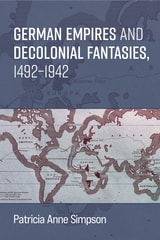
German Empires and Decolonial Fantasies, 1492–1942
Patricia Anne Simpson
University of Michigan Press, 2025
2026 DAAD/GSA Prize for the Best Book in History and Social Sciences Winner
German Empires and Decolonial Fantasies, 1492–1942 investigates the ways German-speaking Europe’s cultural narratives reflect histories of entanglement with the colonial world. Drawing from an impressive range of sources, Patricia Anne Simpson decodes the ironclad colonial logic that reproduces and inflects tropes of the conquistador, scientific explorer, and pioneers. She brings them into dialogue with a cast of historical agents who reimagine the cannibal, the enslaved, the conquered, Indigenous interlocutors, and the ungovernable. Throughout, intersectional attributes of race, gender, ethnicity, and religion reconfigure around shades of European whiteness. Individual chapters explore the Hohenzollern legacy in early modernity; debates about sovereignty and enslavement; recruitment literature, prose and fiction about migration and colonization in Africa and the Americas; and colonial memoirs driven by recolonial fantasies after 1918. German Empires and Decolonial Fantasies advances efforts to decolonize the multiple disciplines that intersect the field of German studies, including literary criticism, history, philosophy, art history, and anthropology.
German Empires and Decolonial Fantasies, 1492–1942 draws from a wide range of sources, from a seventeenth-century Brandenburg fort on the coast of Ghana to a novella about a beleaguered colonial administrator in German East Africa, to advance an interdisciplinary discourse at the nexus of colonial narratives and national imaginaries. Through detailed case studies, Simpson argues for the inclusion of voices that pushed back against imperialist expansion or intervention, as well as those historical actors who disputed the supremacy of whiteness and the persuasive power of German-centric national history.
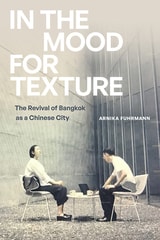
In the Mood for Texture
The Revival of Bangkok as a Chinese CityArnika Fuhrmann
Duke University Press, 2026
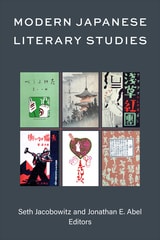
Modern Japanese Literary Studies
Seth Jacobowitz and Jonathan E. Abel, Editors
University of Michigan Press, 2026
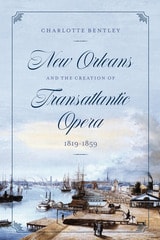
New Orleans and the Creation of Transatlantic Opera, 1819–1859
Charlotte Bentley
University of Chicago Press, 2022
New Orleans and the Creation of Transatlantic Opera, 1819–1859 explores the thriving operatic life of New Orleans in the first half of the nineteenth century, drawing out the transatlantic connections that animated it. By focusing on a variety of individuals, their extended webs of human contacts, and the materials that they moved along with them, this book pieces together what it took to bring opera to New Orleans and the ways in which the city’s operatic life shaped contemporary perceptions of global interconnection. The early chapters explore the process of bringing opera to the stage, taking a detailed look at the management of New Orleans’s Francophone theater, the Théâtre d’Orléans, as well as the performers who came to the city and the reception they received. But opera’s significance was not confined to the theater, and later chapters of the book examine how opera permeated everyday life in New Orleans, through popular sheet music, novels, magazines and visual culture, and dancing in its many ballrooms. Just as New Orleans helped to create transatlantic opera, opera in turn helped to create the city of New Orleans.
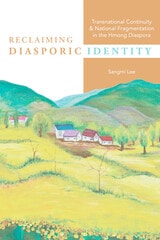
Reclaiming Diasporic Identity
Transnational Continuity and National Fragmentation in the Hmong DiasporaSangmi Lee
University of Illinois Press, 2024
In-depth and interdisciplinary, Reclaiming Diasporic Identity blends ethnography and history to provide a fresh consideration of Hmong life today.
Secondhand China
Spain, the East, and the Politics of TranslationCarles Prado-Fonts
Northwestern University Press, 2022
Uncovering an eclectic and surprising archive, Prado-Fonts draws on diverse cultural artifacts from popular literature, journalism, and early cinema to offer a rich account of how China was seen across the West between 1880 and 1930. Enrique Gaspar, Luis de Oteyza, Vicente Blasco Ibáñez, and lesser-known authors writing in Spanish and Catalan put themselves in dialogue with Leo Tolstoy, John Dewey, W. Somerset Maugham, Bertrand Russell, Pearl Buck, and André Malraux, as well as stereotypical figures from popular culture like Fu Manchu and Charlie Chan. Throughout, Prado-Fonts exposes translation as a technology of cultural hegemony and China as an appealing object for representation. A timely contribution to our understanding of how we create and consume knowledge about the world, Secondhand China is essential reading for scholars and students of Orientalism, postcolonial studies, translation studies, comparative literature, and cultural studies.
The Emperor’s New Epistemology
Music, Empire, and Empiricism in Early Modern ChinaLester Hu
University of Chicago Press, 2027
An innovative account of listening and empire-building in 17th- and 18th-century China.
The Emperor’s New Epistemology explores how listening shaped knowledge and empire-building in seventeenth- and eighteenth-century China. As the Manchu dynasty expanded deep into Inner Asian territories deemed foreign by the majority-Han population, the Qing Empire’s musical culture encompassed the sounds of Mongols, Uyghurs, and Tibetans, as well as Western music brought by Jesuit and other Christian missionaries. Lester Hu reveals that this diversity transformed not only Qing court culture but the very grounds on which knowledge and power could be established.
In one revealing episode from 1692, the Kangxi Emperor (1654–1722) misinterpreted a key term of Classical Chinese music after studying European music with the Jesuits. Hu situates this anecdote within the political, social, and epistemic shifts that transformed late-imperial China. As Hu shows, listening was an instrument of Qing imperial authority: Knowledge about music, language, and even the universe could only be verified through the emperor’s ears. Furthermore, listening facilitated new theories of empirical knowledge, which both lent themselves to Qing-imperial ideology and generated new epistemic tensions. By exploring their echoes in similar shifts in early modern Europe, Hu’s book brings a global perspective to the study of music in the early modern world and reconsiders the transcendental ground on which such comparative and intercultural knowledge is possible.
Writing in the Margins
The Ethics of Expatriation from Lawrence to OndaatjeMarilyn Adler Papayanis
Vanderbilt University Press, 2005