Results by title
4 books match the query 'Foreign public opinion, European'
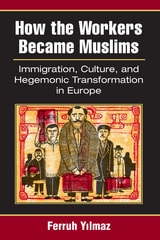
How the Workers Became Muslims
Immigration, Culture, and Hegemonic Transformation in EuropeFerruh Yilmaz
University of Michigan Press, 2016
Writing in the beginning of the 1980s, Ernesto Laclau and Chantal Mouffe explored possibilities for a new socialist strategy to capitalize on the period’s fragmented political and social conditions. Two and a half decades later, Ferruh Yilmaz acknowledges that the populist Far Right—not the socialist movement—has demonstrated greater facility in adopting successful hegemonic strategies along new structural lines Laclau and Mouffe imagined. Right-wing hegemonic strategy, Yilmaz argues, has led to the reconfiguration of internal fault lines in European societies.
Yilmaz’s primary case study is Danish immigration discourse, but his argument contextualizes his study in terms of questions of current concern across Europe, where right-wing groups that were long on the fringes of “legitimate” politics have managed to make significant gains with populations traditionally aligned with the Left. Specifically, Yilmaz argues that sociopolitical space has been transformed in the last three decades such that group classification has been destabilized to emphasize cultural rather than economic attributes.
According to this point-of-view, traditional European social and political splits are jettisoned for new “cultural” alliances pulling the political spectrum to the right, against the “corrosive” presence of Muslim immigrants, whose own social and political variety is flattened into an illusion of alien sameness.
[more]
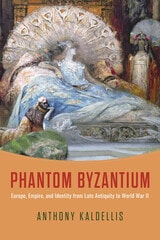
Phantom Byzantium
Europe, Empire, and Identity from Late Antiquity to World War IIAnthony Kaldellis
University of Chicago Press, 2026
How the West appropriated aspects of the eastern Roman empire while portraying it as inferior.
Unveiling the ideological foundations of Byzantine studies, Phantom Byzantium is a pioneering survey of western European perceptions of the eastern Roman empire (also known as Byzantium) spanning late antiquity to World War II. Through ten chronological chapters, Anthony Kaldellis makes the case that western Europe gradually formed its identity by adopting prestigious cultural elements from the eastern empire but simultaneously portraying the east as inferior. The West modeled its Roman imperial style on Constantinople while minimizing the latter as Greek rather than Roman; appropriated a host of Christian traditions from the east while casting the east as schismatic, heretical, or treacherous; and, during the Renaissance, used classical Hellenic philology from Greek scholars before marginalizing them as unworthy bearers of that tradition. This orientalizing impulse worked to buttress western exceptionalism and resulted in the fictitious construction of “Byzantium” as Europe’s evil doppelgänger, embodying the worst versions of traditions fundamental to European identity and casting the region as despotic, superstitious, and degenerate.
Explaining the creation, history, and functions of the ideological construct of Byzantium in the western imagination and European self-fashioning, this book has critical implications for contemporary views of European history.
[more]
The Mirror of Spain, 1500-1700
The Formation of a MythJ. N. Hillgarth
University of Michigan Press, 2000
In this major new work, J. N. Hillgarth investigates how Spain was seen by non-Spaniards in the period when it was the leading power in Europe. The author brings together a wide range of sources that elucidate Spanish history and Spanish character. He demonstrates the ways that propaganda has distorted both these things in the past and even continues to do so in the present.
In the first of the volume's four parts, the author discusses the reasons--geographic, political, and religious--why Spain has proved a hard country to understand. Hillgarth looks at travelers to Spain, from pilgrims to diplomats, spies, exiles, and foreign residents. In its second part, special attention is devoted to the interaction between Christians, Jews, and Muslims, including Jewish and Muslim exiles and secret Jews within Spain.
In its third section, The Mirror of Spain explores reactions to Spain by those who saw it from the outside, the Italians, Dutch, French, and English. One chapter deals with the English, Scottish, and Irish Catholics, who, like the Jewish and Muslim exiles, played a double role in that they were at once "insiders" and outsiders. Finally, Hillgarth attempts to show how two crucial centuries have affected the way Spain has been seen down to the present.
The Mirror of Spain draws on a wide range of sources in different languages. It relies on documents in the Public Record Office and the British Library, the Archivo General de Simancas and the collections of the colleges founded by exiles in Spain, and on major libraries in Venice and Jerusalem. The volume will be of interest to a broad spectrum of scholars--to medievalists, historians of Spain, scholars of political and literary thought, and all those interested in notions of national identity.
J. N. Hillgarth has taught for many years at the University of Toronto and the Pontifical Institute of Mediaeval Studies. He is a Fellow of the British Academy and has received awards and honors from a wide variety of distinguished institutions in Europe and North America.
[more]

The Next Threat
Western Perceptions of IslamEdited by Jochen Hippler and Andrea Lueg
Pluto Press, 1995
[more]