Results by title
4 books match the query 'Foreign public opinion, Western'
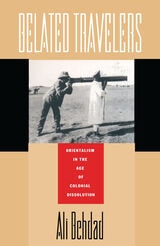
Belated Travelers
Orientalism in the Age of Colonial DissolutionAli Behdad
Duke University Press, 1994
Through readings of Flaubert, Nerval, Kipling, Blunt, and Eberhardt, and following the transition in travel literature from travelog to tourist guide, Belated Travelers addresses the specific historical conditions of late nineteenth-century orientalism implicated in the discourses of desire and power. Behdad also views a broad range of issues in addition to nostalgia and tourism, including transvestism and melancholia, to specifically demonstrate the ways in which the heterogeneity of orientalism and the plurality of its practice is an enabling force in the production and transformation of colonial power.
An exceptional work that provides an important critique of issues at the forefront of critical practice today, Belated Travelers will be eagerly awaited by specialists in nineteenth-century British and French literatures, and all concerned with colonial and postcolonial discourse.
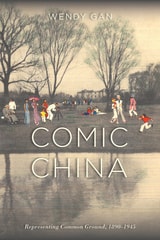
Comic China
Representing Common Ground, 1890-1945Wendy Gan
Temple University Press, 2018
Wendy Gan’s Comic China investigates the circumstances and motivations of cross-cultural humor. How do works that trade in laughter shape our understanding of Western discourses about China? Is humor meant to be inclusive or exclusive? Does it protect or challenge the status quo? Gan suggests that the simple, straightforward laugh may actually be a far more intricate negotiation of power relations.
Gan unpacks texts by authors who had little real contact with China as well as writers whose proximity to China influenced their representations. Looking beyond the familiar canon of serious modernist texts and the Yellow Peril classics of popular fiction, Gan analyzes turn-of-the-twentieth-century musical comedies set in the Far East, Ernest Bramah’s chinoiserie-inspired tales, and interwar travel writing. She also considers the comic works of the missionary Arthur Henderson Smith, the former Maritime Customs Officer J.O.P. Bland, and the Shanghai journalist and advertising man Carl Crow.
Though it includes humor that is less than complimentary to the Chinese, Comic China reminds us that laughter is tied to our common humanity. Gan navigates the humor used in comic depictions ultimately to find, not superiority or ridicule, but common ground.
Desiring Arabs
Joseph A. Massad
University of Chicago Press, 2007
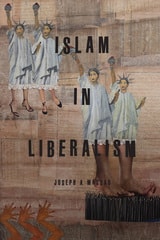
Islam in Liberalism
Joseph A. Massad
University of Chicago Press, 2014
Joseph Massad’s Islam in Liberalism explores what Islam has become in today’s world, with full attention to the multiplication of its meanings and interpretations. He seeks to understand how anxieties about tyranny, intolerance, misogyny, and homophobia, seen in the politics of the Middle East, are projected onto Islam itself. Massad shows that through this projection Europe emerges as democratic and tolerant, feminist, and pro-LGBT rights—or, in short, Islam-free. Massad documents the Christian and liberal idea that we should missionize democracy, women’s rights, sexual rights, tolerance, equality, and even therapies to cure Muslims of their un-European, un-Christian, and illiberal ways. Along the way he sheds light on a variety of controversial topics, including the meanings of democracy—and the ideological assumption that Islam is not compatible with it while Christianity is—women in Islam, sexuality and sexual freedom, and the idea of Abrahamic religions valorizing an interfaith agenda. Islam in Liberalism is an unflinching critique of Western assumptions and of the liberalism that Europe and Euro-America blindly present as a type of salvation to an assumingly unenlightened Islam.