Results by title
7 books match the query 'Forensic Psychology'

China Marine
25th Anniversary EditionE. B. Sledge with a new foreword by John C. McManus and a new preface by John S. Sledge
University of Alabama Press, 2002
From the Pacific’s brutality to China’s uneasy peace—one Marine’s fight to reclaim himself.
In this powerful anniversary edition of China Marine, Eugene B. Sledge—acclaimed author of the classic WWII memoir With the Old Breed—offers an unforgettable portrait of a young Marine navigating the uneasy peace that followed history’s most brutal war. Already celebrated for his visceral honesty and humanity, Sledge deepened his legacy with this rare account of the U.S. occupation of North China, a period as volatile as it was transformative.
Sledge’s memoirs remain enduringly popular because they never flinch from the truth. His reflections resonate across generations, offering readers not only a veteran’s hard-won wisdom but a moving story of survival, friendship, trauma, and the long journey back to ordinary life. His life and words have become part of American cultural memory, featured prominently in both Ken Burns’s PBS series The War and the HBO production The Pacific.
This special anniversary edition honors that legacy with a new preface by his son, bestselling author John Sledge and a new foreword by the eminent military historian John McManus, who together illuminate Sledge’s continued relevance in understanding war and its aftermath.
Intimate, vivid, and deeply human, China Marine stands as a timeless testament to courage, resilience, and the costs of peace after war.
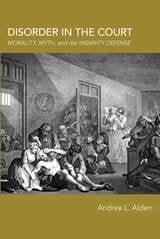
Disorder in the Court
Morality, Myth, and the Insanity DefenseAndrea L. Alden
University of Alabama Press, 2018
The first book-length rhetorical history and analysis of the legal and moral questions behind the insanity defense.
The insanity defense is considered one of the most controversial, most misunderstood, and least straightforward subjects in the American legal system. Disorder in the Court: Morality, Myth, and the Insanity Defense traces the US legal standards for the insanity defense as they have evolved from 1843, when they were first codified in England, to 1984, when the US government attempted to revise them through the Insanity Defense Reform Act. Throughout this period “insanity” existed primarily as a legal term rather than a medical one; yet the testimony of psychiatric experts is required in cases in which an insanity defense is raised.
The adjudication of such cases by courtroom practice is caught between two different but overlapping discourses, the legal and the medical, both of which have historically sought to assert and maintain firm disciplinary boundaries. Both expert and lay audiences have struggled to understand and apply commonplace definitions of sanity, and the portrayal of the insanity defense in popular culture has only served to further frustrate such understandings.
Andrea L. Alden argues that the problems with understanding the insanity defense are, at their foundation, rhetorical. The legal concept of what constitutes insanity and, therefore, an abdication of responsibility for one’s actions does not map neatly onto the mental health professions’ understandings of mental illness and how that affects an individual’s ability to understand or control his or her actions. Additionally, there are multiple layers of persuasion involved in any effort to convince a judge, jury—or a public, for that matter—that a defendant is or is not responsible for his or her actions at a particular moment in time.
Alden examines landmark court cases such as the trial of Daniel McNaughtan, Durham v. United States, and the trial of John Hinckley Jr. that signal the major shifts in the legal definitions of the insanity defense. Combining archival, textual, and rhetorical analysis, Alden offers a close reading of texts including trial transcripts, appellate court opinions, and relevant medical literature from the time period. She contextualizes these analyses through popular texts—for example, newspaper articles and editorials—showing that while all societies have maintained some version of mental illness as a mitigating factor in their penal systems, the insanity defense has always been fraught with controversy.
Forensic Accounting and Fraud Examination
Knowledge, Skills, and AbilitiesRichard Dull
MOOC Books, 2015
This book was written to provide a basic perspective of forensic accounting and fraud investigation. It includes topics such as the elements of fraud, the typical perpetrator of fraud (as well as predators), and the attributes of most fraudsters (such as the fraud triangle and diamond).There are also discussions of internal controls, and data analysis tools and techniques to help identify red flags that frequently exist long before a fraud is detected.
The authors also include a description of money laundering, including common schemes. The money laundering topic leads into the final topic of the book, which is whistleblowing. That topic includes best practices for effective anti-fraud hotlines. WorldCom is used as an example to demonstrate the outcome of a large fraud, and the impact on those involved, from the whistleblower to those who allegedly perpetrated the fraud.
Each of the book’s five chapters includes a fifteen-question quiz to facilitate knowledge proficiency.
While the book was initially designed to accompany a massive open online course (MOOC), it provides a reader with information to help understand the basics of fraud and forensic accounting, including anti-fraud tools and techniques.
Forensic Mental Health Assessment With the MMPI-3
Dustin Wygant
University of Minnesota Press, 2026
A comprehensive, evidence-based handbook for using the MMPI-3 in forensic evaluations
Since its release in 2020, the MMPI-3 has become a cornerstone of clinical and forensic assessment. Forensic Mental Health Assessment With the MMPI-3 is an essential, evidence-based resource that explores use of the MMPI-3 in a variety of forensic contexts. In addition to elucidating the test’s development and the interpretation of its scales, this comprehensive guide delves into critical forensic issues including admissibility (e.g., Daubert criteria), telehealth assessment, cross-cultural considerations, and response bias.
Dustin B. Wygant and Martin Sellbom draw on contemporary research to discuss the unique challenges of forensic evaluations. Through case analyses, this book illustrates how to interpret and integrate MMPI-3 profiles into clinical and diagnostic impressions, and it addresses common psycholegal questions in criminal (e.g., competency to stand trial, insanity), civil (e.g., disability), and family (e.g., child custody) contexts.
Providing practical insights into real-world MMPI-3 applications, Forensic Mental Health Assessment With the MMPI-3 is an indispensable resource for forensic practitioners and legal professionals.
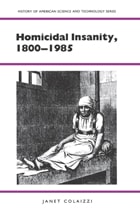
Homicidal Insanity, 1800-1985
Janet Colaizzi, with a foreword by Jonas R. Rappeport
University of Alabama Press, 1989
Where madness meets the law, history leaves no easy verdict.
Homicidal insanity has remained a vexation to both the psychiatric and legal professions despite the panorama of scientific and social change during the past 200 years. The predominant opinion today among psychiatrists is that no correlation exists between dangerousness and specific mental disorders. But for generation after generation, psychiatrists have reported cases of insane homicide that were clinically similar. Although psychiatric theory changed and psychiatric nosology was inconsistent, the mental phenomena psychiatrists identified in such cases remained the same. The central thesis of Homicidal Insanity is that as psychiatric theory changed, psychiatrists regarded these phenomena variously as symptoms of mental disease or the disease in itself. It is possible to trace these phenomena throughout the history of Anglo-American psychiatric theory and practice. A secondary thesis of the book is that psychiatrists have used these phenomena as predictors and markers in the practical matters of preventing insane homicide and of testifying in the courts to defend the irresponsible and expose the culpable.
For 200 years, scientific and philosophical disagreement raised controversy and brought the issues to public attention. Still, to this day no rational method exists to discriminate the dangerous from the harmless in matters of involuntary commitment, nor insanity from crime in the courts.
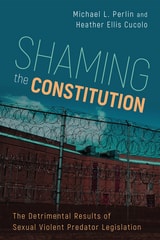
Shaming the Constitution
The Detrimental Results of Sexual Violent Predator LegislationMichael L. Perlin
Temple University Press, 2017
Convicted sexually violent predators are more vilified, more subject to media misrepresentation, and more likely to be denied basic human rights than any other population. Shaming the Constitution authors Michael Perlin and Heather Cucolo question the intentions of sex offender laws, offering new approaches to this most complex (and controversial) area of law and social policy.
The authors assert that sex offender laws and policies are unconstitutional and counter-productive. The legislation largely fails to add to public safety—even ruining lives for what are, in some cases, trivial infractions. Shaming the Constitution draws on law, behavioral sciences, and other disciplines to show that many of the “solutions” to penalizing sexually violent predators are “wrong,” as they create the most repressive and useless laws.
In addition to tracing the history of sex offender laws, the authors address the case of Jesse Timmendequas, whose crime begat “Megan’s Law;” the media’s role in creating a “moral panic;” recidivism statistics and treatments, as well as international human rights laws. Ultimately, they call attention to the flaws in the system so we can find solutions that contribute to public safety in ways that do not mock Constitutional principles.
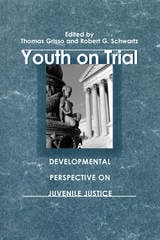
Youth on Trial
A Developmental Perspective on Juvenile JusticeEdited by Thomas Grisso and Robert G. Schwartz
University of Chicago Press, 2003