Results by title

4 books match the query 'Former Soviet Union'
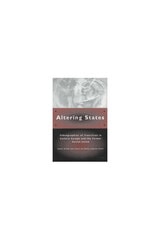
cover of Altering States: Ethnographies of Transition in Eastern Europe and the Former Soviet Union

Altering States

Ethnographies of Transition in Eastern Europe and the Former Soviet Union

Daphne Berdahl, Matti Bunzl, and Martha Lampland, Editors

University of Michigan Press, 2000
The dominant focus in transition studies to date has been on economic and political factors -- analyses generally conducted at the national or international level. The essays in Altering States instead bring us a closer look at what has been happening in everyday life in urban contexts in Germany, the Czech Republic, Slovakia, Austria, Hungary, Romania, Armenia, and Russia. The contributors to the volume -- all anthropologists -- use ethnographic methods to make visible problems and challenges that have until now been obscured. From synagogue restoration in Eastern Europe to gay tourism in Prague to the politics of rock music in Hungary, specific, local topics lead the authors to confront difficult questions of individual agency and discursive practices in the move away from socialism. Broader themes touched on include race and ethnicity, sexuality and postcoloniality, the politics of environmental restoration, and memory and remembrance in the politics of history. Altering States will fill an important gap in the study of transition in Eastern Europe and the former Soviet Union. It will appeal to anthropologists, political scientists, and sociologists and will be accessible to undergraduate and graduate students alike.
[more]
cover of Banking Reform in Central Europe and the Former Soviet Union

Banking Reform in Central Europe and the Former Soviet Union

Jacek Rostowski

Central European University Press, 1995

From Berlin to the Bering Strait, the business of banking has sprung to life. This analysis considers the impact of banking reform on macroeconomic stabilization and the suitability of universal banks, the role of banking regulation and the advantages of 'narrow banks' during transition, the cleaning up of bad debts, and the reform of the payments system.

The book assesses the lessons which can be drawn from reforms in Central Europe for the later reformers in the former Soviet Union and the Balkans. It considers the impact of banking reform on macroeconomic stabilization and the suitability of German-type universal banks; the role of banking regulation and the advantages of 'narrow banks' during transition; the cleaning-up of bad debts; bank privatization and reform of the payments system. Five chapters follow which review the experience of some of the 'second-wave' countries: Estonia, Georgia, Romania, Russia and Ukraine.
[more]
cover of Politics and Policies in Post-Communist Transition: Primary and Secondary Privatisation in Central Europe and the Former Soviet Union

Politics and Policies in Post-Communist Transition

Primary and Secondary Privatisation in Central Europe and the Former Soviet Union

Károly Attila Soós

Central European University Press, 2011
Discusses the policies, practices and outcomes of privatization in six transition economies: the Czech Republic, Hungary, Poland, Russia, Slovenia and Ukraine, paying particular attention to cross-country differences and to interrelations between the processes of privatisation and the political transition from communism to a new system.The analysis is restricted to the privatisation in those fields where its methods have been strongly different from privatisations in advanced market economies and where differences of privatisation principles and techniques among our six countries were also rather various. This is basically the privatisation of middle-sized and large enterprises, not including banks, non-bank financial companies, natural monopolies and agricultural entities.
[more]
cover of When Informal Institutions Change: Institutional Reforms and Informal Practices in the Former Soviet Union

When Informal Institutions Change

Institutional Reforms and Informal Practices in the Former Soviet Union

Huseyn Aliyev

University of Michigan Press, 2017

Huseyn Aliyev examines how, when, and under which conditions democratic institutional reforms affect informal institutions in hybrid regimes, or countries transitioning to democracy. He analyzes the impact of institutional changes on the use of informal practices and what happens when democratic reforms succeed. Does informality disappear, or do elites and populations continue relying on informal structures?

When Informal Institutions Change engages with a growing body of literature on informal practices and institutions in political science, economics, sociology, and beyond. Aliyev proposes expanding the analysis of the impact of institutional reforms on informal institutions beyond disciplinary boundaries, and combines theoretical insights from comparative politics with economic and social theories on informal relations. In addition, Aliyev offers insights that are relevant to democratization, institutionalism, and human geography. Detailed case studies of three transitional post-Soviet regimes—Georgia, Moldova, and Ukraine—illustrate the contentious relationship between democratic institutional reforms and informality in the broader post-Soviet context.

Aliyev shows that in order for institutional reform to succeed in strengthening, democratizing, and formalizing institutions, it is important to approach informal practices and institutions as instrumental for its effectiveness. These findings have implications not only for hybrid regimes, but also for other post-Soviet or post-communist countries.


[more]