Results by title
13 books match the query 'Fortification'

A Fortified Sea
The Defense of the Caribbean in the Eighteenth CenturyEdited by Pedro Luengo and Gene Allen Smith
University of Alabama Press, 2024
WINNER OF THE SOCIETY FOR MILITARY HISTORY'S 2025 DISTINGUISHED BOOK AWARD
A multinational, interdisciplinary study illuminating how fortifications reshaped the Caribbean as a contested imperial borderland in the eighteenth century.
A Fortified Sea illuminates the key role of military forts in the greater Caribbean during the long eighteenth century. The historical Caribbean, with its multiple contested boundaries at the periphery of European western expansion, typically has been analyzed as part of an empire. European powers, including Spain, the Netherlands, England, and Denmark, carved up the Caribbean Sea into a cultural patchwork. These varied cultural contexts were especially evident during regional and national conflicts throughout the eighteenth century and prompted the construction of more fortifications to protect imperial interests. The emergence of Anglo-American colonies during the eighteenth century and later the United States gradually altered previous geopolitical balances, redefining the cultural and geopolitical boundaries of the region.
This collection of essays incorporates several historiographical traditions—from Spanish to American—all portraying the borderland as a breakthrough contested cultural, social, economic, and military boundary. A multinational roster of contributors approaches topics through a war studies lens as well as architecturally and historically, enriching a usually monothematic view. As well, discussion of cultural management of the historical remains of forts shows local communities trying to preserve and interpret the role of forts in society.
Part I defines the training of military engineers in Spain. Part II engages with British defensive military plans and settlements in the Caribbean and shows how the British dealt with the rhetorical image of the empire. Part III clarifies the building processes of fortifications in Santiago de Cuba, Cartagena de Indias, Havana, and Veracruz, among other places. Copious period maps complement the prodigious research. The book will appeal to readers interested in the history of the Caribbean, military history, and European imperial expansion.
CONTRIBUTORS
Mónica Cejudo Collera / Pedro Cruz Freire / María Mercedes Fernández Martín / Aaron Graham / Manuel Gámez Casado / Francisco Javier Herrera García / Nuria Hinarejos Martín / Pedro Luengo / Ignacio J. López-Hernández / José Miguel Morales Folguera / Alfredo J. Morales / Juan Miguel Muñoz Corbalán / Jesús Maria Ruiz Carrasco / Germán Segura García / Gene Allen Smith / Christopher K. Waters

Along the Texas Forts Trail
B. W. Aston
University of North Texas Press, 1997

Bastion by the Bay
The Presidio of San Francisco, from Outpost of Empire to Magnificent ParkJohn P. Langellier
University of North Texas Press, 2026
Chersonesan Studies 1
The Polychrome Grave Stelai from the Early Hellenistic NecropolisBy Richard Posamentir
University of Texas Press, 2010
Chersonesan Studies 1 presents the painted grave stelai of the Early Hellenistic necropolis of Chersonesos Taurike, a Greek city on the northern shore of the Black Sea. This unique collection of over one hundred objects is of major interest to students of ancient art and Greek culture. Their polychrome decoration has been extraordinarily well preserved, a rarity in the ancient world. They compose a remarkable, even unique, body of evidence of Greek funerary memorial sculpture: their shapes are gender-specific, their depicted objects are gender- and age-specific, and they can be ascribed to a handful of specific workshops. Their surprising uniformity requires an explanation, since comparable assemblages from other parts of the Greek world show substantial diversity in all these aspects.
This book provides the first complete catalog and description of the stelai, together with full-color illustrations of all the significant stelai and many details. Through his painstaking recovery and reassembling of fragments, as well as the use of advanced photographic techniques, Richard Posamentir has been able to add a whole new dimension to the study of these artifacts. The volume covers the history of the stelai, analysis of the workshops, and reconstruction of the necropolis that the stelai originally graced. A comparison chapter discusses how the stelai fit into the context of Greek funerary art and provides insights into the culture and society of a city on the Black Sea.

Engineering Security
The Corps of Engineers and Third System Defense Policy, 1815–1861Mark A. Smith
University of Alabama Press, 2009
Thorough examination of the antebellum fortifications that formed the backbone of U.S. military defense during the National Period
The system of coastal defenses built by the federal government after the War of 1812 was more than a series of forts standing guard over a watery frontier. It was an integrated and comprehensive plan of national defense developed by the US Army Corps of Engineers, and it represented the nation’s first peacetime defense policy.
Known as the Third System since it replaced two earlier attempts, it included coastal fortifications but also denoted the values of the society that created it. The governing defense policy was one that combined permanent fortifications to defend seaports, a national militia system, and a small regular army. The Third System remained the defense paradigm in the United States from 1816 to 1861, when the onset of the Civil War changed the standard. In addition to providing the country with military security, the system also provided the context for the ongoing discussion in Congress over national defense through annual congressional debates on military funding.
Fortress Power
Hostile Designs and the Politics of Spatial ControlDerek S. Denman
University of Minnesota Press, 2025
A compelling treatise on the relationship between power and enclosure
Fortress Power presents a genealogy of fortification as a material and political technology intent on obstruction, tracing its implementation across battlefields, borders, and urban environments. Drawing on the influential work of philosophers Michel Foucault and Giorgio Agamben, Derek S. Denman places the fortress alongside the archetypes of the prison and the camp, citing them as paradigmatic of how space is transformed into a tool of domination and control.
Focusing on the defensive architecture of bastion fortresses, urban design, and border landscapes, Fortress Power charts the rise of a form of governance grounded in hostility, extending the scope of its subject from a piece of military construction to a much broader political concept. Detailing how power manifests in everything from city centers to international boundaries, the book analyzes the logic of fortification as it moves through various contexts in the advancement of surveillance, exploitation, warfare, and political authority.
Through a unique blend of architecture and design studies, political theory, international relations, geography, and migration studies, Denman outlines the disquieting legacy of the fortress to highlight its role in the formation of modern government and the enactment of violence. In an era marked by the increasing prevalence of authoritarian power and conflicting geopolitical boundaries, he presents an insightful investigation of the weaponization of the built environment.
Frontier Forts of Iowa
Indians, Traders, and Soldiers, 1682-1862William E. Whittaker
University of Iowa Press, 2009
At least fifty-six frontier forts once stood in, or within view of, what is now the state of Iowa. The earliest date to the 1680s, while the latest date to the Dakota uprising of 1862. Some were vast compounds housing hundreds of soldiers; others consisted of a few sheds built by a trader along a riverbank. Regardless of their size and function—William Whittaker and his contributors include any compound that was historically called a fort, whether stockaded or not, as well as all military installations—all sought to control and manipulate Indians to the advantage of European and American traders, governments, and settlers. Frontier Forts of Iowa draws extensively upon the archaeological and historical records to document this era of transformation from the seventeenth-century fur trade until almost all Indians had been removed from the region.
The earliest European-constructed forts along the Mississippi, Des Moines, and Missouri rivers fostered a complex relationship between Indians and early traders. After the Louisiana Purchase of 1804, American military forts emerged in the Upper Midwest, defending the newly claimed territories from foreign armies, foreign traders, and foreign-supported Indians. After the War of 1812, new forts were built to control Indians until they could be moved out of the way of American settlers; forts of this period, which made extensive use of roads and trails, teamed a military presence with an Indian agent who negotiated treaties and regulated trade. The final phase of fort construction in Iowa occurred in response to the Spirit Lake massacre and the Dakota uprising; the complete removal of the Dakota in 1863 marked the end of frontier forts in a state now almost completely settled by Euro-Americans.
By focusing on the archaeological evidence produced by many years of excavations and by supporting their words with a wealth of maps and illustrations, the authors uncover the past and connect it with the real history of real places. In so doing they illuminate the complicated and dramatic history of the Upper Midwest in a time of enormous change. Past is linked to present in the form of a section on visiting original and reconstructed forts today.
Gayle F. Carlson
Jeffrey T. Carr
Lance M. Foster
Kathryn E. M. Gourley
Marshall B. McKusick
Cindy L. Nagel
David J. Nolan
Cynthia L. Peterson
Leah D. Rogers
Regena Jo Schantz
Christopher M. Schoen
Vicki L. Twinde-Javner
William E. Whittaker
Global Perspectives on Landscapes of Warfare
Hugo C. Ikehara-Tsukayama
University Press of Colorado, 2021
Global Perspectives on Landscapes of Warfare examines the effects of conflict on landscapes and the ways landscapes have shaped social and political boundaries over time. Contributors from different archaeological traditions introduce a variety of methodologies and theories to understand and explain how territories and geographies in antiquity were modified in response to threat.
Drawing from eleven case studies from periods ranging over eight thousand years in the Americas, Asia, and Europe, contributors consider how social groups moved and concentrated residences, built infrastructure, invested resources, created alliances and negotiated with human and nonhuman entities for aid, formed and reformed borders, and memorialized sites and territories. Because landscapes of warfare deal with built environments, chapters are presented with rich graphic documentation—detailed maps, site plans, and artifacts—to support the analysis and interpretations.
Territories that have been appropriated and transformed by communities at war illustrate how built landscapes not only reflect immediate events but also influence subsequent generations. With a diverse array of case studies and an explicit focus on landscapes, Global Perspectives on Landscapes of Warfare will be of great interest to students and scholars of conflict archaeology and the anthropology and history of violence across the globe.
Contributors: Elizabeth Arkush, Viktor A. Borzunov, Igor V. Chechushkov, Tiffany Earley-Spadoni, Nam C. Kim, Lauren Kohut, Takehiko Matsugi, Kerry Nichols, Russell S. Quick, Lizzie Scholtus, James T. Williams
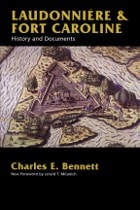
Laudonniere & Fort Caroline
History and DocumentsCharles Bennett and foreword by Jerald T. Milanich
University of Alabama Press, 2001
This classic historical resource remains the most complete work on the establishment of Fort Caroline, which heralded the start of permanent settlement by Europeans in North America. America's history was shaped in part by the clash of cultures that took place in the southeastern United States in the 1560s. Indians, French, and Spaniards vied to profit from European attempts to colonize the land Juan Ponce de Leon had named La Florida.
Rene de Goulaine de Laudonniere founded a French Huguenot settlement on the St. Johns River near present-day Jacksonville and christened it Fort Caroline in 1564, but only a year later the hapless colonists were expelled by a Spanish fleet led by Pedro Menendez de Aviles. The Spanish in turn established a permanent settlement at St. Augustine, now the oldest city in the United States, and blocked any future French claims in Florida.
Using documents from both French and Spanish archives, Charles E. Bennett provides the first comprehensive account of the events surrounding the international conflicts of this 16th-century colonization effort, which was the actual "threshold" of a new nation. The translated Laudonniere documents also provide a wealth of information about the natural wonders of the land and the native Timucua Indians encountered by the French. As a tribe, the Timucua would be completely gone by the mid-1700s, so these accounts are invaluable to ethnologists and anthropologists.
With this republication of Laudonniere & Fort Caroline, a new generation of archaeologists, anthropologists, and American colonial historians can experience the New World through the adventures of the French explorers. Visitors to Fort Caroline National Memorial will also find the volume fascinating reading as they explore the tentative early beginnings of a new nation.

Native North American Armor, Shields, and Fortifications
By David E. Jones
University of Texas Press, 2004
From the Chickasaw fighting the Choctaw in the Southeast to the Sioux battling the Cheyenne on the Great Plains, warfare was endemic among the North American Indians when Europeans first arrived on this continent. An impressive array of offensive weaponry and battle tactics gave rise to an equally impressive range of defensive technology. Native Americans constructed very effective armor and shields using wood, bone, and leather. Their fortifications ranged from simple refuges to walled and moated stockades to multiple stockades linked in strategic defensive networks.
In this book, David E. Jones offers the first systematic comparative study of the defensive armor and fortifications of aboriginal Native Americans. Drawing data from ethnohistorical accounts and archaeological evidence, he surveys the use of armor, shields, and fortifications both before European contact and during the historic period by American Indians from the Southeast to the Northwest Coast, from the Northeast Woodlands to the desert Southwest, and from the Sub-Arctic to the Great Plains. Jones also demonstrates the sociocultural factors that affected warfare and shaped the development of different types of armor and fortifications. Extensive eyewitness descriptions of warfare, armor, and fortifications, as well as photos and sketches of Indian armor from museum collections, add a visual dimension to the text.

The Georgia Florida Contest
Martha C. Searcy
University of Alabama Press, 1985
Almost from the time of Georgia’s settlement by Oglethorpe in 1733, both Georgians and Carolinians had made periodic unsuccessful attempts to conquer the Spanish Castillo San Marcos in St. Augustine; and during the American Revolution (in 1776, 1777, and 1778) the rebels tried without success to take the fortification, which was then a British stronghold. Each of the three expeditions was less successful than the preceding one, and between the formal campaigns vicious partisan warfare between loyalists and rebels devastated much of the area between the Altamaha and St. Johns rivers.
This book presents a detailed history of the three Georgia-Florida campaigns. Indecisive and lacking the glamour of either the contemporary campaigns in the North, or the later campaigns in the South, they appeared isolated from the mainstream of the revolutionary struggle. The rebels were handicapped by divided command, personal quarrels, difficult terrain, and miserable weather. While Searcy emphasizes the military aspects of the period, she also treats the conflict between civil and military authorities, the effects of war on the civilian populace, and the interaction of economic matters with military affairs. Her work clarifies the importance of these military activities in the subsequent British strategy in the occupation of Georgia and the Carolinas.
The Medieval and Ottoman Hajj Route in Jordan
An Archaeological and Historical StudyA. Petersen
Council for British Research in the Levant, 2012
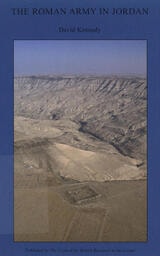
The Roman Army in Jordan
David Kennedy
Council for British Research in the Levant, 2004