Results by title
17 books match the query 'Fossil fuels'
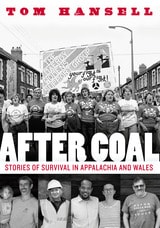
After Coal
Stories of Survival in Appalachia and WalesTom Hansell
West Virginia University Press, 2018
What happens when fossil fuels run out? How do communities and cultures survive?
Central Appalachia and south Wales were built to extract coal, and faced with coal’s decline, both regions have experienced economic depression, labor unrest, and out-migration. After Coal focuses on coalfield residents who chose not to leave, but instead remained in their communities and worked to build a diverse and sustainable economy. It tells the story of four decades of exchange between two mining communities on opposite sides of the Atlantic, and profiles individuals and organizations that are undertaking the critical work of regeneration.
The stories in this book are told through interviews and photographs collected during the making of After Coal, a documentary film produced by the Center for Appalachian Studies at Appalachian State University and directed by Tom Hansell. Considering resonances between Appalachia and Wales in the realms of labor, environment, and movements for social justice, the book approaches the transition from coal as an opportunity for marginalized people around the world to work toward safer and more egalitarian futures.
After Oil
Imre Szeman
West Virginia University Press, 2016
Energy plays a critical role in determining the shape, form and character of our daily existence, which is why a genuine shift in our energy usage demands a wholesale transformation of the petrocultures in which we live. After Oil provides readers with the resources to make this happen.
Bolivia in the Age of Gas
Bret Gustafson
Duke University Press, 2020
Burning Up
A Global History of Fossil Fuel ConsumptionSimon Pirani
Pluto Press, 2018
In Burning Up, Simon Pirani recounts the history of the relentless rise of fossil fuels in the past half century, and lays out the ways in which the expansion of the global capitalist economy has driven it forward. Dispelling common explanations that foreground Western consumerism, as well as arguments about unsustainable population growth, Pirani offers instead an insightful intervention in what is arguably the crisis of our time.
Buying Time
Environmental Collapse and the Future of EnergyKaz Makabe
University Press of New England, 2017
Carbon Technocracy
Energy Regimes in Modern East AsiaVictor Seow
University of Chicago Press, 2021
The coal-mining town of Fushun in China’s Northeast is home to a monstrous open pit. First excavated in the early twentieth century, this pit grew like a widening maw over the ensuing decades, as various Chinese and Japanese states endeavored to unearth Fushun’s purportedly “inexhaustible” carbon resources. Today, the depleted mine that remains is a wondrous and terrifying monument to fantasies of a fossil-fueled future and the technologies mobilized in attempts to turn those developmentalist dreams into reality.
In Carbon Technocracy, Victor Seow uses the remarkable story of the Fushun colliery to chart how the fossil fuel economy emerged in tandem with the rise of the modern technocratic state. Taking coal as an essential feedstock of national wealth and power, Chinese and Japanese bureaucrats, engineers, and industrialists deployed new technologies like open-pit mining and hydraulic stowage in pursuit of intensive energy extraction. But as much as these mine operators idealized the might of fossil fuel–driven machines, their extractive efforts nevertheless relied heavily on the human labor that those devices were expected to displace. Under the carbon energy regime, countless workers here and elsewhere would be subjected to invasive techniques of labor control, ever-escalating output targets, and the dangers of an increasingly exploited earth.
Although Fushun is no longer the coal capital it once was, the pattern of aggressive fossil-fueled development that led to its ascent endures. As we confront a planetary crisis precipitated by our extravagant consumption of carbon, it holds urgent lessons. This is a groundbreaking exploration of how the mutual production of energy and power came to define industrial modernity and the wider world that carbon made.
Carbon Technocracy
Energy Regimes in Modern East AsiaVictor Seow
University of Chicago Press, 2021
Audiobook edition
A forceful reckoning with the relationship between energy and power through the history of what was once East Asia’s largest coal mine.
The coal-mining town of Fushun in China’s Northeast is home to a monstrous open pit. First excavated in the early twentieth century, this pit grew like a widening maw over the ensuing decades, as various Chinese and Japanese states endeavored to unearth Fushun’s purportedly “inexhaustible” carbon resources. Today, the depleted mine that remains is a wondrous and terrifying monument to fantasies of a fossil-fueled future and the technologies mobilized in attempts to turn those developmentalist dreams into reality.
In Carbon Technocracy, Victor Seow uses the remarkable story of the Fushun colliery to chart how the fossil fuel economy emerged in tandem with the rise of the modern technocratic state. Taking coal as an essential feedstock of national wealth and power, Chinese and Japanese bureaucrats, engineers, and industrialists deployed new technologies like open-pit mining and hydraulic stowage in pursuit of intensive energy extraction. But as much as these mine operators idealized the might of fossil fuel–driven machines, their extractive efforts nevertheless relied heavily on the human labor that those devices were expected to displace. Under the carbon energy regime, countless workers here and elsewhere would be subjected to invasive techniques of labor control, ever-escalating output targets, and the dangers of an increasingly exploited earth.
Although Fushun is no longer the coal capital it once was, the pattern of aggressive fossil-fueled development that led to its ascent endures. As we confront a planetary crisis precipitated by our extravagant consumption of carbon, it holds urgent lessons. This is a groundbreaking exploration of how the mutual production of energy and power came to define industrial modernity and the wider world that carbon made.
Energy Culture
Art and Theory on Oil and BeyondImre Szeman
West Virginia University Press, 2019
Energy Culture is a provocative book about oil’s firm grip on our politics and everyday lives. It brings together essays and artwork produced in a collaborative environment to stimulate new ways of thinking and to achieve a more just and sustainable world.
The original work collected in Energy Culture creatively engages energy as a social form through lively arguments and artistic research organized around three vectors of inquiry. The first maps how fossil fuels became, and continue to be, embedded in North American society, from the ideology of tar sands reclamation projects to dreams of fiber optic cables running through the Northwest Passage. The second comprises creative and artistic responses to the dominance of fossil fuels in everyday life and to the challenge of realizing new energy cultures. The final section addresses the conceptual and political challenges posed by energy transition and calls into question established views on energy. Its contributions caution against solar capitalism, explore the politics of sabotage, and imagine an energy efficient transportation system called “the switch.” Imbued with a sense of urgency and hope, Energy Culture exposes the deep imbrications of energy and culture while pointing provocatively to ways of thinking and living otherwise.
Life, Work, and Rebellion in the Coal Fields
The Southern West Virginia Miners, 1880-1922 2nd EditionDavid Corbin
West Virginia University Press, 2015
Between 1880 and 1922, the coal fields of southern West Virginia witnessed two bloody and protracted strikes, the formation of two competing unions, and the largest armed conflict in American labor history—a week-long battle between 20,000 coal miners and 5,000 state police, deputy sheriffs, and mine guards. These events resulted in an untold number of deaths, indictments of over 550 coal miners for insurrection and treason, and four declarations of martial law. Corbin argues that these violent events were collective and militant acts of aggression interconnected and conditioned by decades of oppression. His study goes a long way toward breaking down the old stereotypes of Appalachian and coal mining culture. This second edition contains a new preface and afterword by author David A. Corbin.
Oil and Urbanization on the Pacific Coast
Ralph Bramel Lloyd and the Shaping of the Urban WestMichael R. Adamson
West Virginia University Press, 2018
Oil and Urbanization on the Pacific Coast tells the story of oilman Ralph Bramel Lloyd, a small business owner who drove the development of one of America’s largest oil fields. Lloyd invested his petroleum earnings in commercial real estate—much of it centered around automobiles and the fuel they require—in several western cities, notably Portland, Oregon. Putting the history of extractive industry in dialogue with the history of urban development, Michael R. Adamson shows how energy is woven into the fabric of modern life, and how the “energy capital” of Los Angeles exerted far-flung influence in the US West.
A contribution to the relatively understudied history of small businesses in the United States, Oil and Urbanization on the Pacific Coast explores issues of interest to multiple audiences, such as the competition for influence over urban development waged among local growth machines and outside corporate interests; the urban rivalries of a region; the importance of public capital in mobilizing the commercial real estate sector during the Great Depression and World War II; and the relationships among owners, architects, and contractors in the execution of commercial building projects.
On Petrocultures
Globalization, Culture, and EnergyImre Szeman
West Virginia University Press, 2019
On Petrocultures brings together key essays by Imre Szeman, a leading scholar in the field of energy humanities and a critical voice in debates about globalization and neoliberalism. Szeman’s most important and influential essays, in dialogue with exciting new pieces written for the book, investigate ever-evolving circuits of power in the contemporary world, as manifested in struggles over space and belonging, redefinitions of work and individual autonomy, and the deep links between energy use and climate change.
These essays explore life lived in the twenty-first century by examining critically the vocabulary through which capitalism makes sense of itself, focusing on concepts like the nation, globalization, neoliberalism, creativity, and entrepreneurship. At the heart of the volume is the concept of “petrocultures,” which demands that we understand a fundamental fact of modern life: we are shaped by and through fossil fuels. Szeman argues that we cannot take steps to address global warming without fundamentally changing the social, cultural, and political norms and expectations developed in conjunction with the energy riches of the past century. On Petrocultures maps the significant challenge of our dependence on fossil fuels and probes ways we might begin to leave petrocultures behind.
Petrochemical Fantasies
The Art and Energy of American ComicsDaniel Worden
The Ohio State University Press, 2024
Finalist, Comics Studies Society Charles Hatfield Book Prize 2025
Nominee, Eisner Award for Best Academic/Scholarly Work 2025
In Petrochemical Fantasies, Daniel Worden reveals the entwined history of comics and fossil fuels in the United States. From the 1840s to the present, comics have depicted the power, pollution, and rapid expansion of energy systems—especially the explosive growth of coal and oil. In the 1930s, some of the first comic books were the gas station giveaways Gulf Funny Weekly and Standard Oil Comics. And in recent years, comics have become one of the major sites for visualizing life after oil, a striking reversal of the medium’s early boosterism.
Surveying the work of acclaimed artists such as Nell Brinkley, George Herriman, Jack Kirby, Winsor McCay, and R. F. Outcault and recovering little-known works, Worden advances a new history of American comics in the Anthropocene. From late nineteenth- and early twentieth-century editorial cartoons and superhero comics that visualize our modern energy culture to contemporary comics grappling with climate crises, Petrochemical Fantasies places comics, environmental humanities, and energy studies in conversation with each other to unearth the crucial but overlooked history of comics’ place in US energy culture.
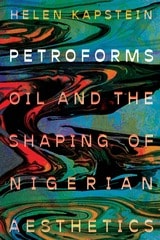
Petroforms
Oil and the Shaping of Nigerian AestheticsHelen Kapstein
West Virginia University Press, 2025
2026 PROSE Award Finalist, Humanities: Literature
Petroforms contributes a much-needed theory of form and genre to the cutting-edge field of petrocriticism, itself an offshoot of developments in postcolonial ecocriticism. Studies of resource fiction and inquiries in the energy humanities have recently taken their rightful place as necessary reflections on the role of the literary imagination in intervening in the Anthropocene as we find ourselves precariously placed in the face of a fossil fuel crisis, climate change, and mass extinctions.
With Petroforms, Helen Kapstein undertakes close readings of a range of Nigerian aesthetic forms: short stories, romance novels, documentary film, the “Nollywood” film industry, fine art sculpture, and poetry. She uses these forms to argue that the demands of paying attention to petroleum extraction, production, consumption, and distribution in the creation of resource fictions must necessarily alter and affect conventional forms and structures. What results is a new set of genre-bending forms, like documentary film that we can read as horror, in response to the forceful and fluid demands of the petroleum industry and its master narrative.
Nigeria is one of the world’s largest oil-producing nations, in which that production is concentrated in the Niger Delta, resulting in a local environment that has been steadily degraded by oil spills, flares, pollution, and contamination, and a local culture shaped by false scarcity in a space of abundance, murderous politics, and escalating violence. At the same time as the Niger Delta grounds Kapstein’s argument in its own political realities and cultural responses, Nigeria’s participation in a global economy of petrodependency allows her theory of petroforms to be extended and applied more generally.
What Peter Hitchcock calls “oil’s generative law” is that it is “everywhere and obvious, it must be opaque or otherwise fantastic.” He means the coexistence of oil’s taken-for-granted qualities is something constitutive of every level of everyday life and its spectacular displays—gushers, spills, explosions. Oil’s nature, the fact that it is everywhere, unctuously oozing into every corner of everyday life, means that it constantly spills over out of our existing forms, genres, and systems, demanding accommodation. To try to contain it, we create new forms. Thus, a petroform is simultaneously reactionary (a necessary response to oil’s pressures, a by-product of the commodity itself) and resistant (an attempt at containment, at generating a retort to the very thing that shapes it). Each form figures oil and then configures and reconfigures itself in reaction to it.
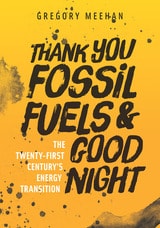
Thank You Fossil Fuels and Good Night
The 21st Century's Energy TransitionGregory Meehan
University of Utah Press, 2017
Everything is subject to a lifecycle. In the field of energy, the obvious question is, “Where are we in the lifecycle of fossil fuels?” Competitive technology for sourcing renewable energy, marketplace readiness, and pressures from climate change all signal that the fossil fuel era is coming to an end. This book explains the alternatives and suggests when and how change will occur. Employing a global perspective and detailed analysis, it provides recommendations on policies and strategies to make a smooth and wholesale transition to renewables before the continued use of fossil fuels becomes economically and socially disruptive.
Gregory Meehan’s overview eschews politics in favor of comprehensive coverage and logical explanation. He addresses economic, environmental, and security concerns and does not shy away from illuminating limitations and problems with various energy sources. Meehan’s dogged pursuit of the current state of knowledge and energy practices around the world shows that different answers are proving viable for different social and environmental contexts. This is the most wide-ranging and thorough introduction to the world’s energy issues and choices to date.
Lecture and exercise guides available upon request.
Click here to hear the Friends of the Marriott Library event with Gregory Meehan. https://youtu.be/YqmNhEN09_c
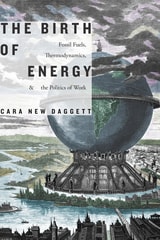
The Birth of Energy
Fossil Fuels, Thermodynamics, and the Politics of WorkCara New Daggett
Duke University Press, 2019
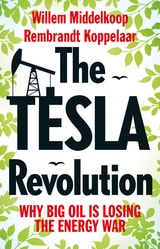
The Tesla Revolution
Why Big Oil is Losing the Energy WarRembrandt Koppelaar
Amsterdam University Press, 2017
In clear, unsensational style, Willem Middelkoop and Rembrandt Koppelaar offer a layman's tour of the energy landscape, now and to come. They show how rapid technological advances in batteries and solar technologies are already driving large-scale transformations in power supply, while economic and geopolitical changes, combined with a growing political awareness that there are alternatives to fossil fuels will combine in the coming years to bring an energy revolution ever closer. Within in our lifetimes, the authors argue, we will see changes that will reshape economics, the balance of political power, and even the most mundane aspects of our daily lives.
Determinedly forward-looking and optimistic, though never straying from hard facts, The Tesla Revolution paints a striking picture of our global energy future.

Walking to the Sun
A Journey through America's Energy LandscapesTom Haines
University Press of New England, 2018