Results by title
5 books match the query 'Fossil hominids'
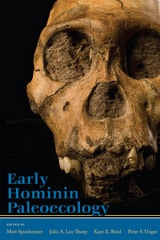
Early Hominin Paleoecology
Matt Sponhiemer, Julia A Lee-Thorp, Kaye E. Reed, Peter Ungar
University Press of Colorado, 2013
Recent advances in the field and the laboratory are not only improving our understanding of human evolution but are also transforming it. Given the increasing specialization of the individual fields of study in hominin paleontology, communicating research results and data is difficult, especially to a broad audience of graduate students, advanced undergraduates, and the interested public. Early Hominin Paleoecology provides a good working knowledge of the subject while also presenting a solid grounding in the sundry ways this knowledge has been constructed. The book is divided into three sections—climate and environment (with a particular focus on the latter), adaptation and behavior, and modern analogs and models—and features contributors from various fields of study, including archaeology, primatology, paleoclimatology, sedimentology, and geochemistry.
Early Hominin Paleoecology is an accessible introduction into this fascinating and ever-evolving field and will be essential to any student interested in pursuing research in human paleoecology.
Additional Contributors:
David Braun
Beth Christensen
David J. Daegling
Crag Feibel
Fred E. Grine
Clifford Jolly
Naomi E. Levin
Mark A. Maslin
John Mitani
Jay Quade
Amy L. Rector
Jeanne Sept
Lillian M. Spencer
Mark Teaford
Carol V. Ward
Katy E. Wilson
God-Apes and Fossil Men
Paleoanthropology of South AsiaKenneth A. R. Kennedy
University of Michigan Press, 2000
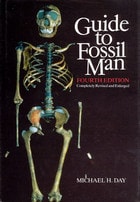
Guide to Fossil Man
Michael H. Day
University of Chicago Press, 1986
Day begins with an introduction to the anatomy of human fossils. He then describes the forty-nine sites in Europe, the Near East, Africa, the Middle East, Asia, and Oceania that have yielded the most significant information on the development of hominid species and the appearance of early man. Grouped geographically, each site description includes data on the hominid remains, other finds such as tools and animal bones, the local geology and contemporary geomorphology and ecology, and dating and other references. Sites featured for the first time in this edition include Kow Swamp and Mungo in Australia; Dali and Maba in China; and West Turkana in Kenya, which contained the almost complete skeleton of a boy determined to be 1,600,000 years old.
Short essays on problems associated with neandertal, australpithecine, and Homo erectus remains are included, as well as a glossary, a geological time scale, charts and comprehensive illustrations. Day's Guide to Fossil Man is invaluable not only for working palaeontologists, palaeolithic archaeologists, and physical anthropologists, but also for anyone interested in human evolution.
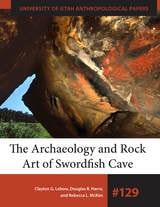
The Archaeology and Rock Art of Swordfish Cave
Clayton G. Lebow
University of Utah Press, 2015
Swordfish Cave is a well-known rock art site located on Vandenberg Air Force Base in south central California. Named for the swordfish painted on its wall, the cave is a sacred Chumash site. It was under threat from various processes and required measures to conserve it. Nearly all of the cave’s interior was excavated to create a rock art viewing area. That effort revealed previously unknown rock art and made it possible to closely examine how early occupants used the space inside the cave. They identified three periods of human use, including an initial occupation around 3,550 years ago, an occupation about 660 years later, and a final Native American occupation that occurred much later, between A.D. 1787 and 1804. The discovery of tools used to make the pictographs linked the art to the two early occupations, pushing back the generally understood antiquity of rock art on California’s Central Coast by more than 2,000 years.
Two aspects make this study unusual: datable materials associated with rock art and complete removal of cave deposits. Well illustrated with photographs, maps, and drawings of both the art itself and the excavations and materials revealed therein, the book presents a rare opportunity to directly link archaeology and rock art and to examine the spatial organization of prehistoric human habitation.
The Human Career
Human Biological and Cultural Origins, Third EditionRichard G. Klein
University of Chicago Press, 2009
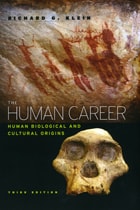
Since its publication in 1989, The Human Career has proved to be an indispensable tool in teaching human origins. This substantially revised third edition retains Richard G. Klein’s innovative approach while showing how cumulative discoveries and analyses over the past ten years have significantly refined our knowledge of human evolution.
Klein chronicles the evolution of people from the earliest primates through the emergence of fully modern humans within the past 200,000 years. His comprehensive treatment stresses recent advances in knowledge, including, for example, ever more abundant evidence that fully modern humans originated in Africa and spread from there, replacing the Neanderthals in Europe and equally archaic people in Asia. With its coverage of both the fossil record and the archaeological record over the 2.5 million years for which both are available, The Human Career demonstrates that human morphology and behavior evolved together. Throughout the book, Klein presents evidence for alternative points of view, but does not hesitate to make his own position clear.
In addition to outlining the broad pattern of human evolution, The Human Career details the kinds of data that support it. For the third edition, Klein has added numerous tables and a fresh citation system designed to enhance readability, especially for students. He has also included more than fifty new illustrations to help lay readers grasp the fossils, artifacts, and other discoveries on which specialists rely. With abundant references and hundreds of images, charts, and diagrams, this new edition is unparalleled in its usefulness for teaching human evolution.