Results by title
8 books match the query 'Found'

America Lost and Found
An English Boy's Wartime Adventure in the New WorldAnthony Bailey
University of Chicago Press, 2000
"An original, sensitively told story in which the perspectives of the child are carefully remembered. . . . Bailey's book speaks, with gentle eloquence, not only to those who remember being boys, but to everyone who would seek to protect children from the hurts and ravagings that ordinary life can inflict, to say nothing of war." —Richard Montague, Newsday
"No doubt Tony Bailey owed America something for its hospitality during those anxious years, and with this book he has amply repaid the debt." —Joseph McLellan, Washington Post
"An exquisitely controlled, quietly amusing and moving story." —Publishers Weekly
"As tender as it is truthful, and as amusing as it is unpretentious." —John Russell, New York Times Book Review
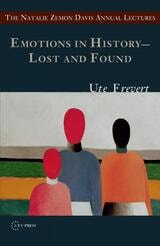
Emotions in History – Lost and Found
Ute Frevert
Central European University Press, 2011
Coming to terms with emotions and how they influence human behaviour, seems to be of the utmost importance to societies that are obsessed with everything "neuro." On the other hand, emotions have become an object of constant individual and social manipulation since "emotional intelligence" emerged as a buzzword of our times. Reflecting on this burgeoning interest in human emotions makes one think of how this interest developed and what fuelled it. From a historian's point of view, it can be traced back to classical antiquity. But it has undergone shifts and changes which can in turn shed light on social concepts of the self and its relation to other human beings (and nature). The volume focuses on the historicity of emotions and explores the processes that brought them to the fore of public interest and debate.
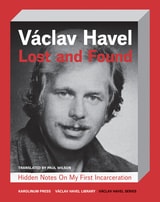
Lost and Found
Hidden Notes on My First IncarcerationVáclav Havel
Karolinum Press, 2026
An English translation of a lost manuscript of reflections from former Czech dissident Václav Havel.
In the fall of 1977, after the dramatic events of the “Year of Charter 77,” Václav Havel wrote a report recounting the first hours after the Charter 77 Declaration, the four months of investigative detention imposed on him by the communist regime, his release, and the agonizing self-examination that followed. In this text, the former dissident describes not only the investigation but also the Faustian guilt he felt after promising to scale back his political activities in exchange for his freedom. As he later recalled in a book-length interview with journalist Karel Hvíždala titled Dálkový výslech (Long-distance interrogation), he hid the roughly one-hundred-page manuscript somewhere, admitting: “I don’t know where it is anymore. Maybe I’ll find it someday.” He never did. The manuscript resurfaced only recently, discovered among the papers of his close friend Zdenek Urbánek. Fragmentary yet strikingly immediate, the text has been reconstructed and published by the Václav Havel Library, with the English translation appearing on the occasion of the world-renowned intellectual’s ninetieth birthday.
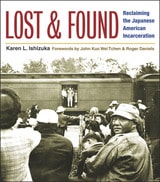
Lost and Found
Reclaiming the Japanese American IncarcerationKaren L. Ishizuka
University of Illinois Press, 2006
For decades, a fog of governmental cover-ups, euphemisms, and societal silence kept the victims the mass incarceration of Americans of Japanese descent during World War II from understanding their experiences. The Japanese American National Museum mounted a critically acclaimed exhibition with the twin goals of educating the general public and encouraging former inmates to come to grips with and tell their own history.
Combining heartfelt stories with first-rate scholarship, Lost and Found reveals the complexities of a people reclaiming the past. Author/curator Karen L. Ishizuka, a third-generation Japanese American, deftly blends official history with community memory to frame the historical moment of recovery within its cultural legacy. Detailing the interactive strategy that invited visitors to become part of the groundbreaking exhibition, Ishizuka narrates the processes of revelation and reclamation that unfolded as former internees and visitors alike confronted the experience of the camps. She also analyzes how the dual act of recovering—and recovering from—history necessitates private and public mediation between remembering and forgetting, speaking out and remaining silent.
Lost and Found
The Adoption ExperienceBetty Jean Lifton
University of Michigan Press, 2009
"[Looks] at adoption from all sides of the triangle: adoptee, birth mother, adoptive parents . . . A provocative, comprehensive inquiry."
---Kirkus Reviews
"Honest and moving."
---New York Times
"Important and powerful . . . [the author] is concerned not just with adoptees but with the experience of adoptive parents and birth parents."
---Psychology Today
"A moving and powerful plea for open discourse instead of secrecy among the participants in the adoption process."
---Public Welfare, American Public Welfare Association
The first edition of Betty Jean Lifton's Lost and Found advanced the adoption rights movement in this country in 1979, challenging many states' policies of maintaining closed birth records. For nearly three decades the book has topped recommended reading lists for those who seek to understand the effects of adoption---including adoptees, adoptive parents, birth parents, and their friends and families.
This expanded and updated edition, with new material on the controversies concerning adoption, artificial insemination, and newer reproductive technologies, continues to add to the discussion on this important topic. A new preface and afterword by the author have been added, as well as a greatly expanded resources section that in addition to relevant organizations now lists useful Web sites.
Betty Jean Lifton, Ph.D., is a writer, psychotherapist, and leading advocate for adoption reform. Her many books include Journey of the Adopted Self and The King of Children, a New York Times Notable Book. She regularly makes appearances as a lecturer on adoption and has an adoption counseling practice in Cambridge, Massachusetts, and New York City.
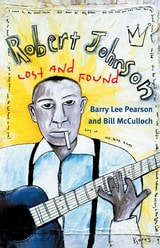
Robert Johnson
Lost and FoundBarry Lee Pearson and Bill McCulloch
University of Illinois Press, 2002
Even with just forty-one recordings to his credit, Robert Johnson (1911-38) is a towering figure in the history of the blues. His vast influence on twentieth-century American music, combined with his mysterious death at the age of twenty-seven, still encourage the speculation and myth that have long obscured the facts about his life. The most famous legend depicts a young Johnson meeting the Devil at a dusty Mississippi crossroads at midnight and selling his soul in exchange for prodigious guitar skills.
Barry Lee Pearson and Bill McCulloch examine the full range of writings about Johnson and weigh the conflicting accounts of Johnson's life story against interviews with blues musicians and others who knew the man. Their extensive research uncovers a life every bit as compelling as the fabrications and exaggerations that have sprung up around it. In examining the bluesman's life and music, and the ways in which both have been reinvented and interpreted by other artists, critics, and fans, Robert Johnson: Lost and Found charts the cultural forces that have mediated the expression of African American artistic traditions.
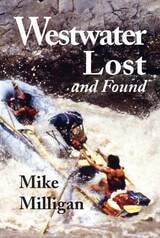
Westwater Lost and Found
Mike Milligan
Utah State University Press, 2004

Westwater Lost and Found
Expanded EditionMike Milligan
Utah State University Press, 2024
This expanded edition brings to light historical events and explores how Westwater’s location greatly contributed to early Grand (Upper) Colorado River boaters’ knowledge and how the lush Westwater Valley and Cisco became critical stops for water, wood, and grass along the North Branch of the Old Spanish Trail. Other new additions include explorer Ellsworth Kolb’s unpublished manuscript describing his 1916–1917 boating experiences on the Grand and Gunnison Rivers; two stories relating to Outlaw Cave, one of which expands upon the mystery of the outlaw brothers; a letter from James E. Miller to Frederick S. Dellenbaugh in 1906 revealing new information about his boating excursion with Oro DeGarmo Babcock on the Grand River in 1897; and a portion of botanist Frederick Kreutzfeld’s little-known journal of 1853 that describes Captain John W. Gunnison’s railroad survey.
Loaded with extensive information and river-running history, Milligan’s guide is sure to enhance readers’ knowledge of the Upper Colorado River and Grand Canyon regions. Boaters, river guides, scholars of the American West, and historians of the Colorado, Green, and Gunnison Rivers or the Old Spanish Trail will gain much from this new edition.