Results by title
3 books match the query 'Founding Fathers of the United States'
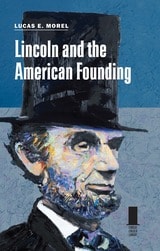
Lincoln and the American Founding
Lucas E. Morel
Southern Illinois University Press, 2020
In this persuasive work of intellectual history, Lucas E. Morel argues that the most important influence on Abraham Lincoln’s political thought and practice was what he learned from the leading figures of and documents from the birth of the United States. In this systematic account of those principles, Morel compellingly demonstrates that to know Lincoln well is to understand thoroughly the founding of America.
With each chapter describing a particular influence, Morel leads readers from the Founding Father, George Washington; to the founding documents, the Declaration of Independence and Constitution; to the founding compromise over slavery; and finally to a consideration of how the original intentions of the Founding Fathers should be respected in light of experience, progress, and improvements over time. Within these key discussions, Morel shows that without the ideals of the American Revolution, Lincoln’s most famous speeches would be unrecognizable, and the character of the nation would have lost its foundation on the universal principles of human equality, individual liberty, and government by the consent of the governed.
Lincoln thought that the principles of human equality and individual rights could provide common ground for a diverse people to live as one nation and that some old things, such as the political ideals of the American founding, were worth preserving. He urged Americans to be vigilant in maintaining the institutions of self-government and to exercise and safeguard the benefits of freedom for future generations. Morel posits that adopting the way of thinking and speaking Lincoln advocated, based on the country’s founding, could help mend our current polarized discourse and direct the American people to employ their common government on behalf of a truly common good.
Religious Liberty and the American Founding
Natural Rights and the Original Meanings of the First Amendment Religion ClausesVincent Phillip Muñoz
University of Chicago Press, 2022
The Founders understood religious liberty to be an inalienable natural right. Vincent Phillip Muñoz explains what this means for church-state constitutional law, uncovering what we can and cannot determine about the original meanings of the First Amendment’s Religion Clauses and constructing a natural rights jurisprudence of religious liberty.
Drawing on early state constitutions, declarations of religious freedom, Founding-era debates, and the First Amendment’s drafting record, Muñoz demonstrates that adherence to the Founders’ political philosophy would lead neither to consistently conservative nor consistently liberal results. Rather, adopting the Founders’ understanding would lead to a minimalist church-state jurisprudence that, in most cases, would return authority from the judiciary to the American people. Thorough and convincing, Religious Liberty and the American Founding is key reading for those seeking to understand the Founders’ political philosophy of religious freedom and the First Amendment Religion Clauses.
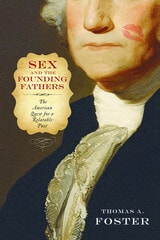
Sex and the Founding Fathers
The American Quest for a Relatable PastThomas A. Foster
Temple University Press, 2016
Biographers, journalists, and satirists have long used the subject of sex to define the masculine character and political authority of America's Founding Fathers. Tracing these commentaries on the Revolutionary Era's major political figures in Sex and the Founding Fathers, Thomas Foster shows how continual attempts to reveal the true character of these men instead exposes much more about Americans and American culture than about the Founders themselves.
Sex and the Founding Fathers examines the remarkable and varied assessments of the intimate lives of George Washington, Thomas Jefferson, John Adams, Benjamin Franklin, Alexander Hamilton, and Gouverneur Morris from their own time to ours. Interpretations can change radically; consider how Jefferson has been variously idealized as a chaste widower, condemned as a child molester, and recently celebrated as a multicultural hero.
Foster considers the public and private images of these generally romanticized leaders to show how each generation uses them to reshape and reinforce American civic and national identity.