Results by title

8 books match the query 'Fraud'
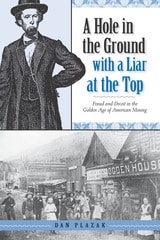
cover of A Hole in the Ground with a Liar at the Top: Fraud and Deceit in the Golden Age of American Mining

A Hole in the Ground with a Liar at the Top

Fraud and Deceit in the Golden Age of American Mining

Dan Plazak

University of Utah Press, 2006
Coal, silver, gold. There is something about the allure of hidden treasure that puts a glint in people’s eyes. By gathering such familiar stories as that of Nevada’s infamous Comstock Lode with a succession of lesser-known scandals, Dan Plazak provides an entertaining and informative volume that delightfully investigates the history of mining frauds in the United States from the Civil War to World War I.
[more]
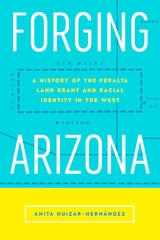
cover of Forging Arizona: A History of the Peralta Land Grant and Racial Identity in the West

Forging Arizona

A History of the Peralta Land Grant and Racial Identity in the West

Anita Huizar-Hernández

Rutgers University Press, 2019
In Forging Arizona Anita Huizar-Hernández looks back at a bizarre nineteenth-century land grant scheme that tests the limits of how ideas about race, citizenship, and national expansion are forged. During the aftermath of the U.S.-Mexico War and the creation of the current border, a con artist named James Addison Reavis falsified archives around the world to pass his wife off as the heiress to an enormous Spanish land grant so that they could claim ownership of a substantial portion of the newly-acquired Southwestern territories. Drawing from a wide variety of sources including court records, newspapers, fiction, and film, Huizar-Hernández argues that the creation, collapse, and eventual forgetting of Reavis’s scam reveal the mechanisms by which narratives, real and imaginary, forge borders. An important addition to extant scholarship on the U.S Southwest border, Forging Arizona recovers a forgotten case that reminds readers that the borders that divide nations, identities, and even true from false are only as stable as the narratives that define them. 
[more]
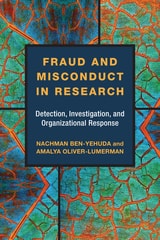
cover of Fraud and Misconduct in Research: Detection, Investigation, and Organizational Response

Fraud and Misconduct in Research

Detection, Investigation, and Organizational Response

Nachman Ben-Yehuda and Amalya Oliver-Lumerman

University of Michigan Press, 2017
In Fraud and Misconduct in Research, Nachman Ben-Yehuda and Amalya Oliver-Lumerman introduce the main characteristics of research misconduct, portray how the characteristics are distributed, and identify the elements of the organizational context and the practice of scientific research which enable or deter misconduct. Of the nearly 750 known cases between 1880 and 2010 which the authors examine, the overwhelming majority took place in funded research projects and involved falsification and fabrication, followed by misrepresentation and plagiarism. The incidents were often reported by the perpetrator’s colleagues or collaborators. If the accusations were confirmed, the organization usually punished the offender with temporary exclusion from academic activities and institutions launched organizational reforms, including new rules, the establishment of offices to deal with misconduct, and the creation of re-training and education programs for academic staff. Ben-Yehuda and Oliver-Lumerman suggest ways in which efforts to expose and prevent misconduct can further change the work of scientists, universities, and scientific research.

 
[more]
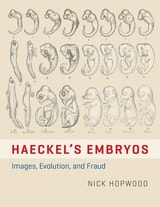
cover of Haeckel's Embryos: Images, Evolution, and Fraud

Haeckel's Embryos

Images, Evolution, and Fraud

Nick Hopwood

University of Chicago Press, 2015

Pictures from the past powerfully shape current views of the world. In books, television programs, and websites, new images appear alongside others that have survived from decades ago. Among the most famous are drawings of embryos by the Darwinist Ernst Haeckel in which humans and other vertebrates begin identical, then diverge toward their adult forms. But these icons of evolution are notorious, too: soon after their publication in 1868, a colleague alleged fraud, and Haeckel’s many enemies have repeated the charge ever since. His embryos nevertheless became a textbook staple until, in 1997, a biologist accused him again, and creationist advocates of intelligent design forced his figures out. How could the most controversial pictures in the history of science have become some of the most widely seen?
           
In Haeckel’s Embryos, Nick Hopwood tells this extraordinary story in full for the first time. He tracks the drawings and the charges against them from their genesis in the nineteenth century to their continuing involvement in innovation in the present day, and from Germany to Britain and the United States. Emphasizing the changes worked by circulation and copying, interpretation and debate, Hopwood uses the case to explore how pictures succeed and fail, gain acceptance and spark controversy. Along the way, he reveals how embryonic development was made a process that we can see, compare, and discuss, and how copying—usually dismissed as unoriginal—can be creative, contested, and consequential.
           
With a wealth of expertly contextualized illustrations, Haeckel’s Embryos recaptures the shocking novelty of pictures that enthralled schoolchildren and outraged priests, and highlights the remarkable ways these images kept on shaping knowledge as they aged.
[more]
cover of Hierarchy, Commerce, and Fraud in Bourbon Spanish America: A Postal Inspector's Expose

Hierarchy, Commerce, and Fraud in Bourbon Spanish America

A Postal Inspector's Expose

Ruth Hill

Vanderbilt University Press, 2021
Using El lazarillo de ciegos caminantes (the "Guide for Blind Rovers" by Alonso Carrio de Lavandera, the best known work of the era) as a jumping off point for a sprawling discussion of 18th-century Spanish America, Ruth Hill argues for a richer, more nuanced understanding of the relationship between Spain and its western colonies. Armed with primary sources including literature, maps, census data, letters, and diaries, Hill reveals a rich world of intrigue and artifice, where identity is surprisingly fluid and always in question. More importantly, Hill crafts a complex argument for reassessing our understanding of race and class distinctions at the time, with enormous implications for how we view conceptions of race and class today.
[more]
cover of Home Economics: Domestic Fraud in Victorian England

Home Economics

Domestic Fraud in Victorian England

Rebecca Stern

The Ohio State University Press, 2008

In Home Economics: Domestic Fraud in Victorian England, Rebecca Stern establishes fraud as a basic component of the Victorian popular imagination, key to its intimate, as well as corporate, systems of exchange. Although Victorian England is famous for revering the domestic realm as a sphere separate from the market and its concerns, actual households were hardly isolated havens of fiscal safety and innocence. Rather, the Victorian home was inevitably a marketplace, a site of purchase, exchange, and employment in which men and women hired or worked as servants, contracted marriages, managed children, and obtained furniture, clothing, food, and labor. Alongside the multiplication of joint-stock corporations and the rise of a credit-based economy, which dramatically increased fraud in the Victorian money market, the threat of swindling affected both actual household commerce and popular conceptions of ostensibly private, more emotive forms of exchange. Working with diverse primary material, including literature, legal cases, newspaper columns, illustrations, ballads, and pamphlets, Stern argues that the climate of fraud permeated Victorian popular ideologies about social transactions. Beyond providing a history of cases and categories of domestic deceit, Home Economics illustrates the diverse means by which Victorian culture engaged with, refuted, celebrated, represented, and consumed swindling in familial and other household relationships.
[more]
cover of Ill-Gotten Gains: Evasion, Blackmail, Fraud, and Kindred Puzzles of the Law

Ill-Gotten Gains

Evasion, Blackmail, Fraud, and Kindred Puzzles of the Law

Leo Katz

University of Chicago Press, 1996

In Ill-Gotten Gains, Leo Katz describes the underlying principles that not only guide the law but also moral decisions. Mixing wit with insight, anecdotes with analysis, Katz uncovers what is really at stake in crimes such as insider trading, blackmail, and plagiarism. With its startling conclusions and myriad twists, this book will fascinate all those intrigued by the perplexing relationship between morality and law.

"An ambitious and well-written book of legal and moral theory to overthrow both utilitarianism and its cousin, the economic approach to law."—Richard A. Posner, New Republic

"A good, well-written book full of interesting examples."—Library Journal

"[An] elegant defense of circumvention and subterfuge . . . a heroically counterintuitive book."—Malcolm Gladwell, New Yorker
[more]
cover of Landscapes of Fraud: Mission Tumacácori, the Baca Float, and the Betrayal of the O’odham

Landscapes of Fraud

Mission Tumacácori, the Baca Float, and the Betrayal of the O’odham

Thomas E. Sheridan

University of Arizona Press, 2006

From the actions of Europeans in the seventeenth century to the real estate deals of the modern era, people making a living off the land in southern Arizona have been repeatedly robbed of their way of life. History has recorded more than three centuries of speculative failures that never amounted to much but left dispossessed people in their wake. This book seeks to excavate those failures, to examine the new social spaces the schemers struggled to create and the existing social spaces they destroyed.

Landscapes of Fraud explores how the penetration of the evolving capitalist world-system created and destroyed communities in the Upper Santa Cruz Valley of Arizona from the late 1600s to the 1970s. Thomas Sheridan has melded history, anthropology, and critical geography to create a penetrating view of greed and power and their lasting effect on those left powerless.

Sheridan first examines how O’odham culture was fragmented by the arrival of the Spanish, telling how autonomous communities moving across landscapes in seasonal rounds were reduced to a mission world of subordination. Sheridan then considers the fate of the Tumacácori grant and Baca Float No. 3, another land grant. He tells the unbroken story of land fraud from Manuel María Gándara’s purchase of the “abandoned” Tumacácori grant at public auction in 1844 through the bankruptcy of the shady real estate developers who had fraudulently promoted housing projects at Rio Rico during the 1960s and ’70s.

As the Upper Santa Cruz Valley underwent a wrenching transition from a landscape of community to a landscape of fraud, the betrayal of the O’odham became complete when land, that most elemental form of human space, was transformed from a communal resource into a commodity bought and sold for its future value. Today, Mission Tumacácori stands as a romantic icon of the past while the landscapes that supported it lay buried under speculative schemes that continue to haunt our history.
[more]