Results by title
4 books match the query 'Freak shows'
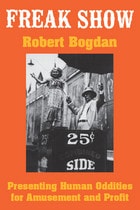
Freak Show
Presenting Human Oddities for Amusement and ProfitRobert Bogdan
University of Chicago Press, 1990
Robert Bogdan's fascinating social history brings to life the world of the freak show and explores the culture that nurtured and, later, abandoned it. In uncovering this neglected chapter of show business, he describes in detail the flimflam artistry behind the shows, the promoters and the audiences, and the gradual evolution of public opinion from awe to embarrassment. Freaks were not born, Bogdan reveals; they were manufactured by the amusement world, usually with the active participation of the freaks themselves. Many of the "human curiosities" found fame and fortune, becoming the celebrities of their time, until the ascent of professional medicine transformed them from marvels into pathological specimans.
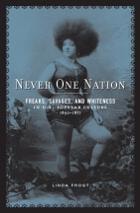
Never One Nation
Freaks, Savages, and Whiteness in U.S. Popular Culture, 1850-1877Linda Frost
University of Minnesota Press, 2005
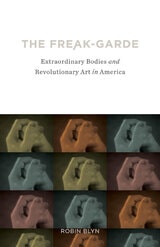
The Freak-garde
Extraordinary Bodies and Revolutionary Art in AmericaRobin Blyn
University of Minnesota Press, 2013
Since the 1890s, American artists have employed the arts of the freak show to envision radically different ways of being. The result is a rich avant-garde tradition that critiques and challenges capitalism from within.
The Freak-garde traces the arts of the freak show from P. T. Barnum to Matthew Barney and demonstrates how a form of mass culture entertainment became the basis for a distinctly American avant-garde tradition. Exploring a wide range of writers, filmmakers, photographers, and artists who have appropriated the arts of the freak show, Robin Blyn exposes the disturbing power of human curiosities and the desires they unleash. Through a series of incisive and often startling readings, Blyn reveals how such figures as Mark Twain, Djuna Barnes, Tod Browning, Lon Chaney, Nathanael West, and Diane Arbus use these desires to propose alternatives to the autonomous and repressed subject of liberal capitalism. Blyn explains how, rather than grounding revolutionary subjectivities in imaginary realms innocent of capitalism, freak-garde works manufacture new subjectivities by exploiting potentials inherent to capitalism.
Defying conventional wisdom, The Freak-garde ultimately argues that postmodernism is not the death of the avant-garde but the inheritor of a vital and generative legacy. In doing so, the book establishes innovative approaches to American avant-garde practices and embodiment and lays the foundation for a more nuanced understanding of the disruptive potential of art under capitalism.
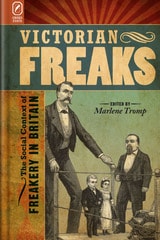
Victorian Freaks
The Social Context of Freakery in BritainMarlene Tromp
The Ohio State University Press, 2008
While “freaks” have captivated our imagination since well before the nineteenth century, the Victorians flocked to shows featuring dancing dwarves, bearded ladies, “missing links,” and six-legged sheep. Indeed, this period has been described by Rosemarie Garland-Thomson as the epoch of “consolidation” for freakery: an era of social change, enormously popular freak shows, and taxonomic frenzy. Victorian Freaks: The Social Context of Freakery in Britain, edited by Marlene Tromp, turns to that rich nexus, examining the struggle over definitions of “freakery” and the unstable and sometimes conflicting ways in which freakery was understood and deployed. As the first study centralizing British culture, this collection discusses figures as varied as Joseph Merrick, “The Elephant Man”; Daniel Lambert, “King of the Fat Men”; Julia Pastrana, “The Bear Woman”; and Laloo “The Marvellous Indian Boy” and his embedded, parasitic twin. The Victorian Freaks contributors examine Victorian culture through the lens of freakery, reading the production of the freak against the landscape of capitalist consumption, the medical community, and the politics of empire, sexuality, and art. Collectively, these essays ask how freakery engaged with notions of normalcy and with its Victorian cultural context.