Results by title
9 books match the query 'Frente Sandinista de Liberación Nacional'
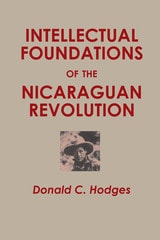
Intellectual Foundations of the Nicaraguan Revolution
By Donald C. Hodges
University of Texas Press, 1986
In this critical study of the thought of Augusto Cesar Sandino and his followers, Donald C. Hodges has discovered a coherent ideological thread and political program, which he succeeds in tracing to Mexican and Spanish sources. Sandino's strong religious inclination in combination with his anarchosyndicalist political ideology established him as a religious seer and moral reformer as well as a political thinker and is the prototype of the curious blend of Marxism and Christianity of the late twentieth-century Nicaraguan government, the Frente Sandinista de Liberación Nacional.
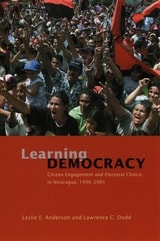
Learning Democracy
Citizen Engagement and Electoral Choice in Nicaragua, 1990-2001Leslie E. Anderson and Lawrence C. Dodd
University of Chicago Press, 2005
By analyzing nationwide surveys conducted during the 1990, 1996, and 2001 Nicaraguan presidential elections, Leslie E. Anderson and Lawrence C. Dodd provide insight into one of the most unexpected and intriguing recent advancements in third world politics. They offer a balanced account of the voting patterns and forward-thinking decisions that led Nicaraguans to first support the reformist Sandinista revolutionaries only to replace them with a conservative democratic regime a few years later. Addressing issues largely unexamined in Latin American studies, Learning Democracy is a unique and probing look at how the country's mass electorate moved beyond revolutionary struggle to establish a more stable democratic government by realizing the vital role of citizens in democratization processes.
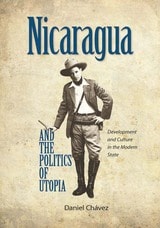
Nicaragua and the Politics of Utopia
Development and Culture in the Modern StateDaniel Chavez
Vanderbilt University Press, 2015
For each era, Chavez reveals the ways Nicaraguan popular culture adapted and interpreted the new political order, shaping, critiquing, or amplifying the regime's message of stability and prosperity for the people. These tactics of interpretation, otherwise known as meaning-making, became all-important for the Nicaraguan people, as they opposed the autocracy of Somocismo, or complemented the Sandinistas, or struggled to find their place in the Neoliberal era. In every case, Chavez shows the reflective nature of cultural production and its pursuit of utopian idealism.
Nicaraguan Exceptionalism? Debating the Legacy of the Sandinista Revolution
Edited by Hilary Francis
University of London Press, 2019
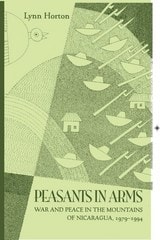
Peasants In Arms
War and Peace in the Mountains of Nicaragua, 1979–1994Lynn Horton
Ohio University Press, 1999
Drawing on testimonies from contra collaborators and ex-combatants, as well as pro-Sandinista peasants, this book presents a dynamic account of the growing divisions between peasants from the area of Quilalí who took up arms in defense of revolutionary programs and ideals such as land reform and equality and those who opposed the FSLN.
Peasants in Arms details the role of local elites in organizing the first anti-Sandinista uprising in 1980 and their subsequent rise to positions of field command in the contras. Lynn Horton explores the internal factors that led a majority of peasants to turn against the revolution and the ways in which the military draft, and family and community pressures reinforced conflict and undermined mid-decade FSLN policy shifts that attempted to win back peasant support.
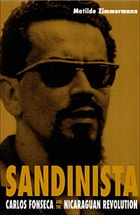
Sandinista
Carlos Fonseca and the Nicaraguan RevolutionMatilde Zimmermann
Duke University Press, 2000
Sandinista is the first English-language biography of Carlos Fonseca Amador, the legendary leader of the Sandinista National Liberation Front of Nicaragua (the FSLN) and the most important and influential figure of the post–1959 revolutionary generation in Latin America. Fonseca, killed in battle in 1976, was the undisputed intellectual and strategic leader of the FSLN. In a groundbreaking and fast-paced narrative that draws on a rich archive of previously unpublished Fonseca writings, Matilde Zimmermann sheds new light on central themes in his ideology as well as on internal disputes, ideological shifts, and personalities of the FSLN.
The first researcher ever to be allowed access to Fonseca’s unpublished writings (collected by the Institute for the Study of Sandinism in the early 1980s and now in the hands of the Nicaraguan Army), Zimmermann also obtained personal interviews with Fonseca’s friends, family members, fellow combatants, and political enemies. Unlike previous scholars, Zimmermann sees the Cuban revolution as the crucial turning point in Fonseca’s political evolution. Furthermore, while others have argued that he rejected Marxism in favor of a more pragmatic nationalism, Zimmermann shows how Fonseca’s political writings remained committed to both socialist revolution and national liberation from U.S. imperialism and followed the ideas of both Che Guevara and the earlier Nicaraguan leader Augusto César Sandino. She further argues that his philosophy embracing the experiences of the nation’s workers and peasants was central to the FSLN’s initial platform and charismatic appeal.

Sandino's Daughters Revisited
Feminism in NicaraguaRandall, Margaret
Rutgers University Press, 1994
Sandino's Daughters, Margaret Randall's conversations with Nicaraguan women in their struggle against the dictator Somoza in 1979, brought the lives of a group of extraordinary female revolutionaries to the American and world public. The book remains a landmark. Now, a decade later, Randall returns to interview many of the same women and others. In Sandino's Daughters Revisited, they speak of their lives during and since the Sandinista administration, the ways in which the revolution made them strong — and also held them back. Ironically, the 1990 defeat of the Sandinistas at the ballot box has given Sandinista women greater freedom to express their feelings and ideas.
Randall interviewed these outspoken women from all walks of life: working-class Diana Espinoza, head bookkeeper of a employee-owned factory; Daisy Zamora, a vice minister of culture under the Sandinistas; and Vidaluz Meneses, daughter of a Somozan official, who ties her revolutionary ideals to her Catholicism. The voices of these women, along with nine others, lead us to recognize both the failed promises and continuing attraction of the Sandinista movement for women. This is a moving account of the relationship between feminism and revolution as it is expressed in the daily lives of Nicaraguan women.
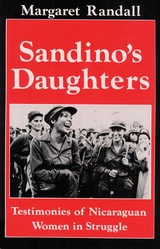
Sandino's Daughters
Testimonies of Nicaraguan Women in StruggleRandall, Margaret
Rutgers University Press, 1995
"A collection of varied and amazing lives, all bent on shaping history. Together, these experienced, undeterred Nicaraguan women offer powerful clues about a truly revolutionary and democratizing feminism."––Adrienne Rich
"If it were not for writers like Margaret, how would women around the world find each other when there is such an institutional effort to keep us apart and silent? Here Margaret brings us the voice of Sandino's daughters, honoring his hat and wearing their own, wiser now, having been part of political and personal revolution."––Holly Near
"Powerful, moving, and challenging. Everyone interested in decency and justice will want to read Sandino's Daughters Revisited."––Blanche Wiesen Cook
Sandino's Daughters, Margaret Randall's conversations with Nicaraguan women in their struggle against the dictator Somoza in 1979, brought the lives of a group of extraordinary female revolutionaries to the American and world public. The book remains a landmark. Now, a decade later, Randall returns to interview many of the same women and others. In Sandino's Daughters Revisited, they speak of their lives during and since the Sandinista administration, the ways in which the revolution made them strong––and also held them back. Ironically, the 1990 defeat of the Sandinistas at the ballot box has given Sandinista women greater freedom to express their feelings and ideas.
Randall interviewed these outspoken women from all walks of life: working-class Diana Espinoza, head bookkeeper of a employee-owned factory; Daisy Zamora, a vice minister of culture under the Sandinistas; and Vidaluz Meneses, daughter of a Somozan official, who ties her revolutionary ideals to her Catholicism. The voices of these women, along with nine others, lead us to recognize both the failed promises and continuing attraction of the Sandinista movement for women. This is a moving account of the relationship between feminism and revolution as it is expressed in the daily lives of Nicaraguan women.
The Education of a Radical
An American Revolutionary in Sandinista NicaraguaBy Michael Johns
University of Texas Press, 2012
“I went to Nicaragua with nothing but a tourist visa, $1,500 in cash, the name of someone at the Agrarian Reform Ministry, and the idea of being a revolutionary intellectual. . . . The idea took hold in a simple character flaw: wanting to believe that I knew better than everyone else.” —From the preface
When Michael Johns joined a Sandinista militia in 1983, a fellow revolutionary dubbed him a rábano, a radish: red on the outside but white on the inside. Now, more than twenty-five years later, Johns appreciates the wisdom of that label as he revisits the questions of identity he tried to resolve by working with the Sandinistas at that point in his life. In The Education of a Radical, Johns recounts his immersion in Marxism and the Nicaraguan sojourn it led to, with a painful maturation process along the way.
His conversion began in college, where he joined a student group called the Latin American Solidarity Association and traveled to Chiapas, Mexico, for research on his senior thesis. Overwhelmed by the poverty he witnessed (and fascinated by a new friend named Maricela who was trying to turn peasants into revolutionaries and who carried a heavily highlighted copy of Late Capitalism), he experienced an ideological transformation. When a Marxist professor later encouraged him to travel to Nicaragua, the real internal battle began for him, a battle that was intensified by the U.S. invasion of Grenada and its effect on the Sandinistas, who believed they were the next target for an imminent American invasion. Before he knew it, Johns was digging trenches and learning how to use an AK-47. His intellectual ideals came face-to-face with revolutionary facts, and the results would perplex him for years to come.
Bringing to life a vivid portrait of the sometimes painful process of reconciling reality with romanticized principles, The Education of a Radical encapsulates a trove of truths about humanity, economics, and politics in one man’s memorable journey.