Results by title
10 books match the query 'Freud'
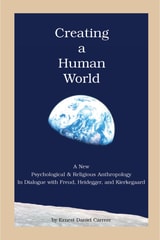
Creating a Human World
A New Psychological and Religious Anthropology In Dialogue with Freud, Heidegger, and KierkegaardErnest Daniel Carrere
University of Scranton Press, 2006
Carrere elucidates the paradoxical spiritual truth that salvation lies not in an escape from humanity, but in embracing it. An interdisciplinary tour de force, this book will appeal to anyone interested in philosophy, psychology, religion, or cultural anthropology.
Egocracy
Marx, Freud and LacanSonia Arribas and Howard Rouse
Diaphanes, 2011

Freud in Oz
At the Intersections of Psychoanalysis and Children’s LiteratureKenneth B. Kidd
University of Minnesota Press, 2011
Children’s literature has spent decades on the psychiatrist’s couch, submitting to psychoanalysis by scores of scholars and popular writers alike. Freud in Oz turns the tables, suggesting that psychoanalysts owe a significant and largely unacknowledged debt to books ostensibly written for children. In fact, Kenneth B. Kidd argues, children’s literature and psychoanalysis have influenced and interacted with each other since Freud published his first case studies.
In Freud in Oz, Kidd shows how psychoanalysis developed in part through its engagement with children’s literature, which it used to articulate and dramatize its themes and methods, turning first to folklore and fairy tales, then to materials from psychoanalysis of children, and thence to children’s literary texts, especially such classic fantasies as Peter Pan and Alice’s Adventures in Wonderland. He traces how children’s literature, and critical response to it, aided the popularization of psychoanalytic theory. With increasing acceptance of psychoanalysis came two new genres of children’s literature—known today as picture books and young adult novels—that were frequently fashioned as psychological in their forms and functions.
Freud in Oz offers a history of reigning theories in the study of children’s literature and psychoanalysis, providing fresh insights on a diversity of topics, including the view that Maurice Sendak and Bruno Bettelheim can be thought of as rivals, that Sendak’s makeover of monstrosity helped lead to the likes of the Muppets, and that “Poohology” is its own kind of literary criticism—serving up Winnie the Pooh as the poster bear for theorists of widely varying stripes.
Freud or Jung
Edward Glover
Northwestern University Press, 1950
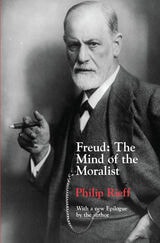
Freud
The Mind of the MoralistPhilip Rieff
University of Chicago Press, 1979
"This remarkably subtle and substantial book, with its nicely ordered sequences of skilled dissections and refined appraisals, is one of those rare products of profound analytic thought. . . . The author weighs each major article of the psychoanalytic canon in the scales of his sensitive understanding, then gives a superbly balanced judgement."—Henry A. Murray, American Sociological Review
"Rieff's tremendous scholarship and rich reflections fill his pages with memorable treasures."—Robert W. White, Scientific American
"Philip Rieff's book is a brilliant and beautifully reasoned example of what Freud's influence has really been: an increasing intellectual vigilance about human nature. . . . What the analyst does for the patient—present the terms for his new choices as a human being—Mr. Rieff does in respect to the cultural significance of Freudianism. His style has the same closeness, the same undertone of hypertense alertness. Again and again he makes brilliant points."—Alfred Kazin, The Reporter
On the Psychotheology of Everyday Life
Reflections on Freud and RosenzweigEric L. Santner
University of Chicago Press, 2001
Santner's crucial innovation in this new study is to bring the theological notion of revelation into a broadly psychoanalytic field, where it can be understood as a force that opens the self to everyday life and encourages accountability within the larger world. Revelation itself becomes redefined as an openness toward what is singular, enigmatic, even uncanny about the Other, whether neighbor or stranger, thereby linking a theory of drives and desire to a critical account of sociality. Santner illuminates what it means to be genuinely open to another human being or culture and to share and take responsibility for one's implication in the dilemmas of difference.
By bringing Freud and Rosenzweig together, Santner not only clarifies in new and surprising ways the profound connections between psychoanalysis and the Judeo-Christian tradition, he makes the resources of both available to contemporary efforts to rethink concepts of community and cross-cultural communication.
The Fetish Revisited
Marx, Freud, and the Gods Black People MakeJ. Lorand Matory
Duke University Press, 2018

The Fragility of Manhood
Hawthorne, Freud, and the Politics of GenderDavid Greven
The Ohio State University Press, 2012
The Moses Complex
Freud, Schoenberg, Straub/HuilletUte Holl
Diaphanes, 2016
In The Moses Complex, Ute Holl analyzes these major works in detail and deep historical context, synthesizing the complex models of resistance to explore the relationships among media, migration, and politics. Since Moses descended from Sinai with the tablets inscribed with the Ten Commandments, new media and new laws have often emerged simultaneously. Liberation, in particular, has been negotiated through many different cultural media, with psychoanalysis, music, and cinema all describing exodus and exile as a process of force. Offering a dynamic and comprehensive political and cultural theory of migration and violence, The Moses Complex speaks equally well to psychoanalytic, musical, and cinematic thinking as it does to our tendency toward violence in the treatment of migrants today.
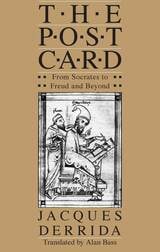
The Post Card
From Socrates to Freud and BeyondJacques Derrida
University of Chicago Press, 1987
You were reading a somewhat retro loveletter, the last in history. But you have not yet received it. Yes, its lack or excess of address prepares it to fall into all hands: a post card, an open letter in which the secret appears, but indecipherably.
What does a post card want to say to you? On what conditions is it possible? Its destination traverses you, you no longer know who you are. At the very instant when from its address it interpellates, you, uniquely you, instead of reaching you it divides you or sets you aside, occasionally overlooks you. And you love and you do not love, it makes of you what you wish, it takes you, it leaves you, it gives you.
On the other side of the card, look, a proposition is made to you, S and p, Socrates and plato. For once the former seems to write, and with his other hand he is even scratching. But what is Plato doing with his outstretched finger in his back? While you occupy yourself with turning it around in every direction, it is the picture that turns you around like a letter, in advance it deciphers you, it preoccupies space, it procures your words and gestures, all the bodies that you believe you invent in order to determine its outline. You find yourself, you, yourself, on its path.
The thick support of the card, a book heavy and light, is also the specter of this scene, the analysis between Socrates and Plato, on the program of several others. Like the soothsayer, a "fortune-telling book" watches over and speculates on that-which-must-happen, on what it indeed might mean to happen, to arrive, to have to happen or arrive, to let or to make happen or arrive, to destine, to address, to send, to legate, to inherit, etc., if it all still signifies, between here and there, the near and the far, da und fort, the one or the other.
You situate the subject of the book: between the posts and the analytic movement, the pleasure principle and the history of telecommunications, the post card and the purloined letter, in a word the transference from Socrates to Freud, and beyond. This satire of epistolary literature had to be farci, stuffed with addresses, postal codes, crypted missives, anonymous letters, all of it confided to so many modes, genres, and tones. In it I also abuse dates, signatures, titles or references, language itself.
J. D.
"With The Post Card, as with Glas, Derrida appears more as writer than as philosopher. Or we could say that here, in what is in part a mock epistolary novel (the long section is called "Envois," roughly, "dispatches" ), he stages his writing more overtly than in the scholarly works. . . . The Post Card also contains a series of self-reflective essays, largely focused on Freud, in which Derrida is beautifully lucid and direct."—Alexander Gelley, Library Journal