Results by title
9 books match the query 'Fruit'
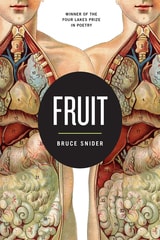
Fruit
Bruce Snider
University of Wisconsin Press, 2020
Fruit of Knowledge, Wheel of Learning (Vol I)
Essays in Honour of Professor Carole HillenbrandEdited by Ali M. Ansari
Gingko, 2021
Carole and Robert Hillenbrand are legendary British professors, both of whom have made immense contributions to the fields of Islamic history and art history, and they are highly respected and beloved by the academic community. For these two volumes, editors Melanie Gibson and Ali Ansari have gathered an eclectic mix of scholarly contributions by colleagues and by some of their most recent students who now occupy positions in universities worldwide. The eleven articles in the volume dedicated to Carole Hillenbrand include research on a range of topics, including the elusive Fatimid caliph al-Zafir, a crusader raid on Mecca, and the Persian bureaucrat Mirza Saleh Shirazi’s history of England. In Robert Hillenbrand's volume, the thirteen articles include studies of a rare eighth-century metal dish with Nilotic scenes, Chinese Qur’ans, the process of image-making in both theory and practice, and a shrine in Mosul destroyed by ISIS.
Fruit of Knowledge, Wheel of Learning (Vol II)
Essays in Honour of Professor Robert HillenbrandEdited by Melanie Gibson
Gingko, 2021
Carole and Robert Hillenbrand are legendary British professors, both of whom have made immense contributions to the fields of Islamic history and art history, and they are highly respected and beloved by the academic community. For these two volumes, editors Melanie Gibson and Ali Ansari have gathered an eclectic mix of scholarly contributions by colleagues and by some of their most recent students who now occupy positions in universities worldwide. The eleven articles in the volume dedicated to Carole Hillenbrand include research on a range of topics, including the elusive Fatimid caliph al-Zafir, a crusader raid on Mecca, and the Persian bureaucrat Mirza Saleh Shirazi’s history of England. In Robert Hillenbrand's volume, the thirteen articles include studies of a rare eighth-century metal dish with Nilotic scenes, Chinese Qur’ans, the process of image-making in both theory and practice, and a shrine in Mosul destroyed by ISIS.

Fruit of Life
Poems, A Bilingual EditionKim Myeong-sun
Rutgers University Press, 2026
Kim Myeong-sun is Korea's first published woman writer. Fruit of Life: Poems (생명의 과실: 김명순 시선) is the first book-length, Korean-to-English translation of her poetry. Kim’s poems offer a raw portrait of 1920s–30s Korea, driven by her personal experiences of sexual assault, misogynistic journalism and criticism, displacement, and poverty during the Japanese colonial occupation (1910–1945). Alongside feminist critique, Kim also writes about sapphic desire, familial affection, and nature, in styles that range from the traditional to the experimental. While Kim’s work was erased from the canon by Korea’s misogynistic literary establishment, Fruit of Life celebrates the legacy of Kim’s radical, versatile poetry, which paved the way for contemporary Korean women writers.
English-Korean Bilingual Edition
영-한 이중언어판
This book is published with the support of the Literature Translation Institute of Korea (LTI Korea).
‘한국 여성 최초 등단 작가’ 김명순의 시가 영문 완역본 『생명의 과실: 김명순 시선』으로 영어권 독자들을 만난다. 1920–30년대 조선 사회의 민낯을 강렬하고 가감 없는 언어로 담아낸 김명순의 시는, 일제강점기 아래 성폭력과 여성혐오적 언론 및 비평, 이주와 빈곤을 직접 겪어낸 작가의 여성주의적·반식민주의적 저항 정신을 생생히 드러낸다. 또한 전통과 실험을 넘나드는 다채로운 형식과 기법으로 여성 간 연대와 사랑, 가족애, 자연에 대하여 노래한다. 『생명의 과실: 김명순 시선』은 여성혐오적 문단으로부터 소외당한 김명순의 작품을 재조명하며, 한국 여성문학의 새로운 지평을 연 그의 업적을 기념한다.

Fruit of the Month
Abby Frucht
University of Iowa Press, 1988
This fine debut of twelve stories explores a topography of the interior, probing the thoughts, motivations, and little-understood impulses behind moments of aggression, jealousy, and loneliness. Turning her eye on the academic landscape as well as the workaday world, Frucht keenly observes people forging friendships, groping for greater self-understanding, and attempting to find meaning in their lives and loves.
Whether writing about a couple trying to conceive a much-wanted child or a lonely husband mourning the changing political attitudes of his wife, Frucht brings her characters and their lives into memorable focus. She builds a fictional world that resonates with the immediate and the familiar.
Although many books of contemporary fiction document the ways people often fail to communicate, the essential quality of Abby Frucht's characters is that they do communicate—connect—and gain part of what they want from life as a result. These stories are never about despair without also being about hope. They speak to each other as playfully and accidentally as memories do.
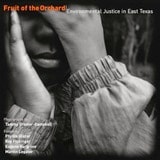
Fruit of the Orchard
Environmental Justice in East TexasPhyllis Glazer
University of North Texas Press, 2006
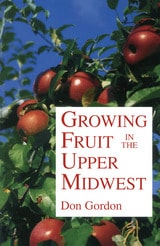
Growing Fruit in the Upper Midwest
Donald Gordon
University of Minnesota Press, 1997
The standard guide to fruit-growing success.
Despite the harsh climate that prevails in the Upper Midwest, even amateur gardeners can successfully grow fruit when armed with some basic information. Focusing on Minnesota, Wisconsin, Iowa, South Dakota, and North Dakota, Growing Fruit in the Upper Midwest is a practical how-to guide to the cultivation of a wide variety of fruit including apples, pears, plums, apricots, strawberries, blueberries, cherries, grapes, currants, gooseberries, and brambles.
To assist readers ranging from home gardeners to small commercial growers, Don Gordon covers site selection, soil types, pruning, fertilization, harvesting, pests, and preventing winter injury as well as describing literally hundreds of excellent species for this region. Many technical aspects of pruning and planting are accompanied with illustrations. Growing Fruit in the Upper Midwest includes maps that indicate the fruit hardiness zones for each state, augmented by an easy-to-use guide to cultivar selection. The introduction is a basic botany lesson, covering plant classifications, growth and development. The section on apple growing, by far the most widely adapted fruit species in this region, will help growers decide which types of trees will thrive on their land. Gordon also provides an overview of interesting and overlooked historic and economic aspects of fruit production across the Upper Midwest. This practical guide is essential reading for home gardeners, small commercial growers, and anyone who has considered this rewarding and fascinating hobby. “The concise information about plant care will assist even the most inexperienced gardener. This book is an excellent reference tool, and I would recommend it highly to anyone growing fruit in Minnesota, Wisconsin, Iowa, North Dakota or South Dakota.” Rochester Post Bulletin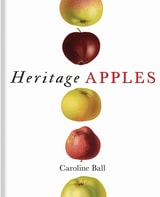
Heritage Apples
Caroline Ball
Bodleian Library Publishing, 2019
This book features apple varieties from the Herefordshire Pomona that are still cultivated today. The Pomona—an exquisitely illustrated book of apples and pears—was published at the height of the Victorian era by a small rural naturalists’ club. Its beautiful illustrations and authoritative text are treasured by book collectors and apple experts alike. From the Blenheim Orange and Worcester Pearmain to the less fêted yet scrumptious Ribston Pippin, Margil, and Pitmaston Pine Apple, Heritage Apples is illustrated with the Pomona’s stunning paintings and tells the intriguing stories behind each variety, how they acquired their names, and their merits for eating, cooking, or making cider. Also featuring practical advice on how to choose and grow your own trees, this is the perfect book for apple-lovers and growers alike.
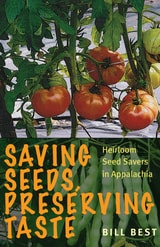
Saving Seeds, Preserving Taste
Heirloom Seed Savers in AppalachiaBill Best
Ohio University Press, 2013
The Brown Goose, the White Case Knife, Ora’s Speckled Bean, Radiator Charlie’s Mortgage Lifter—these are just a few of the heirloom fruits and vegetables you’ll encounter in Bill Best’s remarkable history of seed saving and the people who preserve both unique flavors and the Appalachian culture associated with them. As one of the people at the forefront of seed saving and trading for over fifty years, Best has helped preserve numerous varieties of beans, tomatoes, corn, squashes, and other fruits and vegetables, along with the family stories and experiences that are a fundamental part of this world. While corporate agriculture privileges a few flavorless but hardy varieties of daily vegetables, seed savers have worked tirelessly to preserve genetic diversity and the flavors rooted in the Southern Appalachian Mountains—referred to by plant scientists as one of the vegetative wonders of the world.
Saving Seeds, Preserving Taste will introduce readers to the cultural traditions associated with seed saving, as well as the remarkable people who have used grafting practices and hand-by-hand trading to keep alive varieties that would otherwise have been lost. As local efforts to preserve heirloom seeds have become part of a growing national food movement, Appalachian seed savers play a crucial role in providing alternatives to large-scale agriculture and corporate food culture. Part flavor guide, part people’s history, Saving Seeds, Preserving Taste will introduce you to a world you’ve never known—or perhaps remind you of one you remember well from your childhood.