Results by title
6 books match the query 'Fundraising & Grants'
Cultural Crowdfunding
Platform Capitalism, Labour and GlobalizationVincent Rouzé
University of Westminster Press, 2019
This new book analyses the strategies, usages and wider implications of crowdsourcing and crowdfunding platforms in the culture and communication industries that are reshaping economic, organizational and social logics. Platforms are the object of considerable hype with a growing global presence. Relying on individual contributions coordinated by social media to finance cultural production (and carry out promotional tasks) is a significant shift, especially when supported by morphing public policies, supposedly enhancing cultural diversity and accessibility.
The aim of this book is to propose a critical analysis of these phenomena by questioning what follows from decisions to outsource modes of creation and funding to consumers. Drawing on research carried out within the ‘Collab’ programme backed by the French National Research Agency, the book considers how platforms are used to organize cultural labour and/or to control usages, following a logic of suggestion rather than overt injunction. Four key areas are considered: the history of crowdfunding as a system; whose interests crowdfunding may serve; the implications for digital labour and lastly crowdfunding’s interface with globalization and contemporary capitalism. The book concludes with an assessment of claims that crowdfunding can democratize culture.

Curtains?
The Future of the Arts in AmericaMichael M. Kaiser
Brandeis University Press, 2015
Equipping The Saints
Barbara Elliott
Templeton Press, 2004
For any individual donor or foundation giving money to a faith-based organization, this guide is indispensable. Equipping the Saints offers sage advice on recognizing the qualities of good leaders, effective programs, and the methods of evaluating outcomes. Based on hundreds of interviews with donors and civic leaders, this guide provides a candid look at the unique strengths and weaknesses of these groups. Equipping the Saints is packed with useful tools like a donor's interest inventory, a checklist for making a site visit, tips on reading nonprofit financial statements, and hands-on recommendations for making grants that are both effective and prudent.
"An excellent guide for philanthropists seeking to unleash the power of faith in healing troubled souls and transforming troubled neighborhoods." —Adam Meyerson, president, Philanthropy Roundtable
"Most donors quickly learn how all that glitters is not gold. Some go on to learn how all that is gold does not glitter. In this book Barbara Elliott provides the lessons in discernment and the tools for evaluation that donors need. Take advantage of her understanding by making it your own." —Marvin Olasky, ditor of World magazine, author of Compassionate Conservatism and The Tragedy of American Compassion
"Any donor with even a hint of interest in exploring investments in the work of faith-based organizations (FBOs) needs this book. It is packed with practical information about how to understand and assess FBOs. Its numerous examples of real-life donors making real-life differences through partnerships with faith-inspired community healers ought to stimulate much creative brainstorming among philanthropists." —Dr. Amy L. Sherman, senior fellow and director, Faith in Communities Initiative of the Foundation for American Renewal
"From the perspective of a local foundation giving to faith-based ministries, we have found Barbara Elliott's work to be inspiring, practical and instructive to us as we think through our priorities and principles for funding decisions…I have extraordinary respect for Barbara's scope of understanding, ability to communicate with passion and reason, and her deep understanding of a very complex field. She gives all of us—ministries and funders—genuine hope and invaluable insight." —Fred Smith, president, The Gathering
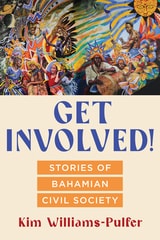
Get Involved!
Stories of Bahamian Civil SocietyKim Williams-Pulfer
Rutgers University Press, 2024
Junkanoo is the national cultural festival of The Bahamas. It fosters a sense of community pride, identity, companionship, spirituality and unity. Watch a video about Junknoo:
https://www.youtube.com/watch?v=tnMpMesNb1Q&t=14s
Paying for the Party
How Fundraising Demands Lead to Less Productive and Less Representative LegislaturesMichael R. Kistner
University of Chicago Press, 2026
A revealing, data-rich exploration of how American legislators transformed from active policymakers into party fundraisers.
Lawmakers in Congress and state legislatures across the United States spend enormous amounts of time and effort fundraising, not just for their own seats but for the party. Whether dialing for dollars or hosting high-priced fundraising events, the pursuit of campaign funds is now a massive part of the American legislator’s job description. What explains this transformation, and what are the consequences for public policy?
In Paying for the Party, Michael Kistner uses new theory and new data to answer these questions. He shows that state legislative party organizations—Democratic and Republican caucuses in capitols across the country—are responsible for turning their members into single-minded seekers of money. Parties reward legislators who contribute the most with powerful leadership and committee positions. Consequently, the members who now hold these agenda-setting positions are increasingly neither the most productive nor knowledgeable lawmakers, but rather those who can raise the most money. And when legislators are asked to raise more money, they skip committee hearings for fundraising events, enacting fewer substantive policies as a result. Paying for the Party shows that parties in contemporary American legislatures have hollowed out the policymaking capacity of their institutions and empowered a decidedly non-representative set of legislators.
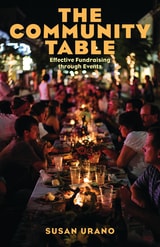
The Community Table
Effective Fundraising through EventsSusan Cole Urano
Ohio University Press, 2016
In resource-challenged Athens County, Ohio, staff and volunteers at the nonprofit Athens County Foundation came up with a daring idea: to host a locally sourced, gourmet dinner for four hundred people. The meal would be held on the brick-paved main street of the city of Athens, to raise funds for the food bank, and increase awareness of the persistent local struggle with food insecurity, as well as raise the visibility of the foundation. The logistical challenges were daunting, but the plan would unite the community around the common theme of providing for its own.
Since then, Bounty on the Bricks has become a touchstone event that raises close to one hundred thousand dollars for the food bank. In The Community Table, Athens County Foundation executive director Susan Urano translates her years of nonprofit experience with large-scale annual fundraisers into a step-by-step guide for development professionals, community leaders, and volunteers.
Urano guides readers to consider when to mount a fundraiser, who the stakeholders are, what social and financial value the event will bring to the community, and how partnerships might augment the payoff. Using real-life examples, she explains how organizers can learn from mistakes and illustrates methods of team building, conflict resolution, and problem solving. Sample ideas, timelines, budgets, publicity plans, and committee structures round out The Community Table.