Results by title
3 books match the query 'Gómez, Liliana'
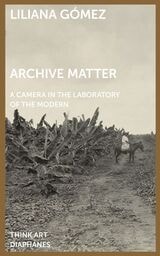
Archive Matter
A Camera in the Laboratory of the ModernLiliana Gómez
Diaphanes, 2023
A journey through the United Fruit Company’s photo archive and its documentation of corporate expansion into the Caribbean.
The establishment of the United Fruit Company as a global political agent with its banana plantations was met with considerable resistance. Now the company’s photographic records are the focal point of Archive Matter as it examines photography’s historical and political impact through the argument that this overlooked, but important, archive made capitalist expansion into the Caribbean possible.
Author Liliana Gómez examines the images from within their “optical unconscious” and via the archive’s silences and omissions. The implication of these silences, Gómez argues, is the attempt to conceal the violence embedded within the realities of the plantations’ daily operations and corporate efforts to “modernize” the Caribbean.
Performing Human Rights
Contested Amnesia and Aesthetic Practices in the Global SouthEdited by Liliana Gómez
Diaphanes, 2021
eco-operations
Edited by Fabienne Liptay and Liliana Gómez
Diaphanes, 2024
The climate change crisis has become part of aesthetic discourse and critical research in culture and the arts. Future-oriented, ecologically conceived possibilities for action are being explored by artists, curators, and scholars alike. eco-operations addresses these emerging aesthetic ecologies and new technologies of cooperation that both challenge and shape a sustainable future, foregrounding interruptions, ruptures, disconnections, dissonances, exclusions, and allochronism. Moving beyond the concepts of “flow” and “network” as a single, coherent (ecological or technological) system, eco-operations instead emphasizes the frictions within asynchronously running systems. The infrastructures and formats of artistic production and exhibition play a central role here, as they themselves constitute ecosystems that invite and regulate processes of sharing and exchange. Artists and activists are embedded in these ecosystems, in which they simultaneously intervene when searching for alternative ways of creating collaborative practice. Bringing together scholars, artists, writers, and curators, and working across a range of disciplines, eco-operations explores this field of tension between global and local ecologies and aims to speculate on where dissonances imply both creative potential and political challenges.
eco-operations features contributions by Dalida María Benfield, Ursula Biemann, Lisa Blackmore, Mateo Chacón Pino, Lucrezia Cippitelli, T. J. Demos, Sandra Frimmel, Laura Flórez, Lorena Cely, Alexandra Gelis, Liliana Gómez, Fabienne Liptay, Uriel Orlow, and Dorota Sajewska.