Results by title
12 books match the query 'Gambling on Indian reservations'
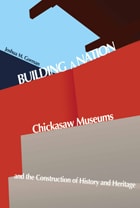
Building a Nation
Chickasaw Museums and the Construction of History and HeritageJoshua M. Gorman
University of Alabama Press, 2011
A groundbreaking study of Indigenous museums and cultural self-representation.
The Chickasaw Nation, an American Indian nation headquartered in southeastern Oklahoma, entered into a period of substantial growth in the late 1980s. Following its successful reorganization and expansion, which was enabled by federal policies for tribal self-determination, the Nation pursued gaming and other industries to affect economic growth. From 1987 to 2009 the Nation’s budget increased exponentially as tribal investments produced increasingly large revenues for a growing Chickasaw population. Coincident to this growth, the Chickasaw Nation began acquiring and creating museums and heritage properties to interpret their own history, heritage, and culture through diverse exhibitionary representations. By 2009, the Chickasaw Nation directed representation of itself at five museum and heritage properties throughout its historic boundaries.
Josh Gorman examines the history of these sites and argues that the Chickasaw Nation is using museums and heritage sites as places to define itself as a coherent and legitimate contemporary Indian nation. In doing so, they are necessarily engaging with the shifting historiographical paradigms as well as changing articulations of how museums function and what they represent. The roles of the Chickasaw Nation’s museums and heritage sites in defining and creating discursive representations of sovereignty are examined within their historicized local contexts. The work describes the museum exhibitions’ dialogue with the historiography of the Chickasaw Nation, the literature of new museum studies, and the indigenous exhibitionary grammars emerging from indigenous museums throughout the United States and the world.
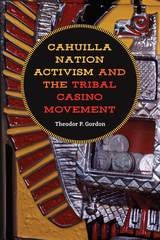
Cahuilla Nation Activism and the Tribal Casino Movement
Theodor P. Gordon
University of Nevada Press, 2018
Cahuilla Nation Activism and the Tribal Casino Movement tells the bigger story of how the Cahuilla nations—including the Cabazon—have used self-reliance and determination to maintain their culture and independence against threats past and present. From California’s first governor’s “war of extermination” against native peoples through today’s legal and political challenges, Gordon shows that successful responses have depended on the Cahuilla’s ability to challenge non-natives’ assumptions and misconceptions.
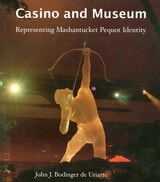
Casino and Museum
Representing Mashantucket Pequot IdentityJohn J. Bodinger de Uriarte
University of Arizona Press, 2007
To some degree, both institutions offer Native representations yet create different strategies for attracting and engaging visitors. While the casino is crucial as an economic generator, the museum has an important role as the space for authentic Mashantucket Pequot images and narratives. The book’s focus is on how the casino and the museum successfully deploy different strategies to take control of the tribe’s identity, image, and cultural agency.
Photographs in the book provide a view of Mashantucket, allowing the reader to study the spaces of the book’s central arguments. They are a key methodology of the project and offer a non-textual opportunity to navigate the sites as well as one finely focused way to work through the representation and formation of the Native American photographic subject—the powerful popular imagining of Native Americans. Casino and Museum presents a unique understanding of the prodigious role that representation plays in the contemporary poetics and politics of Native America. It is essential reading for scholars of Native American studies, museum studies, cultural studies, and photography.
First Nations Gaming in Canada
Yale D. Belanger
University of Manitoba Press, 2011
Gambling and Survival in Native North America
Paul Pasquaretta
University of Arizona Press, 2003
The Pequots have found success at their southeastern Connecticut casino in spite of the odds. But in considering their story, Paul Pasquaretta shifts the focus from casinos to the political struggles that have marked the long history of indigenous-colonial relations. Viewing the survival of Native communities in the face of genocide and forced assimilation as a high-stakes game of chance, he examines gambling metaphors in historical and literary contexts to reveal strategies employed by several tribes as they participate in various "games" with white society--whether land re-acquisition, political positioning, or resistance to outside dominance.
Through a comparative analysis of texts spanning four centuries—colonial war narratives, nineteenth-century romance fiction, tribal memorials, Native American novels—Pasquaretta provides a framework for understanding Indian-white relations and the role of "chance" in the realm of colonialism. He explores two intertwining themes: the survival of indigenous peoples in the face of the European invasion of North America and the ongoing contest of Natives and newcomers that has transpired in the marketplace, on the battlefield, and in the courts. In so doing, he considers the impact of reservation gambling on the development of contemporary tribal communities and the role of traditional Indian gambling practices and stories in the survival of indigenous cultural traditions.
Gambling and Survival in Native North America is a wide-ranging book that shows how Native Americans have become active participants in their own survival despite the popular belief that Indian tribes, as "conquered peoples," have been rendered helpless for over a century. Working within a system devised to confine and even destroy them, they have found ways to remain in the game—and, against all odds, have learned to play it well.
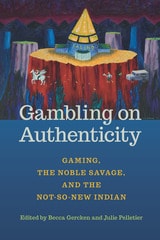
Gambling on Authenticity
Gaming, the Noble Savage, and the Not-So-New IndianBecca Gercken
Michigan State University Press, 2017
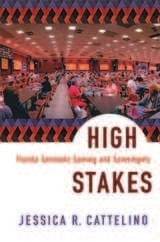
High Stakes
Florida Seminole Gaming and SovereigntyJessica R. Cattelino
Duke University Press, 2008
Cattelino presents a vivid ethnographic account of the history and consequences of Seminole gaming. Drawing on research conducted with tribal permission, she describes casino operations, chronicles the everyday life and history of the Seminole Tribe, and shares the insights of individual Seminoles. At the same time, she unravels the complex connections among cultural difference, economic power, and political rights. Through analyses of Seminole housing, museum and language programs, legal disputes, and everyday activities, she shows how Seminoles use gaming revenue to enact their sovereignty. They do so in part, she argues, through relations of interdependency with others. High Stakes compels rethinking of the conditions of indigeneity, the power of money, and the meaning of sovereignty.
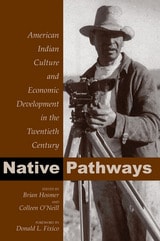
Native Pathways
American Indian Culture and Economic Development in the Twentieth CenturyBrian Hosmer
University Press of Colorado, 2004
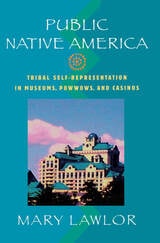
Public Native America
Tribal Self-Representations in Museums, Powwows, and CasinosLawlor, Mary
Rutgers University Press, 2006
The Native American casino and gaming industry has attracted unprecedented American public attention to life on reservations. Other tribal public venues, such as museums and powwows, have also gained in popularity among non-Native audiences and become sites of education and performance.
In PublicNative America, Mary Lawlor explores the process of tribal self-definition that the communities in her study make available to off-reservation audiences. Focusing on architectural and interior designs as well as performance styles, she reveals how a complex and often surprising cultural dynamic is created when Native Americans create lavish displays for the public’s participation and consumption.
Drawing on postcolonial and cultural studies, Lawlor argues that these venues serve as a stage where indigenous communities play out delicate negotiations—on the one hand retaining traditional beliefs and rituals, while on the other, using what they have learned about U.S. politics, corporate culture, tourism, and public relations to advance their economic positions.
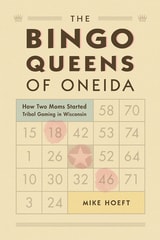
The Bingo Queens of Oneida
How Two Moms Started Tribal Gaming in WisconsinMike Hoeft
Wisconsin Historical Society Press, 2014
While militant Indian activists often dominated national headlines in the 1970s, these church-going Oneida women were the unsung catalysts behind bingo’s rising prominence as a sovereignty issue in the Oneida Nation. The bingo moms were just trying to take care of the kids in the community.
The Bingo Queens of Oneida: How Two Moms Started Tribal Gaming tells the story through the eyes of Sandra Ninham and Alma Webster, the Oneida women who had the idea for a bingo operation run by the tribe to benefit the entire tribe. Bingo became the tribe’s first moneymaker on a reservation where about half the population was living in poverty.
Author Mike Hoeft traces the historical struggles of the Oneida—one of six nations of the Iroquois, or Haudenosaunee, confederacy—from their alliance with America during the Revolutionary War to their journey to Wisconsin. He also details the lives of inspirational tribal members who worked alongside Ninham and Webster, and also those who were positively affected by their efforts.
The women-run bingo hall helped revitalize an indigenous culture on the brink of being lost. The Bingo Queens of Oneida is the story of not only how one game helped revive the Oneida economy but also how one game strengthened the Oneida community.
The New Politics of Indian Gaming
The Rise of Reservation Interest GroupsKenneth N. Hansen
University of Nevada Press, 2015
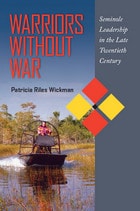
Warriors Without War
Seminole Leadership in the Late Twentieth CenturyPatricia Riles Wickman
University of Alabama Press, 2012
Warriors Without War takes readers beneath the placid waters of the Seminole’s public image and into the fascinating depths of Seminole society and politics.