Results by title

6 books match the query 'Gandhi'

cover of Disarming Manhood: Roots of Ethical Resistance

Disarming Manhood

Roots of Ethical Resistance

David A.J. Richards

Ohio University Press, 2005
Masculine codes of honor and dominance often are expressed in acts of violence, including war and terrorism. In Disarming Manhood: Roots of Ethical Resistance, David A.J. Richards examines the lives of five famous men—great leaders and crusaders—who actively resisted violence and presented their causes with more humane alternatives.Richards argues that Winston Churchill, William Lloyd Garrison, Mohandas Gandhi, Martin Luther King, and Leo Tolstoy shared a psychology whose nonviolent roots were deeply influenced by a loving, maternalistic ethos deeply influenced by the teachings of Jesus of Nazareth. Drawing upon psychology, history, political theory, and literature, Richards threads a connection between these leaders and the maternal figures who profoundly shaped their responses to conflict. Their lives and work underscore how the outlook of maternal care givers and women enables some men to resist the violent responses characteristic of traditional manhood. The voice of nonviolent masculinity has empowered important democratic movements of ethical transformation, including civil disobedience in South Africa, India, and the United States. Disarming Manhood demonstrates that as Churchill, Garrison, Gandhi, King, and Tolstoy carried out their various missions they were galvanized by teachings whose ethical foundations rejected unjust violence and favored peaceful alternatives. Accessibly written and free of jargon, Disarming Manhood's exploration of human nature and maternal bonds will interest a wide audience as it furthers the understanding of human nature itself and contributes to the fields of developmental psychology and feminist scholarship.
[more]
cover of Gandhi and the Stoics: Modern Experiments on Ancient Values

Gandhi and the Stoics

Modern Experiments on Ancient Values

Richard Sorabji

University of Chicago Press, 2012
“Was Gandhi a philosopher? Yes.” So begins this remarkable investigation of the guiding principles that motivated the transformative public acts of one of the top historical figures of the twentieth century. Richard Sorabji, continuing his exploration of the many connections between South Asian thought and ancient Greek and Roman philosophy, brings together in this volume the unlikely pairing of Mahatma Gandhi and the Stoics, uncovering a host of parallels that suggests a deep affinity spanning the two millennia between them.
 
While scholars have long known Gandhi’s direct Western influences to be Platonic and Christian, Sorabji shows how a look at Gandhi’s convergence with the Stoics works mutually, throwing light on both of them. Both emphasized emotional detachment, which provided a necessary freedom, a suspicion of universal rules of conduct that led to a focus not on human rights but human duties—the personally determined paths each individual must make for his or her self. By being indifferent, paradoxically, both the Stoics and Gandhi could love manifoldly. In drawing these links to the fore, Sorabji demonstrates the comparative consistency of Gandhi’s philosophical ideas, isolating the specific ideological strengths that were required to support some of the most consequential political acts and experiments in how to live.
[more]
cover of Gandhi in India: In His Own Words

Gandhi in India

In His Own Words

Mahatma Gandhi and Martin Green

Brandeis University Press, 1987
[more]
cover of Gandhi: The Traditional Roots of Charisma

Gandhi

The Traditional Roots of Charisma

Susanne Hoeber Rudolph and Lloyd I. Rudolph

University of Chicago Press, 1983
The Rudolphs' analysis reveals that Gandhi's charisma was deeply rooted in the aspects of Indian tradition that he interpreted for his time. They key to his political influence was his ability to realize in both his daily life and his public actions, cultural ideals that many Indians honored but could not enact themselves—ideals such as the traditional Hindu belief that a person's capacity for self-control enhances his capacity to control his environment. Appealing to shared expectations and recognitions, Gandhi was able to revitalize tradition while simultaneously breaking with some of its entrenched values, practices, and interests. One result was a self-critical, ethical, and inclusive nationalist movement that eventually led to independence.
[more]
cover of Postmodern Gandhi and Other Essays: Gandhi in the World and at Home

Postmodern Gandhi and Other Essays

Gandhi in the World and at Home

Lloyd I. Rudolph and Susanne Hoeber Rudolph

University of Chicago Press, 2006

Gandhi, with his loincloth and walking stick, seems an unlikely advocate of postmodernism. But in Postmodern Gandhi, Lloyd and Susanne Rudolph portray him as just that in eight thought-provoking essays that aim to correct the common association of Gandhi with traditionalism.

Combining core sections of their influential book Gandhi: The Traditional Roots of Charisma with substantial new material, the Rudolphs reveal here that Gandhi was able to revitalize tradition while simultaneously breaking with some of its entrenched values and practices. Exploring his influence both in India and abroad, they tell the story of how in London the young activist was shaped by the antimodern “other West” of Ruskin, Tolstoy, and Thoreau and how, a generation later, a mature Gandhi’s thought and action challenged modernity’s hegemony. Moreover, the Rudolphs argue that Gandhi’s critique of modern civilization in his 1909 book Hind Swaraj was an opening salvo of the postmodern era and that his theory and practice of nonviolent collective action (satyagraha) articulate and exemplify a postmodern understanding of situational truth.

This radical interpretation of Gandhi's life will appeal to anyone who wants to understand Gandhi’s relevance in this century, as well as students and scholars of politics, history, charismatic leadership, and postcolonialism.
[more]
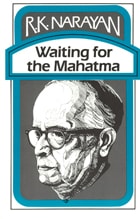
cover of Waiting for Mahatma

Waiting for Mahatma

R. K. Narayan

University of Chicago Press, 1955

"R.K. Narayan . . . has been compared to Gogol in England, where he has acquired a well-deserved reputation. The comparison is apt, for Narayan, an Indian, is a writer of Gogol's stature, with the same gift for creating a provincial atmosphere in a time of change. . . . One is convincingly involved in this alien world without ever being aware of the technical devices Narayan so brilliantly employs."—Anthony West, The New Yorker

"The experience of reading one of his novels is . . . comparable to one's first reaction to the great Russian novels: the fresh realization of the common humanity of all peoples, underlain by a simultaneous sense of strangeness—like one's own reflection seen in a green twilight."—Margaret Parton, New Herald Tribune Book Review

"The hardest of all things for a novelist to communicate is the extraordinary ordinariness of most human happiness. . . . Jane Austen, Soseki, Chekhov: a few bring it off. Narayan is one of them."—Francis King, Spectator

"The novels of R.K. Narayan are the best I have read in any language for a long time."—Amit Roy, Daily Telegraph
[more]