Results by title
2 books match the query 'Gangster'
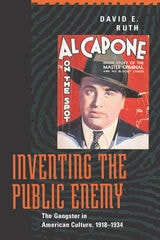
Inventing the Public Enemy
The Gangster in American Culture, 1918-1934David E. Ruth
University of Chicago Press, 1996
In this richly detailed account of mass media images, David Ruth looks at Al Capone and other "invented" gangsters of the 1920s and 1930s. The subject of innumerable newspaper and magazine articles, scores of novels, and hundreds of Hollywood movies, the gangster was a compelling figure for Americans preoccupied with crime and the social turmoil it symbolized. Ruth shows that the media gangster was less a reflection of reality than a projection created from Americans' values, concerns, and ideas about what would sell.
We see efficient criminal executives demonstrating the multifarious uses of organization; dapper, big-spending gangsters highlighting the promises and perils of the emerging consumer society; and gunmen and molls guiding an uncertain public through the shifting terrain of modern gender roles. In this fascinating study, Ruth reveals how the public enemy provides a far-ranging critique of modern culture.
We see efficient criminal executives demonstrating the multifarious uses of organization; dapper, big-spending gangsters highlighting the promises and perils of the emerging consumer society; and gunmen and molls guiding an uncertain public through the shifting terrain of modern gender roles. In this fascinating study, Ruth reveals how the public enemy provides a far-ranging critique of modern culture.
[more]
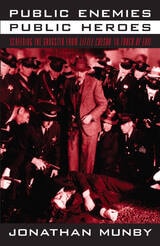
Public Enemies, Public Heroes
Screening the Gangster from Little Caesar to Touch of EvilJonathan Munby
University of Chicago Press, 1999
In this study of Hollywood gangster films, Jonathan Munby examines their controversial content and how it was subjected to continual moral and political censure.
Beginning in the early 1930s, these films told compelling stories about ethnic urban lower-class desires to "make it" in an America dominated by Anglo-Saxon Protestant ideals and devastated by the Great Depression. By the late 1940s, however, their focus shifted to the problems of a culture maladjusting to a new peacetime sociopolitical order governed by corporate capitalism. The gangster no longer challenged the establishment; the issue was not "making it," but simply "making do."
Combining film analysis with archival material from the Production Code Administration (Hollywood's self-censoring authority), Munby shows how the industry circumvented censure, and how its altered gangsters (influenced by European filmmakers) fueled the infamous inquisitions of Hollywood in the postwar '40s and '50s by the House Committee on Un-American Activities. Ultimately, this provocative study suggests that we rethink our ideas about crime and violence in depictions of Americans fighting against the status quo.
[more]