Results by title

7 books match the query 'Gap'
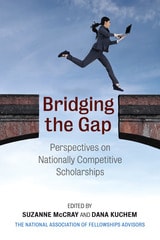
cover of Bridging the Gap: Perspectives on Nationally Competitive Scholarships

Bridging the Gap

Perspectives on Nationally Competitive Scholarships

Suzanne McCray

University of Arkansas Press, 2019
Thousands of college students across the country apply each year for nationally and internationally competitive scholarships and grants. Different awards target different interests, career goals, and student qualifications. Advising students on how to choose the right award that will help launch them on their career path requires a nuanced understanding of scholarship opportunities. Bridging the Gap: Perspectives on Nationally Competitive Scholarships provides key information from scholarship foundations and seasoned advice from campus advisors critically important for the faculty and staff who support students applying for these awards. This book will be a great resource for anyone advising students.
[more]
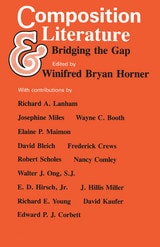
cover of Composition and Literature: Bridging the Gap

Composition and Literature

Bridging the Gap

Edited by Winifred Bryan Horner

University of Chicago Press, 1983
[more]
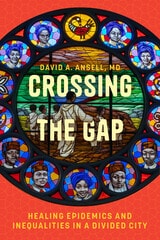
cover of Crossing the Gap: Healing Epidemics and Inequalities in a Divided City

Crossing the Gap

Healing Epidemics and Inequalities in a Divided City

David A. Ansell, MD

University of Chicago Press, 2026

A doctor, a disinvested neighborhood, and a radical experiment to close America’s death gap. 

Two girls are born in the same Chicago hospital. Their neighborhoods—just seven train stops apart—will shape their futures and help determine how long they live. One will celebrate her eighty-fifth birthday. The other will die before sixty-five.

This is the death gap: lives lost too soon. Crossing the Gap asks how a city with world-class hospitals can tolerate an epidemic of premature death—and tells the story of the people fighting to end it.

In his landmark book The Death Gap, physician and health equity leader David A. Ansell exposed how structural racism and poverty shorten lives. He moves beyond diagnosis in Crossing the Gap to explore what happens when a major medical center joins forces with pastors, community organizers, residents, and young leaders on Chicago’s West Side to redefine what a hospital owes its neighbors. Part medical memoir and part urban chronicle, Crossing the Gap follows groundbreaking initiatives such as West Side United and the Sankofa Wellness Village as they confront decades of disinvestment and work to build healthier communities. 

Through stories of collaboration, courage, conflict, and community leadership, Ansell shows how neighborhood voices, rigorous data, and moral imagination can transform health systems from bystanders into partners for change—not just in one city but throughout the nation. 
[more]
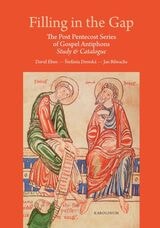
cover of Filling in the Gap: The Post Pentecost Series of Gospel Antiphones

Filling in the Gap

The Post Pentecost Series of Gospel Antiphones

David Eben, Štefánia Hanusa Demská, and Jan Bilwachs

Karolinum Press, 2025

Provides insight into the world of the Carolingian monks and clerics who created the Liturgy of the Hours. 

Filling in the Gap recounts the creative process behind a specific part of the Gregorian Office repertoire that has not been addressed so far. By linking historical and liturgical evidence with musical analysis, the study opens new avenues for grouping manuscripts and interpreting their interrelationships. The catalogue of melodies included in this volume contains transcriptions of the post-Pentecost antiphon repertoire from twenty-four manuscripts across Western Europe.
[more]
cover of Mind The Gap: The Education Of A Nature Writer

Mind The Gap

The Education Of A Nature Writer

John Hay

University of Nevada Press, 2006

John Hay has been acclaimed as one of the most significant contemporary nature writers and environmentalists. In Mind the Gap, an autobiographic memoir and a passionate commentary on our place in the natural world, he retraces the paths that led to his career and explores the literary and environmental influences that shaped his interest in nature. Born into a respected old New York family, Hay grew up in upper-class Manhattan and rural New Hampshire, between the rigid proprieties of society and the delicious freedoms he discovered during his outdoor adventures. Travel, education, and his own sensitivity and curiosity helped to open the world to him. Shortly after World War II, he moved to a desolate, sandy lot on Cape Cod. Much of the book deals with his life in a small rural community on the Cape, addressing such subjects as the annual herring spawn, resident and migratory birds, local wildlife, his human neighbors, and the complex rhythms of life in this region of wind and sea. Hay’s closely observed descriptions of his surroundings support his insightful comments on nature and our relationship to it. He warns us that “in setting ourselves apart from the rest of living creatures, we fall victim to our own ice-bound conceit. It is only in sharing that we know anything at all.” Hay shares his knowledge generously, and as readers we are thereby enriched. Available in Hardcover and Paperback. 
[more]
cover of Serving At-Risk Teens: Proven Strategies and Programs for Bridging the Gap

Serving At-Risk Teens

Proven Strategies and Programs for Bridging the Gap

Angela Craig

American Library Association, 2013
[more]
cover of Subjective Lives and Economic Transformations in Mongolia: Life in the Gap

Subjective Lives and Economic Transformations in Mongolia

Life in the Gap

Rebecca M. Empson

University College London, 2020

Almost 10 years ago the mineral-rich country of Mongolia experienced rapid economic growth, fueled by China’s need for coal and copper. Hopes were raised that the economy would avoid ‘over-heating’ and Mongolia could emerge independently wealthy and powerful. This period of growth is now over. The country is facing increasing public and private debt, conflicts around sovereignty and land, multiple forms of political protest that seem to go unnoticed, and a turn toward a more conservative politics that critiques ideas about democracy and protects its own but ignores the masses. This book details this story through the intimate lives of five women. It explores how they carve out a life for themselves in a landscape that is constantly shifting, while reflecting on past hopes and aspirations. Building on long-term friendships and familiarity with the region, Rebecca attends to the ways these women have come to theorize their experiences of living a ‘life in the gap’, between desired outcomes and actual materializations. In doing so, and through attention to their different strategies, she offers a re-viewing and re-configuring – to build on the analytical vocabulary developed in the book – of official accounts to describe what is going on in this extractivist-based economy.
 
[more]