Results by title
3 books match the query 'García Lorca, Federico'
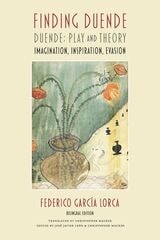
Finding Duende
Duende: Play and Theory | Imagination, Inspiration, EvasionFederico García Lorca
Swan Isle Press, 2023
A new translation of Federico García Lorca’s captivating lecture on duende.
For years, Federico García Lorca’s lecture on duende has been a source of insight for writers and performers, including Ted Hughes, Nick Cave, Patti Smith, and Amanda Gorman.
Duende: Play and Theory not only provides a path into Lorca’s poetics and the arts of Spain; it is one of the strangest, most compelling accounts of inspiration ever offered by a poet. Contrasting the demon called duende with the Angel and the Muse, Lorca describes a mysterious telluric, diabolical current, an irreducible “it,” that can draw the best from both performer and audience.
This new translation by Christopher Maurer, based on a thoroughly revised edition of the Spanish original of 1933, also included in this volume, offers a more accurate and fully annotated version of the lecture, with an introduction by eminent philologist José Javier León. Drawing on a deep knowledge of flamenco, and correcting decades of discussion about duende and its supposed origins in Spanish folklore and popular speech, León shows to what extent the concept of duende—understood as the imp of artistic inspiration—was the playful, yet deadly serious, invention of Lorca himself.
Lorca’s bravura performance of duende is foreshadowed here with a bilingual version—the most complete ever—of his other major text on inspiration, “Imagination, Inspiration, Evasion,” in which he calls for greater freedom in poetry as if searching for duende and its “constant baptism of newly created things.”
[more]
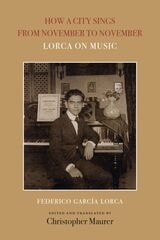
How a City Sings from November to November
Lorca on MusicFederico García Lorca
Swan Isle Press, 2026
Illuminates the place of music in the life and poetry of Federico García Lorca.
“Yo ante todo, soy músico,” Federico García Lorca once remarked: “Before all else, I am a musician.” Whether seated at the piano, collecting folksongs on his travels through Spain, or composing music for his plays, few poets have lived music so deeply. For Lorca, songs were “living creatures.” How a City Sings from November to November: Lorca on Music brings together for the first time in English the poet’s writing on music and musicians. In these pages, through lectures, letters, and interviews, Lorca celebrates the musical seasons of Granada, “a city enclosed by mountains and made for music”; the sources of cante jondo (flamenco deep song); the haunting melodies of Spanish cradle songs; and the dance of La Argentina. He describes learning the guitar, staging Spanish ballads in Buenos Aires, and listening to spirituals in New York. In bed with a fever, he compares it to a “delicate tempo rubato of Chopin.” Based on recent archival research, edited and newly translated by noted Lorca scholar Christopher Maurer, this collection offers an intricate and enjoyable counterpoint to Lorca’s poetry and theater.
“Yo ante todo, soy músico,” Federico García Lorca once remarked: “Before all else, I am a musician.” Whether seated at the piano, collecting folksongs on his travels through Spain, or composing music for his plays, few poets have lived music so deeply. For Lorca, songs were “living creatures.” How a City Sings from November to November: Lorca on Music brings together for the first time in English the poet’s writing on music and musicians. In these pages, through lectures, letters, and interviews, Lorca celebrates the musical seasons of Granada, “a city enclosed by mountains and made for music”; the sources of cante jondo (flamenco deep song); the haunting melodies of Spanish cradle songs; and the dance of La Argentina. He describes learning the guitar, staging Spanish ballads in Buenos Aires, and listening to spirituals in New York. In bed with a fever, he compares it to a “delicate tempo rubato of Chopin.” Based on recent archival research, edited and newly translated by noted Lorca scholar Christopher Maurer, this collection offers an intricate and enjoyable counterpoint to Lorca’s poetry and theater.
[more]
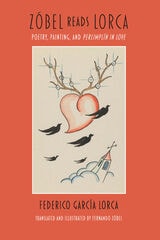
Zóbel Reads Lorca
Poetry, Painting, and Perlimplín In LoveFederico García Lorca
Swan Isle Press, 2022
A cherished erotic play by Federico García Lorca, illustrated by a major Spanish artist.
Painting, poetry, and music come together in Zóbel Reads Lorca, as Fernando Zóbel, a Harvard student who would become one of Spain’s most famous painters, translates and illustrates Federico García Lorca’s haunting play about the wounds of love.
The premiere of Amor de Don Perlimplín con Belisa en su jardín, an “erotic allelujia” which Lorca once called his most cherished play, was shut down in 1928 by Spanish government censors who confiscated the manuscript and locked it away in the pornography section of a state archive. Lorca rewrote the work in New York, and an amateur theater group brought it to the Spanish stage a few years later. Since his death, the play has also been transformed into ballet and opera.
Zóbel Reads Lorca presents Zóbel’s previously unpublished translation and features contextual essays from several scholars. Art historian Felipe Pereda studies Lorca in the context of Zóbel’s development as a painter, Luis Fernández Cifuentes describes the precarious and much-debated state of the humanities in Zóbel’s Harvard and throughout the United States in the 1940s, and Christopher Maurer delves into musical and visual aspects of the play’s American productions.
[more]