Results by title
2 books match the query 'Garth, Hanna'

Black Food Matters
Racial Justice in the Wake of Food JusticeHanna Garth
University of Minnesota Press, 2020
An in-depth look at Black food and the challenges it faces today
For Black Americans, the food system is broken. When it comes to nutrition, Black consumers experience an unjust and inequitable distribution of resources. Black Food Matters examines these issues through in-depth essays that analyze how Blackness is contested through food, differing ideas of what makes our sustenance “healthy,” and Black individuals’ own beliefs about what their cuisine should be.
Primarily written by nonwhite scholars, and framed through a focus on Black agency instead of deprivation, the essays here showcase Black communities fighting for the survival of their food culture. The book takes readers into the real world of Black sustenance, examining animal husbandry practices in South Carolina, the work done by the Black Panthers to ensure food equality, and Black women who are pioneering urban agriculture. These essays also explore individual and community values, the influence of history, and the ongoing struggle to meet needs and affirm Black life.
A comprehensive look at Black food culture and the various forms of violence that threaten the future of this cuisine, Black Food Matters centers Blackness in a field that has too often framed Black issues through a white-centric lens, offering new ways to think about access, privilege, equity, and justice.
Contributors: Adam Bledsoe, U of Minnesota; Billy Hall; Analena Hope Hassberg, California State Polytechnic U, Pomona; Yuson Jung, Wayne State U; Kimberly Kasper, Rhodes College; Tyler McCreary, Florida State U; Andrew Newman, Wayne State U; Gillian Richards-Greaves, Coastal Carolina U; Monica M. White, U of Wisconsin–Madison; Brian Williams, Mississippi State U; Judith Williams, Florida International U; Psyche Williams-Forson, U of Maryland, College Park; Willie J. Wright, Rutgers U.
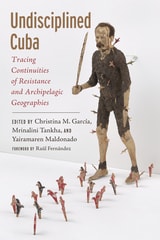
Undisciplined Cuba
Tracing Continuities of Resistance and Archipelagic GeographiesChristina M. García
Rutgers University Press, 2027
Undisciplined Cuba brings scholars of diverse disciplines and moves through multiple temporalities and geographies, allowing Cuba to emerge as a negotiated reality. Rather than rehearse narratives of exceptionalism and Cold War relationships that have detached the nation from its Antillean neighbors, this edited volume understands Cuba as deeply embedded in the Caribbean archipelago. Its chapters encompass feminist activism, public health, cinema for social justice, marine geopoetics, racial geographies, and literary corporealities. Drawing from an archipelagic framework and a decolonial practice of undisciplining, the anthology counters the tendency to treat landscapes, and cultural and political manifestations as artifacts of a national identity or evidence of a discrete geopolitical entity. Instead, Undisciplined Cuba attends to processes, to dynamic relations and continuities of resistance that defy periodization and institutional representation. The book offers a granular view of Cuba and an approach to Caribbean studies that imagines networks in excess of traditional categories of thought.