Results by title
29 books match the query 'Gates'
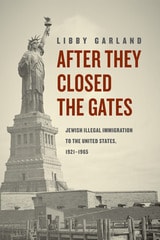
After They Closed the Gates
Jewish Illegal Immigration to the United States, 1921-1965Libby Garland
University of Chicago Press, 2014
In After They Closed the Gates, Libby Garland tells the untold stories of the Jewish migrants and smugglers involved in that underworld, showing how such stories contributed to growing national anxieties about illegal immigration. Garland also helps us understand how Jews were linked to, and then unlinked from, the specter of illegal immigration. By tracing this complex history, Garland offers compelling insights into the contingent nature of citizenship, belonging, and Americanness.

Gates Of The Elect Kingdom
John Wood
University of Iowa Press, 1997
The four parts of this highly accomplished collection showcase the different facets and wide breadth of John Wood's poetic talent. Displayed here are his ability to sustain a sequence, his adeptness with lyricism and the short form, and his sensuous feeling for this life and the life of the past.
In regard to the latter, Wood begins the book with his poetic account of the amazing life and adventures of the vigorous American utopianist Wilhelm Johannes Hoade. Wood's account reads like a novel as he weaves a fictional narrative out of lyric poetry, a narrative that is finally convincing and true in spite of its obvious impossibility.
The second section, “Homage to Dafydd ap Gwilym,” is a free but artistically faithful translation after some of the medieval Welsh poet's major poems, arranged in a way to suggest in a natural/supernatural mode his remarkable character and biography. The third part is a group of finely tuned, mostly lyric poems dealing with family, friends, and intellectual concerns; the fourth is a group of contemporary and historical “revelations,” quite striking in scope and variety. All combine to form a dazzling whole.
Gates of Awe
Holy Day Prayers for Young ChildrenRabbi Howard I. Bogot
Central Conference of American Rabbis, 1991
Gates of Forgiveness
Shaarei SelichaChaim Stern
Central Conference of American Rabbis, 1993
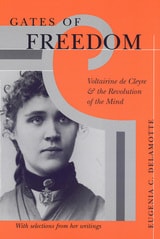
Gates of Freedom
Voltairine de Cleyre and the Revolution of the MindEugenia C. DeLamotte
University of Michigan Press, 2004
---Cary Nelson, University of Illinois
"The question of souls is old; we demand our bodies, now." These words are not from a feminist manifesto of the late twentieth century, but from a fiery speech given a hundred years earlier by Voltairine de Cleyre, a leading anarchist and radical thinker. A contemporary of Emma Goldman---who called her "the most gifted and brilliant anarchist woman America ever produced"---de Cleyre was a significant force in a major social movement that sought to transform American society and culture at its root. But she belongs to a group of late-nineteenth-century freethinkers, anarchists, and sex-radicals whose writing continues to be excluded from the U.S. literary and historical canon.
Gates of Freedom considers de Cleyre's speeches, letters, and essays, including her most well known essay, "Sex Slavery." Part I brings current critical concerns to bear on de Cleyre's writings, exploring her contributions to the anarchist movement, her analyses of justice and violence, and her views on women, sexuality, and the body. Eugenia DeLamotte demonstrates both de Cleyre's literary significance and the importance of her work to feminist theory, women's studies, literary and cultural studies, U.S. history, and contemporary social and cultural analysis. Part II presents a thematically organized selection of de Cleyre's stirring writings, making Gates of Freedom appealing to scholars, students, and anyone interested in Voltairine de Cleyre's fascinating life and rousing work.

Gates of Healing
Hirshel Jaffe
Central Conference of American Rabbis, 0
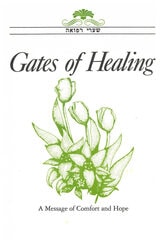
Gates of Healing
A Message of Comfort and HopeHirshel Jaffe
Central Conference of American Rabbis, 0
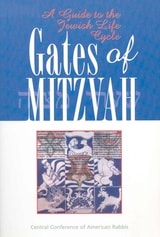
Gates of Mitzvah
Simeon J. Maslin
Central Conference of American Rabbis, 1972
Gates of Prayer - English Open
Chaim Stern
Central Conference of American Rabbis, 0
Gates of Prayer WHM - Hebrew Open
Chaim Stern
Central Conference of American Rabbis, 1992
Gates of Prayer for Shabbat and Weekdays - English-opening, Gender-Inclusive
Chaim Stern
Central Conference of American Rabbis, 1994
Gates of Prayer for Shabbat and Weekdays-Hebrew-opening, Gender-Inclusive
Chaim Stern
Central Conference of American Rabbis, 1994
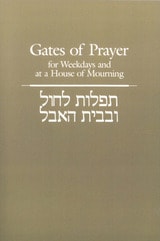
Gates of Prayer for Weekdays and at a House of Mourning
Chaim Stern
Central Conference of American Rabbis, 1992
Gates of Prayer for Young People
Roy A. Walter
Central Conference of American Rabbis, 1997
Gates of Prayer, Large Print, Hebrew Opening
Chaim Stern
Central Conference of American Rabbis, 0
Gates of Prayer
Shaarei Tefila - Hebrew-opening: The New Union Prayerbook for Weekdays, Sabbaths and FestivalsChaim Stern
Central Conference of American Rabbis, 0
Gates of Repentance - English Open
Chaim Stern
Central Conference of American Rabbis, 0
Gates of Repentance - Hebrew Open
Chaim Stern
Central Conference of American Rabbis, 0
Gates of Repentance - LP - Hebrew
Chaim Stern
Central Conference of American Rabbis, 1997
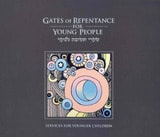
Gates of Repentance for Young People
Rabbi Judith Abrams
Central Conference of American Rabbis, 2002
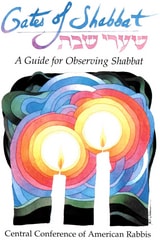
Gates of Shabbat
Neil Waldman
Central Conference of American Rabbis, 1991
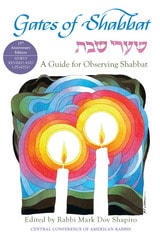
Gates of Shabbat - Shaarei Shabbat
A Guide for Observing Shabbat, Revised EditionRabbi Mark Dov Shapiro
Central Conference of American Rabbis, 2016
This book is about Shabbat--the Jewish treasure that comes around every seven days. In the midst of our freedom, Shabbat offers roots and inspiration along with joy and hope. In the midst of a world of endless choices and paths, Judaism provides the rich resources developed for living a life of meaning over centuries of practice. In particular, Judaism offers Shabbat as a way to deepen, renew, and refresh our lives.
Through additional essays, poetry, and personal insights, as well as many new inspiring and creative ideas, this updated edition of Gates of Shabbat offers a roadmap to discovering and exploring what Shabbat can mean to you.
Gates of Understanding Volume 1 - PDF Electronic Version
A Companion Volume to Gates of PrayerRabbi Chaim Stern
Central Conference of American Rabbis, 1977
This ebook is not sold by CCAR Press and must be ordered from the external ebook stores below.
This companion volume to Gates of Prayer includes essays on worship, liturgy, holiness, theology, music, and more, written by leading thinkers of their day. Also included are notes on Gates of Prayer written by Chaim Stern and A. Stanley Dreyfus. An invaluable resource for anyone interested in the history and development of liturgy and Reform Jewish practice.
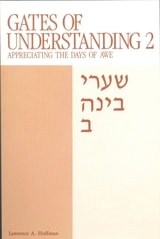
Gates of Understanding
Shaarei Bina - Vol. II: Appreciating the Days of AweRabbi Lawrence A. Hoffman
Central Conference of American Rabbis, 1977
A religious commentary to help High Holy Days worshipers unlock the message behind the liturgy. Covers the history and tradition of the prayers, music in the service, synagogue poetry, the role of God, sin, repentance, and much more. Also includes comprehensive notes to Gates of Repentance and a thorough index.
Gates of Wonder
A Prayerbook for Very Young ChildrenRabbi Howard Bogot
Central Conference of American Rabbis, 1989
Gates of the Seasons
Peter S. Knobel
Central Conference of American Rabbis, 1983

Outside the Gates of Eden
The Dream of America from Hiroshima to NowPeter Bacon Hales
University of Chicago Press, 2014
Born under the shadow of the bomb, with little security but the cold comfort of duck-and-cover, the postwar generations lived through—and led—some of the most momentous changes in all of American history. Hales explores those decades through perceptive accounts of a succession of resonant moments, spaces, and artifacts of everyday life—drawing unexpected connections and tracing the intertwined undercurrents of promise and peril. From sharp analyses of newsreels of the first atomic bomb tests and the invention of a new ideal American life in Levittown; from the music emerging from the Brill Building and the Beach Boys, and a brilliant account of Bob Dylan’s transformations; from the painful failures of communes and the breathtaking utopian potential of the early days of the digital age, Hales reveals a nation, and a dream, in transition, as a new generation began to make its mark on the world it was inheriting.
Full of richly drawn set-pieces and countless stories of unforgettable moments, Outside the Gates of Eden is the most comprehensive account yet of the baby boomers, their parents, and their children, as seen through the places they built, the music and movies and shows they loved, and the battles they fought to define their nation, their culture, and their place in what remains a fragile and dangerous world.

Piracy
The Intellectual Property Wars from Gutenberg to GatesAdrian Johns
University of Chicago Press, 2009
Since the rise of Napster and other file-sharing services in its wake, most of us have assumed that intellectual piracy is a product of the digital age and that it threatens creative expression as never before. The Motion Picture Association of America, for instance, claimed that in 2005 the film industry lost $2.3 billion in revenue to piracy online. But here Adrian Johns shows that piracy has a much longer and more vital history than we have realized—one that has been largely forgotten and is little understood.
Piracy explores the intellectual property wars from the advent of print culture in the fifteenth century to the reign of the Internet in the twenty-first. Brimming with broader implications for today’s debates over open access, fair use, free culture, and the like, Johns’s book ultimately argues that piracy has always stood at the center of our attempts to reconcile creativity and commerce—and that piracy has been an engine of social, technological, and intellectual innovations as often as it has been their adversary. From Cervantes to Sonny Bono, from Maria Callas to Microsoft, from Grub Street to Google, no chapter in the story of piracy evades Johns’s graceful analysis in what will be the definitive history of the subject for years to come.
Pushing Back the Gates
Neighborhood Perspectives on University-Driven Revitalization in West PhiladelphiaHarley F Etienne
Temple University Press, 2013
As college and university administrators expand and develop their urban campuses, they have also become developers—and primary drivers—of neighborhood change. But how do institutions contend with urban real estate needs, revitalization opportunities, and community outreach? And how do the residents benefit? Pushing Back the Gates provides a lively discussion of neighborhood-level perspectives of the dynamic changes brought about by institutions' urban planning efforts.
Harley Etienne outlines the rationale for university-driven development and neighborhood revitalization balanced by caution for the limitations of the model. He provides a summary of the University of Pennsylvania's West Philadelphia Initiatives and the challenges and successes of this unique plan. Etienne also examines the implementation of similar efforts at different universities around the country.
Pushing Back the Gates speaks to communities, university leaders, and urban developers who navigate the boundary between neighborhood revitalization through physical development and investments in incumbent populations and human capital.